Showing posts with label savoy. Show all posts

Tuesday, August 30, 2011

Summarizing George Mills: A Final Perspective


Much of our story here involving George Mills has revolved to a great degree around one thing lately: Religion. However, there certainly are many threads running through his story, and in this—oddly my 300th and hopefully not my final post— we'll begin to summarize, to some degree, what we have learned about George's life.


The Mills Family and Catholicism

It seems odd, at least to an American viewing it from the vantage point of the 20th century, that George's father, the Revd Barton R. V. Mills, converted to Roman Catholicism while attending Oxford around 1883 and then took a series of positions as an Anglican vicar afterwards, eventually ending up as assistant chaplain at the Chapel Royal of the Savoy in London, and doing a segment of Queen Victoria's funeral service. No one else seems surprised or very much cares save one man: The current chaplain of the Savoy, Peter Galloway, who simply chooses to disbelieve, preferring the strange point of view that the public record of the conversion of Mills must be in error.

I guess that's why they call it "faith."

In fact, I recently wrote to a Church of England vicar of today to ask about the relations among the Anglican Church, the High Church, the Low Church, Anglo-Catholicism, and Roman Catholicism. I let him know that some very learned people in the U.K. have expressed directly to me that there's really not much difference at all, especially today, and that it's unlikely anyone cared very much back then, either—hence the vicarages and the chaplaincy to the Savoy being awarded to Mills.

Like most people I've contacted who are involved with the Church, that vicar never bothered to reply to a collegial request for research assistance from an educator. (Just an aside: When clerics contact scholars, do they expect assistance in their own research? If so, that would be quite hypocritical!)

In lieu of that learned opinion, the difference between the Anglican Church and Roman Catholicism seems, however, to have been a big enough deal for some people actually to make the effort to convert from the Church of England to Roman Catholicism, and to form specific religious societies, and publishing houses, and the like, especially when converting was 'of the moment' in the early 20th century.

I think it might a bigger surprise that George Mills was friendly with Roman Catholic converts, frequenting their haunts, publishing with their publishers, and basically living a very Roman Catholic life, all the way through to his funeral service at the Catholic Church of St. Peter's in Budleigh Salterton (as opposed to the St. Peter's C of E there), than it is that he might've been gay, for example, as we recently heard discussed.

Given the overtly Catholic nature of many of George's friends, religion seems to have been the windmill at which Mills tilted most as the son of an Anglican vicar—even if his father also had been a closet Roman Catholic—in an extended family involved fully in Church of England. His sexuality would seem to have been secondary.

Having moved away from the Church of England also seems to be an explanation why distant relatives living today simply don't know the "Barton R. V. Mills" twig on their branch of the family tree exists, let alone anything about any of the Mills family. Honestly, except for a few recollections by a few ancient relatives of George's Uncle Dudley Acland Mills, now living in Canada who do know, but apparently are not interested in the Mills family at all!


A Childless and Forgotten Family

It didn't help that all four of the Rev. Barton Mills's children died childless (unless George's brother, Arthur, had late-in-life offspring I can't locate), but there's something more to the fact that virtually no one knows or cares who these people are or that they even existed.

Except, to some degree, for the women who married into the Mills family.

In the case of Vera Beauclerk (Mrs. George Mills), her family today bviously knows about her, and she's easy to trace—being descended from William the Conqueror.

Considering Edith Ramsay (Mrs. Barton Mills, George's mother), her surviving family today knows of her, but not very much, even to the point of having documented her Christian name incorrectly [as Elizabeth]. It's as if she dropped off the very face of the Earth when she left her nuclear family after marrying Barton Mills and moving to Kensington, just blocks from Buckingham Palace. Of Edith's parents, much is known today, including the possession of a great deal of ephemera, much of which has appeared among these pages. Of Edith herself: Nothing, save the image of her as a toddler in the montage at left.

The last in-law, Lady Dorothy Mills (née Walpole, Arthur's first wife), maintained a high profile of her own as an author/explorer until a horrific car accident drove her into retirement, despite the fact that her family quite literally disowned her for marrying a soldier. They divorced in 1933. Also childless, she has been allowed to fade into obscurity since her death in 1959.

Her onetime husband, George's half-brother Arthur, apparently barely acknowledged his family, and is the best-kept secret of all the Mills siblings.


Something is amiss in all of that.

George, Arthur, and their spinster sisters—Agnes and Violet; very athletic girls, into the Girl Guides and scouting, who never found mates at all and were devoted to George, and he them—were an entire little family all of whom, sadly, had failed to reproduce to continue the family name.

Still: Why does almost no one recall that these people ever were?


George Mills at School

George had been in a great deal of pain in his life and not all of it could have been addressed with an aspirin or two. Physically slight of build, with varicose veins as a boy, and saddled with a speech impediment [possibly a lisp like his sister Aggie's, causing an unclear voice], I can see why he would've preferred sensitivity in the people around him—but boys at school probably tormented him. He basically washed out as a young scholar, spending a brief two years at Harrow. He would not have excelled at something he always loved: Sport, especially cricket. Stronger, more confident, less sensitive boys would have made his life miserable in a variety of ways, even unknowingly.

George had stockpiled many regrets based on his own preparatory schooling.


George Mills during World War I

I don't see Mills's life having been much better as a "Grade III" army recruit (unfit for most military duties) in the service during the First World War. Except for his time in the Army Pay Corps, the corps where the friend and fellow B-III, Egerton Clarke, was also assigned, the slightly built and sensitive Mills must have faced similar torments to those he'd known at school.

The army was another place where Mills would have been a failure: He was a washout as a soldier, a washout as a APC clerk, and a fellow who had been determined fit only to be a "fatigue man"—the lowest form of military life, with virtually no hope of promotion. And things, as we've seen, got worse for him after his friend Egerton was hospitalized and demobilised, leaving George in Winchester alone.


George Mills at Oxford

After having been demobilised himself, George attended Oxford for three years or so and managed to leave without having taken a degree or a single examination to earn one. The academic and social discipline required by an institution like Oxon would have been a struggle for Mills, who had lived a sheltered life, especially in regard to having been allowed to 'quit' when the going got tough, as they say, during his preparatory schooling.

Without that degree, gaining a career in which he could have been a success—and make his father (twice an Oxford graduate) proud—would prove then to be difficult.


George Mills As a Non-Author

As a youth grown into a man, George Mills had been the only male member of his immediate family who had not published a book, from his paternal grandfather on down! While that may never had been said to him directly, when the men all were discussing their books and their publishers, George had to know he was the only one just listening.


George Mills, Schoolmaster, 1926 – 1933

Failed as a schoolboy and scholar and failed in the military, by 1933 we know George also failed to hold down a regular teaching job for very long. He had moved from school to school as a teacher between 1924 and 1933 (one assignment being as far afield as Switzerland) in search of a situation. This presumably meant time spent away from his family, and even his wife.

Something during this time, however, 'clicked' for Mills.

It seems to have been spurred by his relationship with Joshua Goodland at Warren Hill School in Meads, Eastbourne [below, left]. Although Goodland had managed to take two degrees during his seven years at Cambridge, he never fully settled into a career. Goodland was an occupational nomad, veering from a career in teaching to becoming an architect, and following that, a career in law. He then returned to teaching and became Head Master at Warren Hill before eventually turning to his final vocation, serving as a vicar in the Church of England.

Goodland was a diminutive but passionate man, older than George, who had traveled around the world and possessed a myriad of skills and talents, but who lacked a sort of stick-to-it-ness (as we say in the States) that would have inspired the erratic young Mills to find success in his own life in a similar way: Not necessarily along a single, direct career path, but divergently.


In 1932, Barton Mills, George's father, passed away. This simultaneous event, a tragedy, also seems to have been a catalyst and clearly a pivotal point in George's life.


Vindication of His Failures

Mills tackled his lifelong failure issues seemingly one at a time, and began to assemble a future. Whether or not this was consciously done, we cannot tell.

He seems to have gained a great deal from his time spent at Oxford, even if he didn't earn a degree. He met and had been exposed to a sensitive class of fellows who, rather than hurting George, seem to have understood him—perhaps that was something he'd never experienced within his own family—and those well-educated men even liked and cared about him. He learned about himself as a person, as well as receiving reinforcement regarding his faith in Catholicism.

His university experience planted many seeds that would later begin to flourish.


George Mills Returns to Prep School

Some success and popularity at Oxford led Mills to do something that many children-grown-into-teachers do: Return to the scene of previous educational 'crimes' against him and others like him, intent on 'righting' many wrongs that had been perpetrated upon him while at school.

During the late 1920s and early 1930s, under the auspices of progress and enlightenment in education, he then spent time teaching in schools and being the sort of schoolmaster he'd wanted to have, I suppose: His first book is fully titled Meredith and Co.: The Story of a Modern Preparatory School.

Key word: Modern. Things now were finally different in the world of British education, and George had returned to become a part of it all.

Much of what he wanted as a schoolmaster likely was acceptance within some educational institution more than any sort of abstract revenge: During his time in the classroom he was liked and appreciated by faculty, staff, and students, all within a milieu in which he was once considered a failure.


George Mills Finds Success as an Author

After he was unable to hold onto one job for long as the world moved into a severe global economic depression, George then wrote books about his fledgling teaching career—a vocation that he may not have returned to, as far as we know. (There's no evidence he taught more than a single term after WW2.)

This process of writing and being published, in a family of both distinguished scholars and popular authors, enabled him to raise his esteem, I'm sure, in the eyes of his family, as well as in his own. We find that yet another area in which he was dismal failure could be checked off his metaphorical list, and not just barely: His books became popular and were unique in having captured much of the behavior, slang, and idiom of British Schoolboys between the wars, becoming the forerunners of a literary genre that would later flourish.

Once Mills published his third and fourth book in 1939, the label "author" could clearly and permanently be attached to him. Clouds were gathering darkly over a Europe increasingly held in the steely embrace of fascism, however.


George Mills and the Royal Army Pay Corps

There were not many failures left to vindicate, but next came George's lack of any sort of success in the military in general, and within the Army Pay Corps in particular. George had been summarily and permanently sent packing from the APC during his dismal service there during the Great War, so I understand why, while enjoying success as a writer at 43 years of age, all of that was cast suddenly aside. He obviously had put his name into the Officer's Reserve pool as a War Substitute (probably claiming to have the Oxon degree he'd falsely told his prep schools that he had earned) at the onset of the Second World War.

We find that Mills soon ended up back in the Royal Army Pay Corps in 1940, and it must have been all the sweeter when he walked in this time wearing the uniform of a 2nd Lieutenant. George then would have been walking on metaphorical air when he eventually was promoted to full Lieutenant in 1942! Check 'success' in that area off of his 'vindication list'—although it would be short-lived.

Never what we'd call a "finisher," Mills relinquished his commission as an officer in 1943, after just two years, due to "ill-health." He was awarded the honorary rank of Lieutenant.

George's life had been bombarded by loss during this time period, and he would suffer more by the end of the war—the deaths of friends (Terence Hadow, Egerton Clarke), colleagues (Capt. Wm. Mocatta, Joshua Goodland), and loved ones (his wife, Vera, and his mother, Edith), all between 1939 and 1945—which is something he admittedly had in common with the rest of the British Empire during that time frame. It is distinctly possible Mills then suffered from terrible depression.

As we know, George's "ill health" didn't permanently debilitate him, which is fortunate because George had one more item to be dealt with on his 'checklist' of youthful failures, and it would be the one that took the longest time for him to get around to vindicating.


George Mills and Sport

Where Mills was and what he was doing between the end of the war and the late 1950s is unknown: They are George's Missing Years.

By the late 1950s, however, he was playing competitive croquet out of Budleigh Salterton and had quickly and respectably shaved down his beginner's handicap. George went on to win a number of tournaments along the south coast of England before he played his last match in 1970 at 76 years of age.

It's unlikely that athletic competition was something the slight Mills had ever felt good about before the age of 60, and though I imagine his trophies could not have been described as huge, I believe they must have been treasured by him as if they had been colossal!


George Mills and Catholicism

In a world that so recently had been fought over quite violently by Fascists and Communists, there is circumstantial evidence that Mills may have had Socialist leanings during the time. Toss in the lifelong struggles George had had along the way with religion, discussed above, and Mills always seemed to have had something on his philosophical plate!

Mills attended the local Catholic church in Budleigh, where he lived his last years with his spinster sisters, Agnes and Violet, at Grey Friars on Westfield Road, next to the croquet club. With his allegedly Anglican father no longer living, and with no close relatives nearby to embarrass (Arthur had died in New Forest in 1955), he finally could be comfortable and public worshipping in his chosen faith.

One does wonder about his relationship with croquet's Maurice Reckitt, the renowned Christian socialist author who, however, was "terribly anti-Roman Catholic," according to fellow player, Dr. William Ormerod. Did they ever speak of it?


The Social George Mills

From the time of George's first teaching appointment at Windlesham House School in 1926, to his obituary written in 1973 by Lt.-Col. G. E. Cave for the Croquet Gazette, George Mills was seen as a very social man. He has been described as "sociable," exuberant," "lovable," and that "He made people laugh, a lot."

He once was also so keen on children, and was so able to become part of their world in his prep schools that he could write unprecedented and insightful books about the world of his students, books that looked far beneath the veneer of the prep school classes, curricula, and discipline and saw the inner child.

One wonders, then, why so very few people remember George.

His physician in Budleigh does, but except for a few patent comments, Dr. Evans of Budleigh isn't saying much.

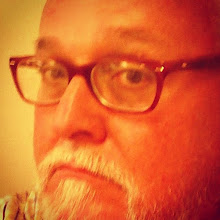
Barry McAleenan, a great friend of this site, knew of Mills as a child, but only really recalled that he likely was a user of snuff. (Barry, by the way, possesses the best photograph of George Mills known publicly, and it is seen at the top of this page.)

Joanna Healing and Judy Perry remember many of the characters during that era of croquet, and while Agnes and Violet Mills are more easily recollected (especially Agnes), George Mills really is not. Not at all.

A clue arrived recently via Martin Granger-Brown, who recalled George's sister "Aggie was very haughty and posh and used to look down on people," something that could have affected public perception of George as he chose to live the final years of his life in her company.

Another clue may be found in the recollections of Dr. William Ormerod. Upon hearing George described as "exuberant," "loveable," and "enthusiastic," he replied, "Those are words I would use to describe Gerald Cave himself."

Given the speech impediment of Mills, Mills may have been extremely uncomfortable with strangers. He may also have been somewhat of a chameleon, reflecting the positive qualities of those he was with, so as to keep himself in harmony with situations that could have caused him a geat deal of social anxiety.

Perhaps Mills was "exuberant," "loveable," and "enthusiastic" with those who, themselves, acted exuberantly, lovingly, and enthusiastically with him. And it follows that those who were cold or unaware of him always would remain so, as he likely would have called no attention to himself.

This would also explain why so many were unaware, during the final years of Mills's life, of his past success as an author.


Summary

Why is a man—George Mills—who was known to be so sociable, so amusing, so full of life and laughter, and a man who not only enjoyed children but seemingly understood them as well, remembered by so very few?

The life of George Mills seems to have been divided in to two halves: Failure and Success—or at least noteworthy degrees of each.

It took fifty years, but George finally vindicated himself regarding the aspects of his life in which he felt like a failure.

It doesn't appear that he ever struggled to survive financially, and that he was a relatively popular, stylish gentleman through the end. He left us childless, as did his siblings, so there are no stories of Uncle or Grandfather George at Christmas, Baptisms, funerals, or on holidays. No stories told by him were repeated to a subsequent generations of children. No one remains, then, to recall the way he spoke, smoked, or laughed.

He ended a man about whom, following his death, very few would ever think again.


The following quote recently entered my e-mail box as part of the signature of a sender, and it immediately struck me:

To laugh often and much; to win the respect of intelligent people and the affection of children; to earn the appreciation of honest critics and endure the betrayal of false friends; to appreciate beauty, to find the best in others; to leave the world a little better; whether by a healthy child, a garden patch or a redeemed social condition; to know even one life has breathed easier because you have lived. This is the meaning of success.
———————————————————————————————————————————————Ralph Waldo Emerson


Those are hopeful words by which we any of us might assess the true value of our lives.

Emerson's words summarize the impact that George Mills—now seemingly forgotten—had on the world. Whether or not he is remembered widely doesn't lessen any of the impact he did, indeed, have—especially on me.

Still, it's nice for someone, anyone, to be remembered, and that's what Who Is George Mills? has always been about.

Unless new information comes to light (as, I'm grateful to say, so often has happened here over the past year or more), unless I'm contacted by a relative, friend, or acquaintance who remembers George and his family, unless we receive a copy (or scan, or photocopy) of his last children's book, or unless we discover his letters or other ephemera that would help us know more in answer to the question, "Who Is George Mills?" then my work here is essentially done.

And I've enjoyed it all. Thank you so much: Everyone.


Goodbye for now, George.


Monday, June 20, 2011

Fr. John Basil Lee Jellicoe, Part 1


Today, we'll take a look at a short thread we've been following, trying to get some closure on the preface to the 1933 book Meredith and Co. by George Mills. There are a few other loose ends to pursue besides this, and I think my work here at Who Is George Mills? will be just about complete.

As we know, the preface referred to two men, as having been helpful and encouraging during his production of the manuscript for the text: Mr A. Bishop, the "Head Master of Magdalen College School, Brackley," and Mr. H.E. Howell, an "old friend."

H. E. Howell remains unidentified, a mysterious man of some influence on George Mills, but unknown to us today.

Last time we found out that Bishop was Arthur Henry Burdick Bishop, not only once Head Master of Magdalen in Brackley, but longtime, successful Head at Warwick School. Many thanks to Mr. G. N. Frykman, archivist at Warwick for his wealth of information on Bishop and the school of his era (1936-1962), as well as for his effort to get someone at Magdalen College School to contact me.

Magdalen College School, or should I say schools, has an interesting history. There are apparently three: Oxford, Brackley, and Lincolnshire, although it appears the name of the last is the Skegness Grammar School. That name, interestingly, was taken in 1933 upon its relocation from Wainfleet.

The Oxford school, originally located in Magdalen College, since has moved across the Magdalen Bridge and expanded.

The institution of our interest here, though, is Brackley, and according to Wikipedia, the college still owns the site in South Horthamptonshire, and has a presence on the governing board.

This historical presence ties the school to the famed Magdalen College, Oxford, and it is there that our investigation leads us. First let's look at an historical figure with close ties to Magdalen College as well.

During the 1920s, a fiery reformer named Fr. Basil Jellicoe [right] took the stage. Born on 5 February 1899 in Chailey, Sussex. Jellicoe is noted in a 1917 Chailey parish magazine as having been "Univ OTC, Oxford." Subsequent issues note that Jellicoe served with the Royal Naval Volunteer Reserve during 1918 and is described as an 'assistant paymaster,' a designation that ended in July 1919, when Jellicoe was presumably disembarked from his service after the end of hostilities in the First World War.

The 2004 edition of the Oxford Dictionary of National Biography says this about Jellicoe:

Jellicoe, (John) Basil Lee (1899-1935), housing reformer and Church of England clergyman, was born on 5 February 1899 at Chailey, Sussex, the elder son of Thomas Harry Lee Jellicoe, rector of Chailey, and his wife, Bethia Theodora, youngest daughter of Sir John Boyd, of Maxpoffle, Roxburgh, lord provost of Edinburgh from 1888 to 1891. His father was a cousin of J. R. Jellicoe, first Earl Jellicoe.

A few months before the end of the First World War he left Oxford to join the Royal Naval Volunteer Reserve and served for a short time in the Mediterranean.


On the website Chailey 1914-1918, Paul Nixon gives his opinion regarding that entry:

This rather spare and stuffy review does not appear to do justice to the man. In the 1920s he campaigned successfully to replace the Somers Town slums in Camden, north London with decent housing and was a colossus in the neighbourhood as well as a firm favourite with the residents. He founded what later became the St Pancras Housing and Humanist Association and helped set up similar groups throughout England. He worked tirelessly for the benefit of poorer communities and must have been sorely missed when he died at the young age of 36.


Father Luke Miller, President of the Haileybury Society, wrote this of Jellicoe:

Just after the First World War Jellicoe had come down from Magdalene Oxford, been ordained and appointed as the Magdalene College Missioner, responsible for a Christian Mission to the area round S. Pancras station in London supported and funded by members of his college. It was an area of slums: dark alleys, stinking tenements, jumbles of dwellings with no sanitation, no light and providing hardly any shelter.

Seeing the terrible housing conditions Father Jellicoe insisted that the spiritual duty of the church for the souls of her children must extend to a physical duty to their wellbeing and specifically to their housing.

Jellicoe cajoled the owners; raised the funds; demanded support; lobbied politicians; worked to change opinion, employed the press – Gaumont films made a news reel that was sent round the country and the world – and generally made himself a nuisance to anyone and everyone to get things done. It was fabulously successful. Things were done and the whole area was transformed.

His work spread beyond to confines of his own parish. He was called on to develop his new concept of Housing Associations in the Isle of Dogs in London and in other cities in the nation. His idea spread round the world, and he is the father of social housing.

Father Jellicoe was not a social reformer. He was a Gospel preacher. Once he described the beginning of the work with the housing. “We wanted money for these building schemes” he said, “So whom do you suppose we went to? Well we went first to a poor paralyzed woman who hadn’t a penny, who couldn’t use anything but her lips, but who knew how to pray. That was the beginning of everything.”

It was costly what he did. It was costly to others who had to give up their preconceptions and their prejudices and be carried along by him in his enthusiasm for the gospel. But it was also costly for him. Twice he had breakdowns under the pressure of the work. He drew strength from his daily offering of the Body and Blood of Jesus at the altar in his church; he organized a prayer guild to sustain the mission in prayer, and he drew on the power of the scriptures in his spiritual warfare. But it cost him nonetheless.

Someone who knew him well wrote of him, “I can see him now, pacing round and round the room, a soul on fire within a rather faded cassock, his eyes ablaze with what I can only call a fury of faith for the fighting of ancient wrongs, his heart aglow with affection for all sorts and conditions of men and with visions for their greater good. I wondered how long it would take for so keen a flame to burn out.”

Basil Jellicoe died, burnt out and exhausted, aged just 36.


At a Service of Thanksgiving celebrating the renewal of St. Martin-in-the-Fields 0n 28 April 2008, the Archbishop of Canterbury mentioned Jellicoe: "In the days when St Martin's was gloriously beginning to reinvent itself in the second and third decades of the last century, a very great Anglo-Catholic priest, Father Basil Jellicoe, at that time the incumbent at St Paul's Convent Garden, was challenged by some of his more narrow-minded High Church friends about why he would come to celebrate and preach in a parish church like this where the blessed sacrament was not reserved. Father Jellicoe said he had no problem at all in coming to preach in a church part of which was reserved for the service of Christ in the form of his poor."


I will not pretend to have any real knowledge of the High Church, Low Church, Anglo-Catholicism, or of the relationship between the Anglican Church and Roman Catholicism.

Although we have not established fully a relationship between Jellicoe and George Mills, regular readers will find a few items already begin jump out from the above. More coincidences involving George Mills? His life seems at times to have been not much more than a series of interesting coincidences!

While it is no more a coincidence that Mills and Jellicoe served in WWI than it would be for any of the other countless men and women who served, it is interesting to note that both Mills and Jellicoe served in the pay corps during the conflict.

Interestingly, despite being a pay corps wash-out as a fatigue man in the Great War, Mills righted the ship of his military career by later himself becoming a member of the reserve of officers [how, exactly, is unknown] and serving as a lieutenant paymaster during the Second World War.

After the First World War, we know Mills attended Oxford, the location of Magdalen College, where Jellicoe received undeniable financial help via the "Magdalen College Mission," as we can see from the image at right.

In addition, Revd Barton R. V. Mills, an Anglican cleric converted to Roman Catholicism and the father of George Mills, is noted for having "founded the Association for Improving the Status of the Unbeneficed Clergy, and was [honourable] secretary of the Society for the Protection of Women and Children" during his life, as described in his obituary in the Times of London. These charitable works occupied the time of the senior Mills from the 1920s through his passing in 1932.

In fact, as early as 1884, when Barton Mills was beginning his career as a cleric, he was found "sitting on the Battersea Committee as an active member, according to a 15 December [1884] report by The Council of the Society for Organising Charitable Relief and Repressing Mendicity," and during the First World War, he had served as an "Acting Chaplain to the Forces."

The Rev. Mills had spent his life doing good works, and in a time when the young Jellicoe—a man with so much passion and vision—couldn't have helped but capture the notice and perhaps fancy of the elder cleric, George's father.


Lastly, we also know that much of George's life was concerned with religion. His father obviously had strong but ambivalent feelings about the exact nature of his own spirituality, converting to Roman Catholicism during the period in his life in which he also began serving as a vicar in the Anglican Church, and Barton later an assistant chaplain in the Chapel Royal at the Savoy.

The tribute paid by the Archbishop of Canterbury above to Fr. Jellicoe seems to apply to the Rev. Mills as well: "[He would have] had no problem at all in coming to preach in [any] church part of which was reserved for the service of Christ in the form of his poor."

Despite current skepticism by the Savoy itself, it's clear that the Rev. Mills had converted to Roman Catholicism (as did many of the men he saw as role models of his youth, like Rev. R. S. Hawker, who converted on his deathbed). By 1956, we find George Mills teaching at Ladycross School [left], a Catholic preparatory school in Seaford, Sussex, and having his own memorial service held at Catholic Church of St. Peter, Prince of the Apostles in Budleigh Salterton in 1972.


Jellicoe saw a blurred line between an exact daily practice of Christianity and its more important function of providing a necessary service to humankind. He was a charitable reformer in the same city at the same time George's own father was. Both Mills and Jellicoe had ties to Oxford in the 1920s. And just before that time, Jellicoe, like Mills, recently had served under the Colours in the pay corps, of all things!

These still could be coincidences, but we'll try to tie them together even a bit more tightly (and weave in Bishop and Howell) next time—stay tuned!


Sunday, February 6, 2011

Rev. Canon R. Creed Meredith, Sir L. Daldry, and Super Bowl XLV


This morning begins Super Sunday, an unofficial U.S. holiday, and I'm anticipating the playing of the American football championship game, the Super Bowl. During the baseball World Series and football playoffs so far I've won two pizzas from Carlos, the custodian at my school. He's bet two more, double-or-nothing (a bet he's already lost once), on the Pittsburgh Steelers, winners of two of the last four championships, hoping to get even. I've bet the pizzas owed me on the Green Bay Packers, the only team owned by its fans—the residents of tiny Green Bay, Wisconsin—and not a corporate conglomerate or egotistical multi-gazillionaire.

Last year I had a similar bet on the Indianapolis Colts, favored against the New Orleans Saints. Throughout the years, I've never been able to pick a Super Bowl winner to save my life, so its safe to say Carlos will likely owe me nothing at the end of the day. Betting my pizzas on the favored "cheeseheads" from Wisconsin almost guarantees that the Steel City will take away the trophy.

My only real chance of being involved in a victory today rides on my wife Janet's chili con carne. The host of the party we'll attend, my colleague Debbie, holds an annual Chili Cook-Off Contest. Last year Janet took the 2nd place ribbon, and this year she's looking to come home with the title!

Anyway, shifting to another field of play, while looking over my vast, panoramic Excel spreadsheet of croquet opponents, partners, and results, a few names do jump out. They may not have been the most regular friends or foes of George, Agnes, and Violet Mills, but they're noteworthy.

First, let's introduce ourselves to the Rev. Canon Ralph Creed Meredith. Creed Meredith played singles against Agnes on three occasions (according to the notoriously "iffy" Times search engine) and beat her twice.

Meredith was a cleric and a mason—something that apparently was a bit controversial at the time. According to the blog The hermeneutic of continuity:

"In 1951, Hannah wrote an article in the journal Theology, entitled 'Should a Christian be a Freemason?' which caused considerable controversy in England, particularly since King George VI and the Archbishop of Canterbury, Geoffrey Fisher, were both freemasons. As a result, the Church Assembly of the Church of England later that year discussed the issue. The Rev R Creed Meredith, a freemason himself, proposed that a commission be appointed to report on Hannah's article. This was overwhelmingly rejected and the Assembly did not reach any particular decision on the matter."

"Hannah" was Walton Hannah, an Anglican clergyman, who according to the blog "was later received into the Catholic Church."

Nonetheless, Creed Meredith served as chaplain to George VI and Elizabeth II [above, right]. On 28 June 1946, the London Gazette published an announcement which offically appointed him "Chaplain to his Majesty." In 1954, his address is listed in Time & Tide Business World (vol. 35) as "The Vicarage, Windsor."

I'm admittedly unsure how that combined vicarage and appointment [Would this have been simply a title, Honorary Chaplain to the King (K.H.C.)?] relate to the being a chaplain at the Queen's Chapel of the Savoy, where Reverend Barton R. V. Mills served as an assistant chaplain from 1901 to 1908. Nevertheless, it was a likely conversation starter for the Mills siblings with the Reverend Canon. You'll remember that Barton Mills was involved in the official ceremonies at the funeral of Queen Victoria and stayed on at the Savoy, moving his family, including his daughter Agnes (age 6) son George (age 5) to London in time to be counted in the census. Violet was born in 1902.

Around 1960, Creed Meredith had moved to at 9 Kingsbridge Road, Parkstone, Dorset, according to the Church of England Year Book, volume 85, making him a probable member East Dorset Lawn Tennis & Croquet Club, where he beat Agnes Mills (+12) on 13 September 1960. The aging vicar, then 73, fell to her (-4) on 11 July 1961 on her home lawns at the Budleigh Salterton Croquet Club.

According to RootsWeb at ancestry.com, Creed Meredith was "was born 10 Jul 1887 in Dublin, Ireland, and died Jan 1970 in England. He married Sylvia Ainsley [on] 21 Apr 1915, daughter of Joseph AYNSLEY. She was born 16 Aug 1894 in Blyth House, Blyth Bridge, Stoke-on-Trent, and died 20 Sep 1987."

Another fellow the Mills knew on the lawns, one whom we first met yesterday, was Sir Leonard Daldry. The Times archive has himm playing with and against them in croquet twice, under unusual circumstances.

On 10 May 1968, Sir Leonard was victorious over George Mills (+2 on time). Later in the day, he beat George again. In a doubles match, playing alongside Violet Mills, he defeated George and his partner Barbara (Mrs. H. F.) Chittenden (+12), the Mills siblings scoring both a tournament win and loss in the same tilt. Although I'm uncertain exactly how doubles pairings were created at the time, one can assume the Sir Leonard knew at least two of the Mills somewhat well for at least that one day!

Daldry was born on 6 October 1908 and died at the age of 80 in October 1988 in Swindon, Wiltshire, 25 or 30 miles south-southeast of the Cheltenham Croquet Club. The Mills siblings played in croquet tournaments in Cheltenham at least three times, two in 1961 and 1965, during both of which it's possible that Sir Leonard was not in Nigeria.

The National Portrait Gallery describes Daldry in this way: "Sir Leonard (Charles) Daldry (1908-1988), Banker and Senator of Federal Legislature, Nigeria." He is a sitter in 18 portraits taken by the famed photographer "Bassano." In some portraits, Daldry appears with his wife, Lady Joan Mary Daldry (née Crisp). Those were taken on 30 October 1963. He later had individual portraits taken by Bassano on 23 April 1976. Disappointingly, none of these portraits are available on-line. Presumably, they may be of slighly higher quality than the image of Daldry [above, left] I was able to crop from an on-line 1974 MacRobertson Shield teams photograph.

According to Nigerian Wiki: "Leonard Charles Daldry was resident director of the Barclay's Bank for West Africa and later that of Nigeria and the Cameroons. He joined the bank in 1929. In the 60s, he was chairman of the Nigerian Barclay's bank." He is also listed there as a member of the Nigerian First Republic Senate.

On 1 January 1960, Daldry was appointed to the Most Excellent Order of the British Empire "for public services in the Federation of Nigeria," according to the London Gazette.

Daldry is also described as "Nigeria Board of Barclay's Bank, DCO... a member of the Nigerian Railway Corporation [and] a Special Member of the House of Representatives and as a Senator, 1929-61," in Accessions to repositories and reports added to the National Register of Archives by The Royal Commission on Historical Manuscripts in the National Register of Archives (Great Britain, 1969).

It seems that Daldry was intimately involved with Nigeria's economics and governance before and slightly after it gained its independence from Britain on 1 October 1960.

He certainly must have had a great many stories and insights to share on the lawns and at the bar in various croquet tournaments around England.

There is a third name of interest among the players during my "Mills Era" of croquet in south England: Lady Ursula Abbey.

We'll save Lady Ursula for another day, for reasons that we'll find out soon. Stay tuned...


Sunday, January 30, 2011

A Closer Look at 1932, David Niven's Mother, and the Family of George Mills


Today I'm learning a lesson: There is no such thing as a small bit of information.

Thinking I'd sit down and fire off a short posting regarding yesterday's study of wills and probate, I find myself knee deep, once again, in information. Perhaps all of it is not George Mills-related, but some of it's quite interesting. At least to me. And other aspects of it are very pertinent to questions we've often asked here...

The probate record for the Revd. Barton Reginald Vaughan Mills contains this excerpt: "clerk died 21 January 1932 at 5 Collingham-gardens South Kensington Middlesex"

This was the first indication that we've had that, when Revd. Mills passed away "suddenly," he was not at home with his family at 24 Hans-road in Chelsea.

I thought, "Well, I'll go to Google Maps, take a virtual snapshot of 5 Collingham Gardens [above, left], and see if I can find out who he might've been visiting when he expired. I'll punch it up in a short post this morning and be done!"

The address 5, Collingham Gardens has an interesting history. The terraced freehold recently sold, on 29 January 2010, for £8,900,000 to Michaelis Boyd Associates of 108 Palace Gardens Terrace, London, who applied in December 2010 to the Royal Borough of Kensington and Chelsea for "the provision of rooflight on the second floor roof and alteration of 3 rear basement windows to french doors."

The building now houses Alphaco, a British waste-to-energy company, dealing in "Waste tires, Waste tyres, Scrap tyres, Scrap tires."

It also is the home of Collingham Gardens Child and Family Unit, an NHS psychiatric hospital for children and adolescents [right], apparently one of the few facilities providing inclusive "in-patient child psychiatric care for learning disabled children."

Here's a brief description of the 1883-1884 construction of 5 Collingham-gardens from 'The work of Ernest George and Peto in Harrington and Collingham Gardens', Survey of London: volume 42: Kensington Square to Earl's Court (1986), pp. 184-195:

"No. 5 is much the larger house [than No. 4], partly because of an extra low wing (which has now lost its stepped gable) to the north. Here too the plan and some features survive, showing that the levels were split, with the drawing-room this time at the back on the half-landing. The wooden residence by March 1886, was the fourth Earl of Wilton, who fitted one of the rooms up as an organ-saloon replete with model organ and patent hydraulic engines. The house and its fittings were reputed to have cost him upwards of £25,000."

No. 4 could have been your residence at the time on these terms: "The price of a long lease here was £8,000, or it could be rented for £600 a year." No. 5 being "much" larger, can we assume the original price tag was "much" greater than those figures?

There are images of the interior, circa 1886-1888 and photographed by H. Bedford Lemere, to be found at: http://www.europeana.eu/portal/brief-doc.html?embedded=&start=1&view=table&query=5+collingham+gardens+brompton

By 1889, however, the Earl of Wilton no longer resided at 5 Collingham Gardens. On 22 March 1889, Mr. Robert Duncombe Shafto, a rich, former M.P. for North Durham died in his "London residence" at that address according to the Monthly chronicle of north country lore and legend, volume 3, 1889.

By 1902-1903, the address appears in the Royal Blue Book: Fashionable Directory and Parliamentary Guide as the residence of merchant banker John Conrad im Thurn, of J. C. im Thurn & Sons, merchants, 1, East India-avenue, EC.

And in 1938, Beryl Dallen (née Umney), wife of Deryck N. Dallen of Hartley Manor Farm, gave birth to a baby girl at 5 Collingham-gardens.

The above news, found in the 1938 periodical Chemist and druggist: The newsweekly for pharmacy, volume 128, indicates that perhaps the locale was no longer an upper-crust luxury abode at that time.

In fact, according to the website Lost Hospitals of London, 1947 would see the Metropolitan Ear Nose and Throat Hospital purchase "two freehold houses, 4-5 Collingham Gardens, SW5, which were converted to a 45-bedded hospital and Nurses Home."

But converted from what? The birth of baby girl Cherry V. Dallen at 5 Collingham Gardens in 1938 was probably not due to a visitor suddenly giving birth in the drawing room of a stately home. And that 1938 birth date is fairly close to the date of our interest: 21 January 1932, and why Revd. Barton R. V. Mills was at that address on that day when he suddenly died.

A clue to what became of 5 Collingham Gardens between being the residence of the moneyed J. C. im Thurn at the century's turn, and its sale to the Metropolitan Ear Nose and Throat Hospital in post-war 1947, was found in the strangest of places!

In 2003's Niv: The Authorized Biography of David Niven by Graham Lord, we find this reference to Niven's mother on page 48: "In 1932 [Niven] was in Aldershot on a physical training course when Uncle Tommy telephoned to say that Etta was dying in a nursing home in South Kensington. He rushed up to London and was stunned to see how wasted she was by her cancer, but it was too late to say goodbye. Following an operation, peritonitis complications set in, she did not recognise him and she died on 12 November at 5 Collingham Gardens with her beloved husband at her bedside. She was only 52."

So, we know now that Barton Mills had been committed to a nursing home at 5 Collingham Gardens, about a mile southwest of his home at 24 Hans-road. Obviously not in the best of health, the death of Revd. Mills on 21 January of that very same year was apparently still unexpected.

Interestingly, on the heels of yesterday's examination of wills, probates, and bequests, there's also this snippet from Niven's biography: "She left an astonishingly large estate of £14 169 3s. 9d. net, the equivalent in modern terms of about $950,000 [obviously valued against the RPI]... three times as much as she had inherited from William Niven sixteen years previously. This huge increase in wealth was not caused by inflation, which was nil between 1916 and 1932, nor probably by clever investment, since the British stock market index fell fifty-five per cent between 1919 and 1931 as it was battered by the Great Depression. The only explanation is that Etta left her inheritance from William Niven untouched to grow for sixteen years in some high earning account... Niv's claims that she was desperately poor were quite untrue."

This additional bit of information is instructive for our purposes.

Revd. and Mrs. Barton Mills inherited £22565 8s. 9d., from Edith Mills's father, Sir George Dalhousie Ramsay, with whom they lived at the time of his death in 1920.

At the time of Barton's passing in 1932, his "effects" were valued at £17007 11s. 7d.—a greater legacy than that of Niven's mother, Lady Henriette "Etta" Comyn-Platt—but less than Sir George had previously bequeathed to them upon his passing in 1920.

Etta's legacy was worth "three times" its original value in 1916, meaning she had likely been left less than £5000. It's value had trebled by 1932 despite economic troubles in the intervening years.

The Mills family had taken almost £23000, and in four fewer years than Lady Comyn-Platt, diminished it to roughly £17000. And this does not take into consideration the residue of any 'effects' from the inheritance that Barton Mills had received upon the passing of his father, Arthur Mills, M.P., in 1898, which may have approached £10000. Afterwards, he spurned a secure living as vicar of Bude Haven, Cornwall and took the family and his career as a cleric to London. Mills then worked from 1901-1908 as an assistant chaplain at the Queen's Chapel at the Savoy, a position which probably paid little, but also would have helped them 'pay the bills' through the 20th century's first decade.

During that time in London, Mills also published a book of sermons, a book entitled Marks of the Church, and several works on the writings of St. Bernard that are still valuable resources to theologians today, as well as having served as a military chaplain during the First World War.

Figuring at least some small income from those ventures, it seems the Mills family was far from impoverished during the decades preceding Barton's death, as evidenced by the seven servants and governess listed in the household by enumerators of the 1911 UK census.

In fact, it seems the Mills family pretty much lived a life of ease on money and 'effects' they'd inherited at various times, further evidence being provided by Barton's probate listing of his son as "George Ramsay Acland Mills, gentleman."

Other men listed among the names on the very same page of probate documents are described as "foreman," "baker," and "engine driver." There's no reason George wouldn't have been listed as a "schoolmaster" if he'd, indeed, been employed in 1932.

Apparently, Mills was at the very least 'between positions' as a schoolmaster at the time of his father's death, probably at home, being a gentleman and tapping out the manuscript for his first book, 1933's Meredith and Co.

Thoughts on this have already been explored, and George's financial situation would have been augmented, along with that of his wife, Vera Louise, upon the death of his mother-in-law, Evelyn Amy Hart Beauclerk, in 1933. Although the executor of Beauclerk's will was Westminster Bank Ltd., it seems highly probable that some of her effects, totaling £9235 19s. 9.d, found their way down to her daughter, Vera, and son-in-law, George, gentleman.

Two things:

● Were George and Vera living with Evelyn Beauclerk or Barton Mills in 1932-1933? There are no telephone listings for the couple, so unless they were rooming with someone else or living in a hotel, they would have been secure with one London family or the other.

● And, given the firm financial footing the Mills family finds itself in, circa 1898-1920, why does the autobiography of Lady Dorothy Mills cry poverty during her courtship and marriage to Barton Mills's elder son, Capt. Arthur Frederick Hobart Mills of the D.C.L.I., George's half-brother by Barton's first marriage?

In 1914, Captain Mills is sent off to the war in France, but according to his autobiographical book, With My Regiment: From the Aisne to La Bassée [Lippincott: Philadelphia, 1916] written under the pseudonym "Platoon Commander", before departing he first "went up to London to my rooms to collect a few things."

His father lived in a 20-room abode at 12 Cranley Gardens, S.W., the likely location of those "rooms."

So Revd. Mills had room in his home for son Arthur, even if no money in his wallet for the newlywed couple after his nuptials to the above-mentioned and apparently disowned Dorothy Rachel Melissa Walpole in 1916. If Capt. Mills couldn't afford to support his wife on an infantry captain's wage, he certainly wasn't renting unlived-in "rooms" in London as well as a bed at a boarding at a house near his barracks on the Thames!

Of course, to believe that cry of poverty is to accept only the word of Lady Dorothy, who wrote her autobiography in 1929 after creating the persona of being a completely independent and modern woman, whose success was due in no part to the help of any man, be he father, lover, or husband. Her self-made, 'rags-to-riches' persona was as much what she was marketing as her stories, and if it appeared at all that she'd ever been well-cared-for as an adult by either husband Arthur or her in-laws, the Mills, it would certainly have taken much of the lustre off of her heroically feminist backstory.

Nevertheless, just one address in the probate record of Barton Mills has led to much additional knowledge of our George Mills—his career, his family, and his prospects, circa 1932. And the writing of this post turned out to be no 'quickie'!

As always, if you have anything that you can add, please don't hesitate to contact me—and thank you in advance!


Sunday, January 23, 2011

A Virtual Walking Tour of Budleigh Salterton (While Thinking Aloud about George Mills)


Churches seem to have always played an important role in the lives of the Mills family. This is probably no better exemplified than by the letter that George Mills wrote to The Times on 8 April 1959 entitled "Dogs in Church," apparently in reply to an on-going, whimsical thread of mail that had struck a chord in Mills. The missive is a nostalgic retelling of a story that George's father, the Revd. Barton R. V. Mills often told about going to church with his parents, Arthur Mills, M.P., and Lady Agnes, as well as their black retrievers, Belle and Achille.

The last line of the death notice of George Mills that we saw yesterday reads: "Funeral service at the Roman Catholic Church on Wednesday, December 13, at 10:30 a.m." Friend Michael Downes couldn't find a grave for Mills in the local burial ground in Budleigh Salterton (although that may have been due to the inclement weather), and until we know where George rests, his story in Budleigh ends in a church with that 10:30 a.m. service.

It's a dazzlingly sunny morning here in Florida, but cuttingly cold for this part of the world [37°F / 3°C] and the level of insulation found in the houses. However, technology has advanced to the point where I can sit here and virtually stroll around Devonshire, exploring—thanks to Google Maps. I know this won't be of interest if you are a resident of Budleigh Salterton, but for me, it's exciting to see the town across the pond!


First, let's look for the Budleigh Salterton Hospital [above] where Mills peacefully departed. It's at the corner of Boucher and East Budleigh Roads in what is apparently Otterton. Really it's just across the croquet lawns and cricket fields—both sporting loves of George—from his home, Grey Friars. It's about 1500 ft. from the Mills home to the main entrance of the hospital, but it appears to be a rather circuitous drive from one to the other.


On the way back to Grey Friars, I strolled down The Lawn from High Street and took a look at the beautiful edifice that appears to be St. Peter's Church of England [above], although I couldn't find a sign. After receiving his Master's in History from Oxford, George's father, Barton, had been a vicar in the Church of England from 1887 through 1901, as well as having been a chaplain briefly in San Remo, Italy, and an assistant chaplain at the Royal Chapel at the Savoy. Subsequently, the senior Mills worked as a religious scholar and as a military chaplain during the First World War.

We know, however, that Barton Mills converted to Roman Catholicism while at Christ Church, Oxford, before becoming a cleric in the Church of England—sometime before 1885. From the United States, it seems odd that a cleric in one denomination would worship as a member of the congregation of a different denomination—Barton Mills certainly must have missed a few Catholic masses while busy delivering sermons for the C of E at the same hour—but no one I've discussed it with in the UK seems very much surprised by that at all (except for the current Chaplain of the Queen's Chapel of the Savoy, Peter Galloway, who found the news implausible and immediately questioned the authoritative 1885 reference book without even bothering to review it because it did not coincide with his bias). Revd. Barton R. V. Mills appears to have been Roman Catholic by faith, Church of England only by vocation. I leave it to the reader to surmise the tenets of which creed would have been passed, personally, from father to children in such a case.

The entire Mills family's repeated affiliation with Catholicism is far more than coincidental, so it's no surprise at all that George's funeral service was held at Budleigh's "Roman Catholic Church" (also named for St. Peter, a fact left out of the death notice, presumably to prevent confusion among those wishing to attend the service). Grey Friars is virtually equidistant between the two churches of St. Peter, so Mills's spiritual choice of denomination clearly wasn't based on mere proximity. The Mills family clearly was no longer associated with the Church of England.


After turning north up Slaton Road and Moor Lane, I turned north on Upper Stoneborough Lane. While walking along Clinton Terrace, I found a lovely, far more simple, brick church [above].


Turning the corner, I found the entrance [above]...


Looking carefully, the sign at front appears to read "Catholic Church of St. Peter, Prince of the Apostles," obviously the location of George's funeral. I imagine Mills closing his dripping umbrella and stepping into the warm, dry vestibule on rainy Sunday mornings...


Returning to Moor Lane, I followed it out to the West, to the very end, where it meets Dark Lane, across from the primary school. There I found St. Peter's Burial Ground, presumably where Michael Downes and his wife, Annie, looked for the final resting place of George Mills one misty winter day.


Approaching the entrance, I carefully read the sign, then strolled along the hedge [above], peering over and thinking... Wishing I could enter...

I wonder if this locale is where George Mills finally went to rest. His paternal grandfather was a powerful M.P., and associated with the Efford Down House in Bude, Cornwall. His paternal grandmother was Agnes Lucy Dyke Acland, daughter of Sir Thomas Dyke Acland VI, 10th baronet, M.P., of Broad Clyst, Devon. The Columb John Chapel at Killerton [below] there in Devon was still being used for Acland family burials after Sir Thomas's death. Could George have found a resting place there?


But one wonders where his father, Barton, was buried after his death in 1932? With the Aclands at Columb John, part of the estate where he and his brother Dudley Mills had been raised for much of their youths by the aging Sir Thomas while father Arthur journeyed to many of the empire's colonies? Knowing where Dudley now rests might help in all of this!

George's mother, Elizabeth Edith Ramsay, was the daughter of Londoner Sir George Dalhousie Ramsay, and she may have been laid to rest alongside her father. Might George be resting near his mother in London—or even with other kin in Scotland?

His wife, Vera Louise Beauclerk Mills, was of the lineage of William I on the Beauclerk side of the family, and granddaughter of the legendary Sinophile Sir Robert Hart on the other. Vera, who passed away in 1942 at the age of 48, may have been buried in a family plot with either family. Could it be that George ended up alongside her?


Or is it likely that the childless Mills, along with his spinster (and presumably childless) sisters, Agnes and Violet, rests together with them in the St. Peter's Burial Ground there in Devonshire, near Grey Friars, the croquet club, and the sea, where they'd all lived so happily for a quarter of a century at the end of their lives?

It's even possible, I suppose, that Mills and/or his sisters were cremated. Still, nothing in the family's past would lead me to believe that.

We've followed the life and career of George Mills—schoolmaster, author, paymaster—from his birth in Bude, Cornwall to his passing in Budleigh Salterton, Devon. He spent a great deal of his life moving around, as we're well aware. I'll admit, I'd very much like to know where, exactly, he at long last came to rest.