Showing posts with label elizabeth edith. Show all posts

Sunday, August 28, 2011

Egerton Clarke, Parenthood, Paper, and the Second World War


School is back in session here in Florida—stifling heat indices of well over 100°F be damned—and I've fallen behind in my correspondence.

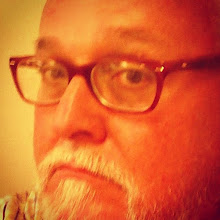
This week I received news from Janine La Forestier, granddaughter of Egerton Clarke [pictured, right]. It was actually a note accompanying a forwarded message from, I believe, her cousin Camilla.

Here's Janine's note, followed by Camilla's correspondence, both which I have taken the liberty to adjust slightly for ease of readability here:


Morning Harry: I received [this] from one of [Uncle] Anthony's daughters. Very interesting about the paper—and that would explain a lot and be a much simpler explanation—so he was writing but [had] no way to get it published because of the shortages......I had heard of a shooting, but don't know any details.

Anyway - it might shed some light on why George didn't publish too—I guess we were looking for something a bit more interesting.

Take care and hope school is going well. They don't go back until September here—nice long holiday. Cheers, Janine


The following is from Camilla, on Wednesday, Aug 24, 2011 at 4:14 AM:

Dear Janine,

Where to start?

My father and the other two sent to boarding school long before the start of the war and not because of it. That was always the plan. By then money source was doubtful, although they always had nannies of whom my father formed a particular attachment to Nanny Toms.

Our grandparents were not untypical of the era and the old stiff British upper lip and sentimentality where children were concerned is not in evidence.

The children were sent [to school]. My dad [was] age 6 in 1935. His mother dropped [him] at the school and he remembers her driving off ([actually] being driven, of course). There was no tearful goodbye. Parents knew that contact at that time would be limited, and indeed it seems that the new nannies and houses added to the [children's] detachment from parents.

I think there is also a much more feasible answer as to why Egerton doesn't publish after 1939: There was no available paper. Rationing was everywhere and for everything. All printing would have been diverted for essential printing to do with the war effort. Poetry and literature would have been limited, and it is unlikely Egerton would have had the means [to publish his own work].

As to the funding for schooling, Egerton set up a charity for the funding of Catholic education for boys, my father being one of the few beneficiaries so [it was] a bit suspect.

Remember also he was a convert and had made a lot of notable contacts at university as was the vogue in those days. Catholic conversions were very 'of the moment,' as was the literary group he ran [which contained] some very notable names.

Aunty Dorothy wrote a very moving letter to my father in the 60's when he had inquired about [Egerton Clarke's] life. She told of a life for her and her brothers where they had a distant, unattached mother and not a happy childhood.

I have researched the Percy Carmichael [Clarke] and Emma Piper marriages, etc., and Angela has visited the church in Dinard, France, where there is indeed a window [dedicated] to [Percy Clarke's] memory.

Percy had an interesting life and was married before he married Egerton's mother. [He] worked for a bank, was sent to Australia for the bank, and was involved in the shooting of a man before he became a Church of England minister, but I think you might know all this.

Probably enough for now. Hope this gives a different view.


Fascinating! Thank you so much, Janine and Camilla!


We learn quite a bit from this missive beyond the most interesting aspect: Egerton Clarke's father apparently shot a man in Australia before becoming a vicar!

It seems that the distance between Egerton and his mother, Emma Anna [right], after the death of his father when Egerton was just three years old may have been, at least in part, because she was not a mother very involved with her children, and not because of financial hardship.

The nannies mentioned above, women who attended to Egerton's children, apparently mirrored the care given to him by nannies as a boy. We have seen that one nanny in particular was of such importance to him as to have been mentioned in the dedication of his first book of poetry.

In addition, we learn that Egerton may have missed his children during the Second World War, but that they were had not been separated from him by the hostilities, but by previously arranged design. It seems likely, however, that the war may have heightened his worry about them, or increased his desire to spend time with them, especially as he was becoming increasingly ill.

Regarding aspects of Camilla's message that would pertain to George Mills, a friend of Egerton's since their deployment in the Army Pay Corps at Winchester during the First World War, we learn that it was apparently somewhat fashionable at the time, at least among intellectuals, to convert to Roman Catholicism.

We know that when Edith Mills, George's mother, passed away in late 1945, services were held at Holy Trinity Church in Brompton, the locale of George's marriage in 1926. Despite the fact that George's father had been a convert to Catholicism since the 1880s, Rev. Barton R. V. Mills served as a Anglican vicar, chaplain, and cleric for his entire career.

We don't know if Edith Mills also had been a clandestine convert to Catholicism like her husband, Barton, but her 1945 funeral services were held under the auspices of the Church of England. The 1972 memorial service for George Mills much later, however, would be held at the Catholic Church of St. Peter, Prince of the Apostles, in Budleigh Salterton [left]. George obviously was not a convert because it was chic at mid-century, but one of deep faith and conviction.

Finally, we find that it is speculated that reason Egerton Clarke did not publish after 1937 or so may have been simple: The rationing of a limited supply of paper.

While I am certain that certainly would have played an important part in the difficulty poet Egerton Clarke and children's book author George Mills may have found in publishing during the war, it doesn't explain a few things.

First, we know that Egerton Clarke was disheartened about having at least one poem rejected, circa 1942. A shortage of paper may have caused him to be upset, but it does not explain why any bitterness would not have been felt during the entire war, but was encapsulated only in the rejection of a particular poetic submission.

Secondly, although Clarke succumbed to tuberculosis in 1944, George Mills never published another original work after 1939's Saint Thomas of Canterbury, through his death in 1972. Paper, at some point, did become available generally, and Mills saw his prep school trilogy of titles reprinted in the 1950s. Still, he never wrote again, save the odd letter to The Times.

Looking over publishing in the United Kingdom during WWII, we find that poetic volumes did continue to be printed. From 1940 through 1940, we find complete volumes of poetry published by Sir John Betjemen*, Cecil Day Lewis*, T.S. Eliot*, William Empson, Roy Fuller*, Robert Garioch, Rayner Hepenstall, Louis MacNiece*, Stephen Spender*, Dylan Thomas*, Henry Treece, W.B. Yeats and Rudyard Kipling (posthumously), Laurence Binyon*, Edmund Blunden*, G.S. Fraser, Alan Ross, A.L. Rowse, Sydney Goodsir Smith, Terence Tiller*, Vernon Watkins, Walter De la Mare*, W.S. Graham*, John Heath-Stubbs, J.F. Hendry*, Patrick Kavanaugh, Sidney Keyes*, Alun Lewis, Robert Nichols, Leslie Norris, John Pudney*, Henry Reed, Stevie Smith, Dorothy Wellesley, Kenneth Allott, Keith Douglas, Lawrence Durrell, David Gascoyne, Geoffrey Grigson, Michael Hamburger, Kathleen Raine, Keidrych Rhys, William Soutar*, George Barker, Alex Comfort, Patric Dickinson, Laurie Lee, John Lehmann, Mervyn Peake, Herbert Read, E.J. Scovell, and Charles Williams.

[Poets whose names are followed by an asterisk (*) published multiple volumes of poetry during those war years, having been allotted a great deal of that scarce paper!]

It's instructive to look at one young Irish poet of the era, W. R. "Bertie" Rodgers (1909 – 1969).

Rodgers [right] had attended Queen's University Belfast and showed promise as a writer. After graduating in 1935, however, he was ordained a Presbyterian minister and was appointed to the Loughgall Presbyterian Church in County Armagh, where he served through 1947.

In 1941, Rodgers published Awake! and Other Poems, which was critically acclaimed in both Britain and the United States, despite the fact that, according to Wikipedia, "the first edition was almost totally lost when the publisher’s warehouse was destroyed in the London Blitz."

Again, despite the destruction of his first edition, along with other texts in that warehouse, newcomer Rodgers was anointed with the publications of subsequent editions, despite the paper shortage. Rodgers soon eschewed his calling and became a script writer for the BBC after the war.


We find, sadly, that there was, indeed, paper enough to support the publication of a great deal of poetry during the Second World War, enough even to support the literary debut of a little known Irish cleric like Rodgers.

In the case of Egerton Clarke, there seem to be two possible conclusions as to why the available paper was not lavished upon his work.

First, he may not have been prolific enough. Perhaps, had he a portfolio of poems under his arm in 1942, his earlier lengthy string of critically well-received poetic texts may have caused a publisher to take him to press. Janine believes that it was Egerton's failure to have a single poem published that he "took very hard."

It's also possible that the critical acclaim that Egerton had earned had been somewhat forgotten. The poets publishing during the war, listed above, were not among his circle of literary friends, and it is possible that he had become "old news," having been relegated to the status of a minor poet during the years he spent during the 1930s writing children's books for Burns, Oates and Washbourne, a Catholic publishing house. He may have been consigned to the pigeonhole "Catholic poet," instead of simply being considered, as he once had been, an "up and coming poet."

Let us not forget that, making things far worse, Egerton was in poor health during the war and would not live to hear of the fall of Berlin [left] or Tokyo.

George Mills was also in poor health during the war. He had returned to the Royal Army Pay Corps as an officer in 1940, but after a string of tragedies in his life, he relinquished his commission in 1943 due to "ill health."

While George's physician later in life, Dr. David Evans of Budleigh Salterton, claims that George was in good health at the end of his life and quite independent, something had overwhelmed him during the war, and George never wrote again.

Trolling Wikipedia's lists of notable children's books, very few are from the era of the Second World War: Curious George (1941) by H.A. Rey; Five on a Treasure Island (1942) by Enid Blyton [left]; The Littlest Prince (1943) by Antoine de Saint-Exupéry; and Pippi Longstocking (1945) by Astrid Lindgren.

A contemporary British children's author Noel Streatfeild, for example, published only The House in Cornwall (1940) and Curtain Up (1944) [also published as Theater Shoes; pictured, right) for children during the war. Perhaps it was due to a shortage of paper—but she also managed to publish three novels for adult readers during the same years, 1940 – 1944.

Perhaps, then, it was only difficult to publish children's books in the U.K. during the war.


That also would seemingly be incorrect. Enid Blyton is listed as having published only one notable work [below, left] during WWII, but her entire published output between the years 1940 and 1944 was an incredible 88 books!

Clearly, there was enough paper to publish the works of major authors and poets, as well as minor works that would have been seen by publishers as a way to make some money (as in the case of the prolific Blyton) during the worldwide conflict.

Regarding George Mills, even if the recuperating author had been pitching book ideas to publishers during 1943, 1944, and 1945, it's likely that he was seen by then in the same way we see him today: A minor author with limited earning potential for a publishing house.

In the cases of both Egerton Clarke and George Mills, the lustre that once had been found on their careers a decade earlier had diminished dramatically, and pages they once might have published were being given instead either to dependable and established authors, or to new writers who might be potential literary stars.

It is easy to see why Egerton and George would have taken the subsequent downturn in their careers poorly, and perhaps bitterly.


Thank you once again, Janine and Camilla, for helping to fill in some of the gaps in this research. It is very much appreciated.


Saturday, August 27, 2011

Rooms to Let: 21, Cadogan Gardens, S.W.3


It's a sunny morning with gentle breezes wafting through the horse country of north central Florida off the tail of Hurricane Irene. The heat index is supposed to creep up to a stifling 108°F today, but it's no longer summer here as it is in most of the United States: The children here have already been back in school for a week!

My plan had been to wrap up our study of George Mills by the time I returned to my classroom, but I fell just short of that. Today, we'll look at one aspect of the Mills family that may be of interest, although it's uncertain exactly how much it deals with George Mills directly.

As you may recall, George was married in 1925 and purchased a home in Portslade. His father, the Rev. Barton R. V. Mills, passed away in January 1932 while his family was residing at 24 Hans-road in London. The name on the family's telephone listing changed to "Mrs. Barton Mills" that same year.

Labouring under an assumption that George may still have been residing in his Portslade home when he was not away teaching at Windermere and Glion, Switzerland, the residents of 24 Hans-road would have been Edith Mills, Barton's widow and George's mother, and Agnes and Violet Mills, the spinster sisters of George.

Then, in 1933, the address for family's telephone listing in the London directory changed from Hans-road to 21 Cadogan Gardens, S.W. 3, although the telephone number—SLoane 3278—remained the same.

The family obviously had moved to new quarters after the patriarch's death. Let's go to the London Times, however, for more information.

A classified advertisement in the 11 April 1933 edition of The Times reads:


COOK-GENERAL, required for flat; 3 in family. Apply after 3 or write, Barnard, 21 Cadogan Gardens, S.W. 3.


We don't know exactly when the remaining members of the Mills family moved to Cadogan Gardens—just that the address appeared in the November 1933 telephone directory. The relocation came early enough, however, to make the printing deadline for a November directory.

There are two ways to look at the above entry at first glance. One way is to assume that the previous residents were simply in need of a cook, a domestic who later moved away with them when that family left in favour of the Mills.

"Barnard" may, I suppose, have been a dependable servant in charge of interviewing the new cook, but for which set of residents we do not know. It may have been the surname of the new owners just as easily. Still, if George and his wife, Vera, were still living in Portslade in 1933, the members of the Mills family moving into 21 Cadogan Gardens would have, indeed, numbered three: Edith, Agnes, and Violet.


Let's see what else we may find in The Times…

In the 9 December 1933 edition, almost two years after the death of Rev. Barton Mills, we find this advertisement in the classified category FLATS & CHAMBERS:

ADJACENT HARROD'S, KNIGHTSBRIDGE. — LARGE ROOM on entrance floor, adjoining bath room to be LET, Unfurnished ; constant hot water, electric light and power ; excellent service and catering ; 42s. per week. — 24 Hans Road S.W. Sloane 4025.


I'm not exactly sure what this tells us, save what a large room near Harrod's went for per week. It is possible the family had held onto the property, and that the Mills were subletting rooms at 24 Hans Road [right] as a source income—as far as we know, none of the Mills women were working. While the number Sloane 4025 was not their own phone number, it may have been the number of an agent who handled rentals for them or an additional line at 21 Cadogan Gardens.

Or it may have had nothing to do with them at all: I can search London directories by name, but not by telephone number.

Once again assuming the property to have something to do with the Mills family, we can see the worldwide economic depression has tightened on London. Here is virtually the same advert, this time from 30 October 1934:


KNIGHTSBRIDGE (adjoining Harrod's):. — BED-SITTING ROOMS. Furnished and unfurnished; h. and c. basins, constant hot water; house telephones. Furnished from 27s. 6d. ; unfurnished from 25 s.-45s., to include service and light; all meals at moderate prices. — 18 and 24, Hans Road, S.W.3 Kens. 7541.


Less than a year later, 24 Hans-road had multiple furnished and unfurnished rooms to let, and "excellent catering" had become "meals at moderate prices." Couple that with the addition of 18 Cadogan Gardens and change in phone number and we might assume that, even had the Mills retained 24 Hans through 1933, it likely was no longer among their assets. Someone else had acquired the property.


Why might the Mills family have held 24 Hans Road in order to let rooms, even for a short while? It seems to be what they were doing during that time, evan at Cadogan Gardens [left]. Let's take a look at a few more classified advertisements from The Times.

This is from death notices in the 20 December 1937 issue of The Times:

HIBBERT. — On Dec. 17, 1937, at 21 Cadogan Gardens, S.W., HELENA MIDDLETON (LENA), widow of CAPTAIN EDWARD ROWLEY HIBBERT, and last surviving child of Christian Allhusen, of Stoke Court, Stoke Poges, in her 80th year.


While it's possible Mrs. Middleton had simply been visiting, why then was no actual address provided? She clearly would have been boarding at 21 Cadogan Gardens with Edith and the girls.


From the 25 May 1938 issue of The Times, in the column entitled FORTHCOMING MARRIAGES:

MR. P. N. LOXLEY AND MISS E. L. DAWNEY


A marriage has been arranged, and will shortly take place, between Peter Noel Loxley, H.M. Diplomatic Service, only son of the late Captain Noel Loxley, Royal Navy, and of Mrs. Loxley, temporarily of 24, Cadogan Gardens, S.W.3, and Elizabeth Lavender Dawney, daughter of Major-General and Mrs. Guy Dawney, of Longparish House, Longparish, Hampshire.


Here we find another widow of a British officer living with the Mills, albeit seemingly temporarily in this case.

One wonders how many boarders of this era quite honestly took a room 'temporarily' yet subsequently never relinquished it.


In addition, we find this item in the 29 September 1939 edition of The Times:

MR. R. H. AMES AND MISS C. ZIMMERMAN


The engagement is announced between Robert Hugh Ames, only son of Mr. and Mrs. Robert Y. Ames, 21, Cadogan Gardens, and Miss Carlotta Zimmerman, niece of Mr. and Mrs. Alfred Meyer, 440, Park Avenue, New York City.


Here we find a couple, Mr. and Mrs. Ames, taking up residence with Edith and the girls. London telephone directories show that the Ames had their own phone in the house, and a Robert Y. Ames was at the time a barrister of the Temple Bar.


In a section entitled LADY CLERKS & TYPISTS, in the 13 April 1942 issue of The Times, we find:

LADY Francis Ryder requires a Secretary and a Card Index Hand, both for Services hospitality organization ; trained, experienced ; good references ; 40 or over ; Write 21, Cadogan Gardens, S.W.3.


Records show that Lady Ryder was involved in hospitality for servicemen during the Second World War. From the website Australian War Memorial, we find a paper written by Hank Nelson for the "2003 History Conference – Air War Europe" entitled A Different War: Australians in Bomber Command.

Of the bomber crews, Nelson writes:

Even when they were operating frequently, aircrew could eat, sleep, read, and play a game of billiards in conditions far removed from those inside a bomber fuselage. When crews were stood down, had a “48” (a 48-hour leave pass), or took their regular six days leave in every six weeks, they could travel to the local towns – Lincoln, Grimsby, Skegness, and York – and go to a dance, have a meal at a pub, see a movie, or attend a service at Lincoln Cathedral or the Thomas Cooper Memorial Baptist Church in St Benedict Square, Lincoln. They could go to the home of an English crew member, or that of a family nominated by the Lady Frances Ryder and Miss MacDonald of the Isles Dominion Hospitality Scheme, sleep in, read the newspapers, and wander across the fields. Or they could catch a train to London, stay at the Strand Palace Hotel close to the Boomerang Club and Codger’s bar, see the sights, and take in the show at the Windmill Theatre, John Gielgud as Hamlet at the Theatre Royal, Noel Coward’s Blithe spirit at the Duchess Theatre, or a concert at Albert Hall. Less than 24 hours later, aircrew could be taking a Halifax on a test flight preparing it for an operation over the Ruhr.

The National Portrait Gallery listing for Lady Ryder states: "Lady Frances Ryder (1888-1965), Organiser of Dominion Services and Students Hospitality Scheme; daughter of 5th Earl of Harrowby." A pair of 1925 portraits of her taken by photographer Alexander Bassano is seen above, right, and at left.

Apparently much of Lady Ryder's organising was done from the home of Edith, Agnes, and Violet Mills!


Among the death notices in the 19 May 1944 issue of The Times, we discover:

KITTERINGHAM. — On May 18, 1944, at 21, Cadogan gardens, S.W.3, MATILDA JEMIMA KITTERINGHAM, passed peacefully away. Requiem, St. Mary's, Cadogan Street, S.W.3, to-morrow (Saturday), at 10:00 a.m., and afterwards at Kensal Green.

A spinster, Kitteringham had been a nurse at "T.F.N.S. No. 5 City of London General Hospital" according to the 15 April 1919 edition of the Edinburgh Gazette, page 1479.


In the 22 September 1944 edition of The Times, we find this interesting advertisement:

REQUIRED shortly, COUNTRY ACCOMODATION for mother, two small boys, and nurse, for one or two months. — Gilmour, 21, Cadogan Gardens, S.W.3.


Without speculating on the reason for requiring these "country accommodations," one must envision 21 Cadogan Gardens as having been a rather interesting place during the war: Married couples, elderly spinsters (one of them a Peer), aging military men, and single mothers with young boys, all living with the genteel Mills ladies in London at a time when wartime rationing and German rockets must have made each day quite trying, to say the very least.

It sounds like quite an interesting place to live, and we do know that, in 1944, George Mills was using the Naval and Military Club in London [left]—which itself had suffered damage from Nazi bombs—as his address, having relinquished his commission in the Royal Army Pay Corps in 1943.

We find, then, that it is possible that housing in London may have been so difficult to find that Mills couldn't get a room in his family's own home. It's also possible, though, that he simply didn't want one there, preferring the club to 21 Cadogan Gardens.


On 12 December 1945, Edith Elizabeth Ramsay Mills, mother of George, Agnes, and Violet, would pass away. From the 14 December issue of The Times:

MILLS. — On Dec. 12, 1945, after a few days' illness at 21, Cadogan Gardens, S.W.3, ELIZABETH EDITH, widow of REV. BARTON R. V. MILLS, and daughter of the late Sir George Dalhousie Ramsay, C.B. Funeral at Holy Trinity Church, Brompton, on Monday Dec. 17, at 2 p.m. Please, no flowers.


The family did not immediately vacate 21 Cadogan Gardens, and death would soon visit once again. From the 21 June 1946 issue of The Times:

DRUMMOND. — On June 18, 1946, CAPTAIN FREDERICK HARVEY JOHN DRUMMOND, M.C., of 21, Cadogan Gardens, S.W.3, beloved husband of Elizabeth, and son of the Lady Katherine Drummond and the late Allan H. Drummond. Funeral at Sherbourne, near Warwick, Monday, June 24, at 2 o'clock. Memorial service at St. Martin-in-the-Fields, June 24, at 2:30 p.m. Flowers to Messrs Ashton and Co., 235, Fulham Road, South Kensington.


Funeral arrangements and services for boarders like drummond [his geleaology is seen, excerpted from the 1908 text Coke of Norfolk and His Friends by Anna Maria Wilhelmina Stirling, at left] may have been becoming a bit too much for the Mills sisters—assuming George was not living with them at Cadogan Gardens.

As noted before here, by 1947, Agnes would have been 52 years old, and Violet, 45. Now with no mother [who'd been born, married, lived, and died right there in Kensington] to keep them in London, it would be no surprise to find that the girls might leave town to live out their Golden Years.

1947 also found these additions to the British Library's Manuscripts Catalogue: "Ramsay (George Dalhousie) of the War Office; knt. 1900. Correspondence and papers 1835-1898," and "Papers of G. D. Ramsay rel. to the Royal Army Clothing Dept. 1855-1898," Add. 46446 – 46450.

The donors of those manuscripts? "Mills (Agnes Edith). Miss. grand-daughter of Sir G. D. Ramsay. Presented, jointly with Miss V. E. Mills 1947," and "Mills (Violet Eleanor). Miss. grand-daughter of Sir G. D. Ramsay. Presented, jointly with Miss A. E. Mills 1947."


It seems that the girls had been busy cleaning out 21 Cadogan Gardens following their mother's passing, and finally arranging a place for the papers of Sir George Dalhousie Ramsay, their maternal grandfather, to reside in perpetuity [right].


Since the presentation of Sir George Dalhousie Ramsay's papers to the British Library was in the name of Misses Agnes and Violet Mills, may we assume that George was not in residence with them at the time of the discovery and bequeathing of their grandfather's manuscripts?

The listing for Mrs. Barton Mills [SLOane 3278; 21 Cadogan gdns, S.W.3] stays in place in the London directories until its last appearance in the 1947 book.


The Misses Mills then appear in the 1948 telephone directory at Budleigh Salterton, residing at Grey Friars. Given the actual listing—"The Misses Mills"—George was not residing with them in Budleigh at the time.


To summarize the life of the Mills family between 1932 and 1947, after the death of Rev. Barton Mills, his wife and daughters relocated from Hans Road to nearby Cadogan Gardens and began running what was basically a boarding house (although I am certain that, given their elite neighbourhood and clientele, there must have been an upscale euphemism they would have preferred) through the Great Depression and the Second World War.

Their rooms must have had a quality of exclusivity about them as we do not find any advertisements to let them. "Word of mouth" about the Mills home must have been enough to keep them full of tenants.

[We should, however, keep in mind the capricious and obstinate nature of the on-line search engine of The Times database. When we used it to collect croquet results for the Mills siblings, it provided access only a small fraction of the information available. It is distinctly possible that the Mills did advertise for tenants in The Times on many occasions and the exceptionally poor search engine there cannot locate those entries.]

Following the death of their mother Edith in 1945, the spinster sisters of George Mills cleaned out 21 Cadogan Gardens in 1947 and took their lives—Agnes was 53 that year, and Violet 45—to Devon, where they took up residence at Grey Friars, at 15 Westfield Road [left], in Budleigh, literally just a hundred or so feet from the croquet club.

Eventually George finally would—probably in the late 1950s—come to live with them, all of them playing bridge and croquet until the 1970s, when George passed away in December 1972 and the girls both in July 1975.


Monday, July 25, 2011

Egerton Clarke: A Final Look at the Man and his Work


After a month of almost full-time study, I feel as if Egerton Arthur Crossman Clarke—orphan, scholar, soldier, poet, librarian, and art director—has become a part of me.

While I can appreciate and enjoy Clarke's poetry, I'll admit to being far more of a "free verse" sort of fellow, the Chilean poet Pablo Neruda being my one of my favourites, along with American Langston Hughes. Egerton's early work in couplets and quatrains simply doesn't move me the way I am certain he would have preferred, and any critique I could offer, save a dim "I like it," would be embarrassingly uninformed.

To the rescue comes friend of the website Jennifer M., an English Literature major from prestigious Gettysburg College in Pennsylvania. Over the past few weeks of my obsession with Egerton Clarke, I've shared information and his poetry with her, and she has generously consented to share with us her thoughts on our subject.

The real beauty of what she has written is found in being able to follow her along the linear path of her thinking about Egerton Clarke, his life, and his work. Flavoring it along the way with thoughts of the poetry she's read, as well as some personal experience and the influence of outside readings she has done, makes the result a commentary, rooted in informed speculation, on the life and times of Clarke, and to a degree, George Mills.

Mostly regarding Clarke's text, Kezil and Other Poems, and presented in her own words, here it is, interrupted only an occasional note answering any questions she had along the way. You can also click HERE to read the poems in a different window as she discusses them.


Sunday, June 26, 2011 11:49 AM

What really interests me is the dedication. Ernest "opened the door for me," Gerald "opened my eyes once and for all," and the mysterious "Kezil" who inspired so much. My first thought is that Egerton was gay, and he's subtly paying tribute to friends/lovers who helped him come out in some small way. The poem refers to Kezil as a "she" but of course that could have been just for cover.

It's an interesting coincidence that you would send me this now, because I just added Wilfred Owens' poetry [Owen is pictured, right] to my Amazon wish list, and Clarke's book was written around the same time. I know I had read "Dulce et Decorum Est" in high school or college at some point; when I read it again just recently I appreciated it on a whole new level, and I decided I would like to read more of his poetry. Clarke's poetry is different, of course, not all about the horrors of war.

I often prefer "old fashioned" poets like Clarke or Owens; I can understand what they're trying to say, and because they don't use the surrealistic or outlandish imagery of later poets, the ideas can really sink in more easily.

I like "Kezil." It's very romantic in a mysterious, "Far East" kind of way. The imagery of all the red and the sun and the feast on the lawn reminds me of some of the imagery of Maugham's stories. I imagine a landscape hot, maybe in the desert, the sky is shades of red, orange and gold, and lying about as the heat starts to increase as the sun rises, remembering the lovemaking of the night before as "poems of his body's memory/Carved upon the lawn." Clarke is remembering all this from a long time ago, and it was so wonderful he thinks it may have been "but a garden dream." The poem is "writ/But as yet unread," maybe because Clarke never told "Kezil" of his feelings for her/him?

Feel free to tell me I'm way off base, if I am. But I have a feeling I'm pretty close.

I loved "Shadows" because the imagery is of a time that I enjoy reading and watching movies about: a graceful old England, tea in the garden but not a simple picnic, no, we have a table with lace cloth and the good china things brought out to the garden by the servants. It reminds me of some reading I've done about the British Raj, where these people in India would go on an outing and take half a dozen donkeys with tents, furniture, household utensils, and loads of other things just to spend the day outdoors, but in
comfort and with as much style as they would have at home. I was just out on my balcony cooling off before coming in to write this, and while I just have my little folding chair, it is nice to sit outside, away from TV and music and internet, and just laze around with a book on my lap, or just look around me at the trees, thinking my thoughts.


Monday, June 27, 2011 7:30 PM


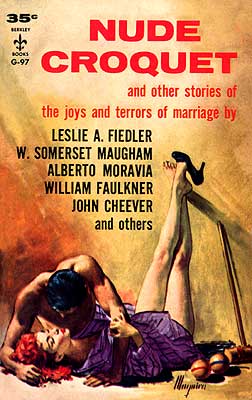
It occurred to me yesterday after I sent you my thoughts about Egs that maybe I was viewing him through "Maugham colored glasses," so to speak. I've read most of Maugham's works and two biographies of him (the best by far is The Secret Lives of Somerset Maugham by Selina Hastings). He was gay, but for most of his life homosexuality was illegal in England, so he constantly had to hide who he was. He traveled all over the world, where in some places it was more tolerated, and retired to France. He had two long term relationships (Gerald Haxton and Alan Searle) and a number of other lovers, as well as a wife (Syrie) for cover, who bore him a daughter (Liza). The caption under the first picture of him is "a lonely child, guarded and withdrawn." People who knew him guessed that having to hide his sexuality went a long way towards making him a guarded and private person in general, who often had little tolerance for other people's foolishness. His stories are brilliant, his travel writing also fascinating, yet most people who knew him felt they didn't really know him. There is one *ahem* remarkable picture in the book of Maugham and some male friends sunbathing nude. So on their private estates they could let their hair down a little, but they also had to be careful who was around.

Anyway, I realized that I was applying many of these standards to Egs, and assuming he was gay. And they could all be true, or none of them true. But that dedication sticks with me. I'd be curious to see the dedications in his other books. I think the one in Kezil is one of the longest I've seen in any book. Do you have any idea who Gerald Crow and Ernest Duggan were? (And I agree with Egs that deciding who to dedicate your first book to would be a difficult choice, which makes his selection of Gerald and Ernest all the more significant.)

[Crow was an influential poet at Oxford during the time. Duggan did not attend Oxford, and there is not enough information about him to identify him from among the many Ernest Duggans of the era.]

I was thinking too about George, and your comments in your croquet article that there was really no trace of him after WWII, except for the croquet results. I imagine it would be hard for him, serving as an Army paymaster but not serving in the Army itself, handing out pay to men he knew might never come home. That could mess with your head. Do you know how George and Egs met? Was it in the Army?

[As we know, Egerton served almost exclusively with the Army Pay Corps in Winchester, Hampshire, where he became acquainted with George Mills, during his months in the military.]

After living through WWII, with Nazi rockets slamming right into your house, I can see how one would want to retire and just play croquet for the rest of your life. After something like that, maybe stories about boys' schools didn't seem so consequential anymore. I'm sure a lot of things that seemed important wouldn't matter much anymore after an experience like that. Perhaps some of the real boys he based the characters on died in the war.

So, back to the poems (in no particular order).

Envy: Well, I saw a whole bunch of "the love that dare not speak its name" in this poem. Making of evidence a lie, he dares taste only the seeds, coward comforts, nought is real before the eye, and in spite of all this make-believe, contented he would be. Of course, if the poem turns out to be something else entirely, I'm gonna feel like a goof. But the more I read them over the more I'm convinced he's talking about something he can't really talk about. Do you know what year he was married? I would be interested to see if it was before or after this book was published.

[Clarke married Teresa Kelly at Winchester, Hampshire, in 1926, and they had three children together.]

Reverie: This one made me sad, because I can relate to his feeling of going back to the places of your childhood and realizing that those days are gone forever. I, too, "understand the present lack of all the half-remembered moods." The places where you were a child may not have changed, but you, the person, surely have. "Is irretrievable the time/When afternoons meant nurse and walk?" Sadly, when you're a grown-up, they do seem to be.

In Hospital: This one brought to mind some of Wilfred Owens' poems. This one is a good portrayal of someone in pain in the hospital, not really aware of their surroundings, but everything makes them uncomfortable and they just want to sleep…

Was Egs in WWI, and was he wounded?

[Exclusive of his first few days under the Colours, Egerton served only in Winchester, Hampshire, in England. He easily could have come in contact with casualties receiving treatment for combat wounds, though.

By the way, is it a mere coincidence that his service and his marriage both occurred in Winchester? Might Teresa even have been one of his nurses?]


Sunday, July 03, 2011 7:31 AM

I've been rethinking my sweeping assertion that Egs and Gerald were gay. I was reminded yesterday of a book by Sharon Marcus called Between Women: Friendship, Desire and Marriage in Victorian England. I've never read it, but I've heard it referenced elsewhere.

In this persuasively argued, provocative book, Marcus makes the case that women in late 19th-century England engaged in intimate friendships—which "the Victorians... believed cultivated the feminine virtues of sympathy and altruism"—that often had a sexual component of visual objectification and even sexual intimacy.

The history of gender and sexuality becomes much more interesting, difficult, and subtle after [reading] Between Women. Reading the love and affection of nineteenth-century women now requires a new level of care and historical self-consciousness that may be painful to possess, as it will remind us of our own losses--of the affection, eroticism, attachment, encouragement, and tremendous fun between the ordinary women--real and fictional--Marcus has so valiantly re-imagined, recovered, and recorded.

I think both men and women can form deep attachments to members of the same gender without it having be a gay or lesbian romantic relationship. I think that's what I was missing when I was looking over Eg's and Gerald's poems. Today people don't generally express such deep emotions so openly. Also taking into account that these men served in WWI, a horrific experience, which would probably bind them closer to their comrades then ordinary friendships. So I withdraw my assertion that I'm certain one or any of them are gay. I just don't know, and there's really no way of knowing, now.

I'm planning to read through Kezil again so I'm sure I'll have more to say about some other of the poems.


Sunday, July 03, 2011 7:40 PM

I've read this poem over several times in a row now, and I'm still not sure what to make of it. On the surface, it's about two people sitting up all night with a friend's body. From reading I know that used to be a custom in many places, that relatives would sit up all night with the dead the first night after they died.

And yet little phrases come in and kind of skew the meaning, and make me think there's something else behind it:

Customary vigil kept
Yet gave no thought to the dead

Knowing Convention had bought
Our silence, we were afraid

But never a thought we took,
For the pale and shuttered eyes

Each thinking the other's thought,
With never a thought for him,

We knew how Custom had bought
Our love for a dead man's whim

So these two people are sitting up with their dead friend, but why aren't they thinking about him? What thought are they sharing? Seeing phrases like "convention has bought our silence" makes me drift back to the idea that Egs was gay, but I'm trying to steer myself away from that, to be open to other interpretations. Whatever is going on between him and the other mourner, it's eating at them both, and they can't think of anything else, and they don't want anyone else to know about it. Something that happened in battle, in WWI? Or they're sitting up with the dead person out of custom, but that don't really want to, it's a "dead man's whim"? I just can't get a handle on that this poem is trying to say, or rather, trying not to say.


Saturday, July 23, 2011 1:33 PM

You know, I'm really starting to second guess myself on the whole "Egs is gay" thing. I was so sure at first, but the more I learn about him from all the research you did, I'm kind of changing my mind. I think he and George were very close friends, sure, but I'm no longer convinced it was anything more than that. I think friendships between people, women or men, were different and sometimes more intense "back in the day," and I was trying to apply that using today's standards. I mean, maybe I was right, but we'll never know for sure.


Saturday, July 23, 2011 7:29 PM

Reading [this] all over, I don't think I really have a summing up to write... Just that Egs was a good poet, and maybe we're not meant to know for sure, much more about him than that.


This missive arouses a notion that has crossed my once in a while during my time researching George Mills: Could George have been gay?

Egerton's dedication, if nothing else, certainly plants the seeds for wondering something like that. He and George had been friends in the Army Pay Corps and likely also at Oxford, although they studied at different colleges: Mills at Christ Church and Clarke at Keble.

They both were extremely sensitive individuals who probably never fit into the regimentation of the military, and perhaps not even into the institutional discipline required for success at Oxon. It seems they may have relied upon one another to make their way through those experiences, although it seems as if Mills may have been more reliant on the Clarke, who ostensibly had been an orphan and already must have had ample experience taking care of himself under the auspices of an institution, St Edmund's School [left].

George's 1925 marriage to Vera Beauclerk, indeed, could have been a cover for his romantic preference. That would explain in part his childlessness, as well as providing a possible reason that Vera was residing away, in such an unusual place—Minehead—at the time of her death early in 1942.

Still, not a bit of that means, or even really suggests in the least, that he was homosexual.

It seems far more likely that George's dirty little secret as a young man—something his family knew but most others would not—was that he, like his father, was a closet Roman Catholic in a land brimming with Anglicans, of both the Low and High Churches.

It's quite possible that his faith in Catholicism might have rubbed family members the wrong way. There must be, after all, a reason why his relations today are often unaware of the existence of Georges entire branch of the family. It is possible that his mother, Elizabeth Edith Ramsay Mills, may have found herself distanced from her own family when, after they believed she was marrying an Anglican vicar, it turned out she had married a secretly devout Roman Catholic. As much as I am told it really didn't—and doesn't—matter, something certainly 'mattered' that managed to erase Revd Barton Mills and his progeny from all of his in-laws' family trees.

I find it difficult to believe that, by chance alone, they all simply happened to be entirely forgotten by everyone.


There have been other suggestions along the way here that things with Mills may not have always been what they seem. The sentence, "I'm afraid that the Catholic school system, as you probably know, was infested for many years by paedophiles and ghastly sadists," once shared by a friend of the site, springs immediately to mind. It regarded why, in the end, George [pictured, right, at Ladycross School in 1956] may have been disappointed by the union of his faith and his career in education, and eventually left teaching.

This is not to take a swipe at only Catholic prep schools regarding a problem common to many institutions. We recently received this message, attached to an entry regarding Parkfield School in Haywards Heath: "In hindsight it was a hideous, sadistic and monsterous Dickensian nightmare of a school."

There may, in fact, be some aspects of the story of George Mills that one might consider a bit on the dark side. Still, there's nothing in the evidence to verify or even indicate that George participated in any of it.


George Mills may simply have been a relatively bland fellow: A bit sickly, tall, slight of build, overly sensitive, with a speech impediment, a fine sense of humor, a keen eye for observation, and a proclivity for failing to finish what he started, especially regarding any of his careers. There may be a part of us that would like some sensational quality upon which to hang our metaphorical hat regarding George Mills. We are, after all, often privy these days to many of the controversial secrets of those in the public eye, and we have almost come to the point as a society where it's not a matter of 'if they exist,' but 'when they will be revealed.'

But that does not seem to be the case right now with our George Mills.

Returning in conclusion to Jennifer's implication of some Higher Power overseeing all of this, or with at least the sure and steady hand of fate writing out this script, she sums up everything succinctly above: "Maybe we're not meant to know for sure much more about him than that."


Thursday, March 17, 2011

1919: STATEMENT AS TO DISABILITY.


When last we checked in on Pte. George Ramsay Acland Mills, S/440048, of the Army Service Corps, he had just completed work to gain his certificate in shorthand and typing on 18 December 1918, just five weeks after the signatures had dried on the Armistice that ceased hostilities on the Western Front.

George must have had it in his mind to return home to his new address in London. While in the service, his parents and sisters had moved from 38 Onslow Gardens in Kensington to the home of George's maternal grandfather, Sir George Dalhousie Ramsay, at 7 Manson Place, Queen's Gate, S.W. The aging Ramsay was 90 years old at the time, and had served as Director of Clothing at the Army Clothing DepĂ´t, 1863-1893, in whose service he was named to the Civil Division, Third Class, of the Most Honorable Order of the Bath in 1882.

Sir George's wife, Eleanor Juliat Chartris Crawford Ramsay, Pte. George's grandmother, had passed away on 15 March 1918, a death which likely precipitated Sir George's daughter, Edith, and son-in-law, Rev. Barton R. V. Mills, and/or their children moving in with Ramsay.

Am I the only one who finds it remarkable that a completely unsuccessful and unsuitable army clerk like George Mills was given another chance to redeem himself, this time in the Army Service Corps—a corps affiliated with the Army Clothing DepĂ´t, in which Sir George [right] had made a name for himself, in part for having begun the use of a twilled cloth called khaki under his stewardship?

Ramsay was ninety at the time, yes, but might he still have had some strings to pull down in the war department on behalf of his struggling grandson and namesake? That is, if, indeed, George had let anyone in the the family know of his difficulties!

Either way, we have no reason to believe that George did not begin work as a clerk somewhere in the Army Service Corps almost immediately after the completion of his training. With the Army Pay Corps already having commandeered the lion's share of the able clerks at the time, and with the APC probably then needing even more as soldiers began to demobilise, it's hard to imagine Mills didn't end up sitting in front of a typewriter somewhere, at a desk, typing something for someone.

Demobilization must have involved the Army Service Corps, keeping track of soldiers' issued items. Here's an excerpt from an on-line description of some of those duties written by Terry Reeves at the Great War Forum:

"Men were allowed to keep their uniform, with the exception of those discharged from hospital. Those arriving from overseas with steel helmets were allowed to retain them. Great coats could be kept, but £1-00p was deducted from the man's pay. He was issued with a great coat voucher however. If, within a specified period of time he handed it in at his local railway station, he would be reimbursed on the production of the voucher.

A Dispersal Certificate recorded personal and military information and also the state of his equipment. If he lost any of it after this point, the value would be deducted from his outstanding pay."

Mills may not have been involved in that sort of accounting and paperwork exactly, but when experienced clerks began doing those new tasks, it seems likely that their more routine chores would have fallen to him—the new fellow.

Mills hardly had a chance to warm his chair in the ASC, however, when he was called for demobilization and discharge as well. Reeves continues:

"Men were sent to special dispersal units for demobilization. Whilst there, they were issued with all the necessary documentation after which they would be sent on leave. For most men, demobilization automatically took place at the end of the leave period."

Not quite so for one George Ramsay Acland Mills, however. Here's a typed document from his file [left] that is dated 30 January 1919, some six weeks after completion of his own coursework in shorthand and typing, indicating he had finally had been selected for demobilization, but it didn't go through immediately. It reads: "O.C. Clerks Boy.   Please note that S/440048 Pte George Mills (group 43) who has been held up can now be spared for demobilization." It is signed by the Lieutenant Colonel in charge of the Reserve Supply Personnel Depot of the Army Service Corps. The location given is "12, Eversfield Place, Hastings."

No reason is given for Mills having been held back prior to 30 January, but this document does seem to release him at that point.

But, wait! Not so fast….

Yet another document, this one a handwritten memorandum [right] penned by Capt. C. Washington of the Royal Army Medical Corps, medical officer in charge, R.A.S.C., at 26 Eversfield Place. It was sent to the "OC. Clerks boy" at "Warrior Square," and it reads: "3 February 1919    S/440048    P/E    G.R. Mills.    Herewith documents of above named man returned as he is undergoing treatment. Please cause him to report then(?) with documents on completion of treatment."

It was 3 February and Mills was held up yet again! This time it definitely appears to have been for medical reasons.

George finally did end up being demobilized, however, a process that seems to have started sometime in advance of 30 January 1919. On George's Army Form Z. 22., STATEMENT AS TO DISABILITY., he claimed he had not been disabled during his time spent serving under the Colours for the duration of the war. It was signed by the commanding officer of the RSPD, ASC, and clearly dated 31 January 1919.

Mills had been sent to make that "statement as to disability" the day after receiving the typewritten card above. Something must not have clicked, however, so scratch that: He was delayed again.

We can see on Army Form Z. 22. [pictured below, left] that Mills was finally given his demobilization physical in Hastings on 17 February 1919 by our old friend, Dr. H. R. Mansell, C.M.P. We can see that on the typewritten card mentioned above someone has scrawled "Action   18 — 2 — 19." George was finally on the move!

What had delayed Mills for well over two weeks, perhaps more than three, during which time he must have been simply itching to return to London and his family?

There is some ghost writing on side one of Army Form Z. 22. [click the form, left, to enlarge it] that can, in fact, be clearly be read on this sheet, not in the cells of the tables that have been left blank unilaterally, but in the marginal areas. To the left, we see the words "under treatment" written in script next to George's particulars (name, rank, serial number, etc.). It's hard to tell if it is written in pencil, or if it is the result of some misplaced carbon paper.

Above those same particulars, we again see written in a ghostly but clearly readable script—either in pencil or carbon—the words "Dobies Itch."

Dobie's Itch didn't jump right out at me immediately, first because I had no idea what it was. Based on a quick googling, I discovered that's because we in the United States today usually refer to it as "Jock Itch" (or the more vulgar "Crotch Rot"), while UK websites now call the same thing Dobie's Itch. Secondly, it never occurred to me that a soldier could be held up for nigh upon three weeks for that sort of seemingly insignificant treatment. Looking over literature from the era, however, it seems "Dobies Itch" may have been used then as another term for "ringworm."

Frighteningly, regarding Ringworm, Wikipedia states: "Dermatophytosis has been prevalent since before 1906, at which time ringworm was treated with compounds of mercury or sometimes sulfur or iodine. Hairy areas of skin were considered too difficult to treat, so the scalp was treated with x-rays and followed up with antiparasitic medication."

Indeed, on p. 735 of the 12 December 1918 edition of the Boston Medical and Surgical Journal (vol. 179) an article regarding x-rays, "Ten Years' Experience with Ringworm in Public Elementary Schools," states: "[T]his offers a convenient mode of epilation, which is necessary to get at the mycelium and spores... but the drawback is the time required, about two months; and, besides, there is the temporary baldness, and, theoretically, the fear of damage to the brain cells. It is also a somewhat costly method."

In the 1918 text Medicine and Surgery, H. H. Hazen, M.D., wrote an chapter entitled "Dermatology and the War." On page 145, he states: "Acne is objectionable chiefly because it is so unsightly I have already published my observations of x-ray treatment of the disease, and further observations have served to show that it is the quickest and surest means of cure, and permanent cure.

Ringworm of the groins has been common in men who have served in Gallipoli and Egypt. The British dermatologists report many such cases among the officers, and it is only fair to assume that the privates have suffered just as frequently."

It's hard to tell if that last sentence was intended to be a pun or not, but we must realize that, while "Dobie's Itch" may have been amusingly vulgar for the men to laugh about (then and today), the treatments 100 years ago were no laughing matter from the perspective of medicine nowadays. (I'm reluctant to use the term "modern medicine," for these horrible treatments were exactly that in 1918.) In fact, we recently read of the above Dr. Mansell's malpractice difficulties regarding his well-meaning use of x-rays simply to diagnose a broken leg!

Here's one last snippet, from a textbook called Diseases of the Skin by Richard Lightburn Sutton, published in 1919—presumably with treatments up to the 1918 standards that would have been applied to George Mills.

The section on treatment of ringworm begins on page 975, and the photographic illustrations are an absolute nightmare—b&w medical illustrations meet Heironymus Bosch [examples are pictured, left, and above, right]. Laboring under the assumption that the modern-day connotation of "Dobie's Itch" (sometimes Dhobi's Itch) as having something to do with the "crotch" might mean that George's treatment, circa 1918, focused in that specific area of his body, this may best describe his treatment. Let’s hope so.

The text reads: "In ringworm of the crotch and axillae [Sutton's emphasis], it is often necessary to apply soothing remedies, as Anderson's antipruritic powder, calamine lotion, and similar preparations first, and antiseptics later. Of the latter, an aqueous solution of sodium hyposulphate (10 to 15 per cent) is one of the best, although carbolized solutions of resorcin (2 to 10 per cent) and mild parasiticidal ointments (ammoniated mercury, suplhur, and salicylic acid) sometimes act well… Even after the disease is apparently eradicated, it is usually advisable to emply a non-irritating parasticide, as an ointment containing ammoniated mercury (2 to 5 per cent) or an aqueous solution of sodium hyposulphide, for a period of several weeks to guard against relapses."

If that wasn't the treatment he received—and that would have been the better choice looking at it from 2011, although why wouldn't they have thought back then that a combination of ammonia and mercury could do a body good?—then my heart goes out to Mills. If he underwent x-ray therapy, something we know was available to Dr. Mansell, it must have been horrific and might easily explain his inability to have children later in life.

Still, repeatedly swabbing ammoniated mercury on any part of his body, particularly this private's privates, couldn't have been particularly healthy or pleasant. While I'm sure his bunk mates snickered aloud at his itchy irritation, the entire affliction and course of treatment must have tormented Mills.

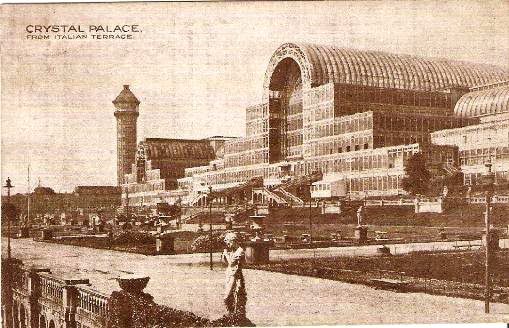
On 19 February 1919, Mills finally was demobilised by the Dispersal Unit at the Crystal Palace on Sydenham Hill (by automobile today about 17 miles south of his grandfather's home in Queen's Gate), perhaps with a parasiticidal ointment secreted on his person. He had been given his Army Form Z. 11. to take with him on his "leave," at the end of which he would become a civilian again.

George was home at last.

Is this story over? Not quite.

There would have to be one last strange episode in this saga of George Mills, Rifleman, Lance Corporal, Fatigue Man, Private, Student, and Clerk, and it would be almost a punch line to a running joke. But we'll look at that paperwork next time…