Showing posts with label service corps. Show all posts

Wednesday, June 15, 2011

Who Was Mr. H. E. Howell?


Here in the States, we just love numbers that end in fives, but we love zeroes even more. And a number just isn't anything unless it ends in double or triple zeroes. A baseball player with 99 career home runs is just a guy, as they say. A fellow with 100 home runs in his career—now he's something special!

There was a news bit the other evening that the St. Louis baseball manager, Tony LaRussa, was the first since the legendary Cornelius McGillicuddy in 1950 to reach 5,000 managerial wins for his career. Of course, LaRussa was also the first one since then to reach 4,998 and 4,999, but they just weren't quite the same accomplishments, now, were they?

I say this because the temperature here in north central Florida is predicted to reach 99°F today, and despite the discomfort it will cause, there are those who will be disappointed if it doesn't touch the century mark!

This all has nothing to do, however, with the topic of today's back burner item, although the word "burner" is clearly apropos.

It now has been over a year since I received a copy of the first book written by George Mills, 1933's Meredith and Co. At the time, I posted the contents of the book's preface. In part, it reads [emphasis mine]:

I wish to acknowledge, with much gratitude, the help and encouragement received from many friends; particularly from Mr. A. Bishop, the Head Master of Magdalen College School, Brackley, and from my old friend, Mr. H. E. Howell, who have read the book in manuscript form. I am also very much indebted to that splendid specimen of boyhood, the British Schoolboy, who has given me such wonderful material.

First of all, wouldn't it be something were that original manuscript copy to turn up?

Secondly, while I've closed the gap on the identity of Mr. A Bishop (and hope to write about that soon), Mr. H. E. Howell remains a mystery.

The first matter of business in chasing down any such name is to try to tease a Christian name out of those initials. In this case, I'm afraid there is not even a very solid guess that I'd go to war with.

Mills, I've felt, must have been writing Meredith in London, although that may not be accurate. Labouring, however, under that assumption, I scoped the London telephone directories of the era for a Howell with the first initial "H."

One name did jump out immediately: Hinds Howell, a physician who lived and/or practiced at 145 Harley Street, W.1. He certainly would have been well-schooled enough not to simply offer Mills a pat on the back about his book and to diagnose certain inadequacies.

Also, that name "Hinds Howell" traces back into the late 19th century when a "Canon Hinds Howell, MA," resided at the Drayton Rectory—where Watkin Williams, friend and colleague of George's father, the Revd Barton R. V. Mills—once was located.

However, the physician, Hinds Howell, turns out to be Conrad Meredith Hinds Howell (1877 – 1960), and clearly not an H. E. Howell.

Now, I'm sure, the term "old friend" doesn't necessarily imply Howell's chronological age, but the fact that he and Mills had enjoyed a friendship that lasted many years. Where might they have met? Parkfield School? Harrow? In the neighbourhood at Kensington? Under the Colours? At Oxford?

There was also a Hamilton Howell, who resided at 14 Norfolk Terrace in Brighton. Mills might have met him while teaching at Windlesham House and living in Portslade in 1925–26. Would that time frame characterize an "old friend" by 1933?

In 1937, there are also a "Harry E." and a "Herbert E." among the Howells of London, along with our discredited "Hinds."

But who are they? Our answer here clearly doesn't lie in the telephone book.

One might assume Howell was a learned man, a man whom Mills would have trusted for advice of a literary nature. I'm sure Georges wife and perhaps his sisters also read his manuscript, followed by a hearty, "That's simply wonderful, George!" The men mentioned in the preface above, though, are likely men of letters who would have provided more of a practical critique.

Let's look elsewhere.

We find an H. E. Howell mentioned in the 1913 edition of The Devonian Year Book of the London Devonian Association. On page 25, there is a description of a re-enactment of the game of bowls being played when the "Armada" was sighted, and a speech was given in the Great Empress hall by Mr. Winston Churchill, First Lord of the Admiralty (who, in his remarks, announced he "sprang from a good old Devonian family" ), to the London Devonian Club, the Exeter Club, the Three Towns Association, the Barumites of London, the Ottregians, the Tivertonians, representatives of the Devonian Clubs of Southend, Southampton, Swansea, Newport, Portsmouth, etc., as well as "the men and women of Devon."

Among the specifically named members of the company, on page 26, we find a "Mr. H. E. Howell."

Besides honeymooning in and retiring to Devon later in life, George Ramsay Acland Mills had family in Devonshire that once owned vast amounts of the land: The Aclands. In 1913, those holdings had not been converted to the National Trust or sold, and Mills most likely was able still to avail himself of Acland hospitality during holidays away from both Cornwall as a youngster, and London as an older boy and young man.

Devon is as likely a place for the "old" Howell – Mills connection as any. Perhaps they met there as children.

[An aside perhaps of interest only to Keith's mum: It was during a London Devonian Association dinner in honor of his neighbour, Clive Morison-Bell, held on 17 March 1914, that Ernest Shackleford sketched on the back of his menu card his planned route for the Imperial Trans-Arctic Expedition, including calculations that could be used to "fix" the South Pole. The expedition, however, ended up with his ship, the Endurance, crushed in pack ice in the Weddell Sea and the crew temporarily marooned on Elephant Island. Incidentally, the menu that evening was "turbot dieppoise, tomato with tapioca, Kirsch sorbet and glace plombiere."]

Another reference teased out of the blizzard of information provided by the internet is this nugget [right], gleaned from The Liberal Magazine, volume 19, in 1911. It contains an item attributed to a "Mr. H. E. Howell" of "Brierley" on "April 19th, 1911" that reads: "Though Lord Beaconsfield had not the privilege of English blood himself, he was the greatest of English statesmen since the days of Pitt. In these days there was a curious renaissance of the Celt in politics. . . . There was a boiling-up of Celtic fervour, something like that last great effort in the early colonising days before King Alfred, which broke itself in useless fury against Saxon steadfastness on the despairing field of Brunnan- burgh."

That "snippet" is all I can read on-line, but these words indicate the sort of learned man that George Mills might have relied on for advice, as well as friendship. It also isn't clear if the Brierley cited is in Yorkshire, Gloucestershire, or Herefordshire. Is there one in each?

However, the dates here are instructive. Mills was born in 1896, and would have been 15 years old when the item above was written, and 17 when Churchill made his speech.

If this is our "Mr. H. E. Howell," he is then quite probably at least a few years older than George Mills. And a location in Brierley—situated some 182 miles north of London—makes sharing a manuscript difficult in the days of no faxes, PDFs, or e-mail attachments. Perhaps the geography had changed a great deal by 1933.

A 1911 U.K. census summary [above, left] shows no H. E. Howell in London or in Brierley—but one living in a cottage on Bath Road in the civil parish of Wells in Somerset with a female and another male. There is no other "H. E. Howell" in the census.

Two men—Harry Howell and Herbert Howell—show up in "Brierley" (or at least in "Hemsworth/Yorkshire West Riding" in the 1911 census.

Harry was born in 1883, some 13 years before Mills, in Plymouth, England. That would make him a Devonian!

There is also evidence of soldiers named H. E. Howell having served. One was killed in action.

Records from World War I show [right] there was, however, a "Harry E. Howell" in the Army Service Corps—a A.S.C. private, just like George Mills—during the First World War. There is no other indication that this Howell is our man, however.

Another—very clearly listed as "H. E. Howell," with "Herbert E." added later—had been a gunner in the Royal Field Artillery corps from February 1915 until July 1917. He earned a couple of medals in France, but there are no remarks about wounds, death, or a forwarding address; simply: "Dis. 20. 7. 17." "Dis." would presumably mean "discharged"?

Having been assigned to France, it is unlikely he's our man, Mills having served, but stayed in England.

Let's get back to the Herbert Howell from the 1911 census. He was born in 1891, but I can't find a place of birth.

There's only one other Herbert E. Howell among the WWI records [left], and he served as a private, at first in the 2nd London Regiment, but then transferred to—you guessed it!—the Army Service Corps.

Again, though, short of his initials and assignment, there's no real evidence that this is our man. After all, I suspect that the whole of the A.S.C. was comprised of more than, say, a couple of dozen chaps who all knew each other very well.


So, where are we in all of this?

According to the internet, the temperature here has reached a steamy 99, but the heat radiating from our sun-drenched back patio is causing the thermometer out there to read a even more sultry 106° F.

I know the heat isn't really on to discover the identity of this Mr. H. E. Howell, a man so obviously important to George Mills, personally and as an author, professionally. But I do want to.

Right now, there's one more link to Mr. H. E. Howell that we haven't touched on, and it involves All Saints Margaret Street Church, Father Basil Jellicoe, Magdalen College, and the identity of the Mr. A. Bishop mentioned in the preface.

We'll take a look at that last link next time. Stay tuned…


Thursday, March 17, 2011

1919: STATEMENT AS TO DISABILITY.


When last we checked in on Pte. George Ramsay Acland Mills, S/440048, of the Army Service Corps, he had just completed work to gain his certificate in shorthand and typing on 18 December 1918, just five weeks after the signatures had dried on the Armistice that ceased hostilities on the Western Front.

George must have had it in his mind to return home to his new address in London. While in the service, his parents and sisters had moved from 38 Onslow Gardens in Kensington to the home of George's maternal grandfather, Sir George Dalhousie Ramsay, at 7 Manson Place, Queen's Gate, S.W. The aging Ramsay was 90 years old at the time, and had served as Director of Clothing at the Army Clothing Depôt, 1863-1893, in whose service he was named to the Civil Division, Third Class, of the Most Honorable Order of the Bath in 1882.

Sir George's wife, Eleanor Juliat Chartris Crawford Ramsay, Pte. George's grandmother, had passed away on 15 March 1918, a death which likely precipitated Sir George's daughter, Edith, and son-in-law, Rev. Barton R. V. Mills, and/or their children moving in with Ramsay.

Am I the only one who finds it remarkable that a completely unsuccessful and unsuitable army clerk like George Mills was given another chance to redeem himself, this time in the Army Service Corps—a corps affiliated with the Army Clothing Depôt, in which Sir George [right] had made a name for himself, in part for having begun the use of a twilled cloth called khaki under his stewardship?

Ramsay was ninety at the time, yes, but might he still have had some strings to pull down in the war department on behalf of his struggling grandson and namesake? That is, if, indeed, George had let anyone in the the family know of his difficulties!

Either way, we have no reason to believe that George did not begin work as a clerk somewhere in the Army Service Corps almost immediately after the completion of his training. With the Army Pay Corps already having commandeered the lion's share of the able clerks at the time, and with the APC probably then needing even more as soldiers began to demobilise, it's hard to imagine Mills didn't end up sitting in front of a typewriter somewhere, at a desk, typing something for someone.

Demobilization must have involved the Army Service Corps, keeping track of soldiers' issued items. Here's an excerpt from an on-line description of some of those duties written by Terry Reeves at the Great War Forum:

"Men were allowed to keep their uniform, with the exception of those discharged from hospital. Those arriving from overseas with steel helmets were allowed to retain them. Great coats could be kept, but £1-00p was deducted from the man's pay. He was issued with a great coat voucher however. If, within a specified period of time he handed it in at his local railway station, he would be reimbursed on the production of the voucher.

A Dispersal Certificate recorded personal and military information and also the state of his equipment. If he lost any of it after this point, the value would be deducted from his outstanding pay."

Mills may not have been involved in that sort of accounting and paperwork exactly, but when experienced clerks began doing those new tasks, it seems likely that their more routine chores would have fallen to him—the new fellow.

Mills hardly had a chance to warm his chair in the ASC, however, when he was called for demobilization and discharge as well. Reeves continues:

"Men were sent to special dispersal units for demobilization. Whilst there, they were issued with all the necessary documentation after which they would be sent on leave. For most men, demobilization automatically took place at the end of the leave period."

Not quite so for one George Ramsay Acland Mills, however. Here's a typed document from his file [left] that is dated 30 January 1919, some six weeks after completion of his own coursework in shorthand and typing, indicating he had finally had been selected for demobilization, but it didn't go through immediately. It reads: "O.C. Clerks Boy.   Please note that S/440048 Pte George Mills (group 43) who has been held up can now be spared for demobilization." It is signed by the Lieutenant Colonel in charge of the Reserve Supply Personnel Depot of the Army Service Corps. The location given is "12, Eversfield Place, Hastings."

No reason is given for Mills having been held back prior to 30 January, but this document does seem to release him at that point.

But, wait! Not so fast….

Yet another document, this one a handwritten memorandum [right] penned by Capt. C. Washington of the Royal Army Medical Corps, medical officer in charge, R.A.S.C., at 26 Eversfield Place. It was sent to the "OC. Clerks boy" at "Warrior Square," and it reads: "3 February 1919    S/440048    P/E    G.R. Mills.    Herewith documents of above named man returned as he is undergoing treatment. Please cause him to report then(?) with documents on completion of treatment."

It was 3 February and Mills was held up yet again! This time it definitely appears to have been for medical reasons.

George finally did end up being demobilized, however, a process that seems to have started sometime in advance of 30 January 1919. On George's Army Form Z. 22., STATEMENT AS TO DISABILITY., he claimed he had not been disabled during his time spent serving under the Colours for the duration of the war. It was signed by the commanding officer of the RSPD, ASC, and clearly dated 31 January 1919.

Mills had been sent to make that "statement as to disability" the day after receiving the typewritten card above. Something must not have clicked, however, so scratch that: He was delayed again.

We can see on Army Form Z. 22. [pictured below, left] that Mills was finally given his demobilization physical in Hastings on 17 February 1919 by our old friend, Dr. H. R. Mansell, C.M.P. We can see that on the typewritten card mentioned above someone has scrawled "Action   18 — 2 — 19." George was finally on the move!

What had delayed Mills for well over two weeks, perhaps more than three, during which time he must have been simply itching to return to London and his family?

There is some ghost writing on side one of Army Form Z. 22. [click the form, left, to enlarge it] that can, in fact, be clearly be read on this sheet, not in the cells of the tables that have been left blank unilaterally, but in the marginal areas. To the left, we see the words "under treatment" written in script next to George's particulars (name, rank, serial number, etc.). It's hard to tell if it is written in pencil, or if it is the result of some misplaced carbon paper.

Above those same particulars, we again see written in a ghostly but clearly readable script—either in pencil or carbon—the words "Dobies Itch."

Dobie's Itch didn't jump right out at me immediately, first because I had no idea what it was. Based on a quick googling, I discovered that's because we in the United States today usually refer to it as "Jock Itch" (or the more vulgar "Crotch Rot"), while UK websites now call the same thing Dobie's Itch. Secondly, it never occurred to me that a soldier could be held up for nigh upon three weeks for that sort of seemingly insignificant treatment. Looking over literature from the era, however, it seems "Dobies Itch" may have been used then as another term for "ringworm."

Frighteningly, regarding Ringworm, Wikipedia states: "Dermatophytosis has been prevalent since before 1906, at which time ringworm was treated with compounds of mercury or sometimes sulfur or iodine. Hairy areas of skin were considered too difficult to treat, so the scalp was treated with x-rays and followed up with antiparasitic medication."

Indeed, on p. 735 of the 12 December 1918 edition of the Boston Medical and Surgical Journal (vol. 179) an article regarding x-rays, "Ten Years' Experience with Ringworm in Public Elementary Schools," states: "[T]his offers a convenient mode of epilation, which is necessary to get at the mycelium and spores... but the drawback is the time required, about two months; and, besides, there is the temporary baldness, and, theoretically, the fear of damage to the brain cells. It is also a somewhat costly method."

In the 1918 text Medicine and Surgery, H. H. Hazen, M.D., wrote an chapter entitled "Dermatology and the War." On page 145, he states: "Acne is objectionable chiefly because it is so unsightly I have already published my observations of x-ray treatment of the disease, and further observations have served to show that it is the quickest and surest means of cure, and permanent cure.

Ringworm of the groins has been common in men who have served in Gallipoli and Egypt. The British dermatologists report many such cases among the officers, and it is only fair to assume that the privates have suffered just as frequently."

It's hard to tell if that last sentence was intended to be a pun or not, but we must realize that, while "Dobie's Itch" may have been amusingly vulgar for the men to laugh about (then and today), the treatments 100 years ago were no laughing matter from the perspective of medicine nowadays. (I'm reluctant to use the term "modern medicine," for these horrible treatments were exactly that in 1918.) In fact, we recently read of the above Dr. Mansell's malpractice difficulties regarding his well-meaning use of x-rays simply to diagnose a broken leg!

Here's one last snippet, from a textbook called Diseases of the Skin by Richard Lightburn Sutton, published in 1919—presumably with treatments up to the 1918 standards that would have been applied to George Mills.

The section on treatment of ringworm begins on page 975, and the photographic illustrations are an absolute nightmare—b&w medical illustrations meet Heironymus Bosch [examples are pictured, left, and above, right]. Laboring under the assumption that the modern-day connotation of "Dobie's Itch" (sometimes Dhobi's Itch) as having something to do with the "crotch" might mean that George's treatment, circa 1918, focused in that specific area of his body, this may best describe his treatment. Let’s hope so.

The text reads: "In ringworm of the crotch and axillae [Sutton's emphasis], it is often necessary to apply soothing remedies, as Anderson's antipruritic powder, calamine lotion, and similar preparations first, and antiseptics later. Of the latter, an aqueous solution of sodium hyposulphate (10 to 15 per cent) is one of the best, although carbolized solutions of resorcin (2 to 10 per cent) and mild parasiticidal ointments (ammoniated mercury, suplhur, and salicylic acid) sometimes act well… Even after the disease is apparently eradicated, it is usually advisable to emply a non-irritating parasticide, as an ointment containing ammoniated mercury (2 to 5 per cent) or an aqueous solution of sodium hyposulphide, for a period of several weeks to guard against relapses."

If that wasn't the treatment he received—and that would have been the better choice looking at it from 2011, although why wouldn't they have thought back then that a combination of ammonia and mercury could do a body good?—then my heart goes out to Mills. If he underwent x-ray therapy, something we know was available to Dr. Mansell, it must have been horrific and might easily explain his inability to have children later in life.

Still, repeatedly swabbing ammoniated mercury on any part of his body, particularly this private's privates, couldn't have been particularly healthy or pleasant. While I'm sure his bunk mates snickered aloud at his itchy irritation, the entire affliction and course of treatment must have tormented Mills.

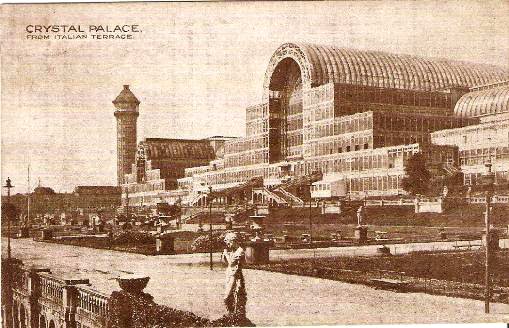
On 19 February 1919, Mills finally was demobilised by the Dispersal Unit at the Crystal Palace on Sydenham Hill (by automobile today about 17 miles south of his grandfather's home in Queen's Gate), perhaps with a parasiticidal ointment secreted on his person. He had been given his Army Form Z. 11. to take with him on his "leave," at the end of which he would become a civilian again.

George was home at last.

Is this story over? Not quite.

There would have to be one last strange episode in this saga of George Mills, Rifleman, Lance Corporal, Fatigue Man, Private, Student, and Clerk, and it would be almost a punch line to a running joke. But we'll look at that paperwork next time…


Wednesday, March 16, 2011

1918: TRADE PROFICIENCY and a CERTIFICATE.


At this point, our trip through the WWI file of Pte. George Mills is nearly at an end. Reviewing some key dates, we know Mills joined the British Army on 15 January 1916 and was added to the Army Reserve on the 16th.

His service actually reckoned from 11 July 1916 when he was posted to the Rifle Brigade at the Rifle Depot in Winchester [pictured, left; a place Mills must have liked, aesthetically]. On 30 January 1917, Mills was appointed an unpaid Lance Corporal. Things, one assumes, must have been going well..

On 11 April 1917, exactly 8 months to the day after his posting, Mills was transferred to the Army Pay Corps at Buckland near Dover. The transfer is marked "on probation." Five days later, George, once again became a Rifleman (Private) and was officially transferred to the APC, dated 16 April 1917. What it meant to be "on probation" is not recorded.

Mills lasted just two days shy of 17 full months in the APC when he was "permanently and compulsorily transferred" out of the Pay Corps, which at the time was starved for able bodies to work, on 9 September 1918. We also know that was seen as someone who would not "ever make corporal," as was written in a review on his 16 April 1918 APC anniversary, and was then noted in writing as being "not much use" on 15 June 1918.

The Army Form W 5010 he carried with him to the O.C. Eastern Command Transfer Centre at Prees Heath [parade grounds pictured, right] designated him as a "clerk found unsuitable ," but also recommended that suitable duty for George would be "clerical work." Apparently just not clerical work at the incredibly busy Army Pay Corps!

The date of dispatch to his new assignment, "A.S.C. Supply List, Prees Heath, Salop," was 11 September 1918: The Army Service Corps.

Let's go to the paperwork to find out what happened next to a man who after a year and a half was found so utterly unsuitable as a clerk that he was permanently transferred out—obviously using a very special logic—to find work elsewhere as a… uh… clerk, seemingly the only military task suitable for him.

What does one do if one cannot find work, or doesn't like one's current employment? Education! Training! We'll find that's exactly what the army must have had planned for young George Mills, Private, failed clerk, and fatigue man.

There are two documents in his file that let us know exactly what Mills did immediately after posting to Shropshire on11 September 1918. They are obviously carbon copies of originals that probably went with him to his next assignment. [I have enhanced/darkened these images in PhotoShop, but there are still tricky parts for one to decipher.]

The first document is a stencil duplicate [I think we called them "mimeographs" when teachers gave them to us when I was a kid], probably on card stock given its relatively small dimensions and good condition. The stock would explain why some information was inked in advance—pressure through an upper layer of card stock wouldn't have worked very well with carbon paper. However, only the easy-to-read original, probably carried in a soldier's own hand to his new assignment, was likely to have mattered much in the grand scheme of army offices, circa 1918.

The first document is entitled "TRADE PROFICIENCY. CLERK." It announces that Mills had been trained at the military base [pictured, left] S.C.T.C. Fovant, at the village in the south of Wiltshire. Fovant is noteworthy because of the large-scale regimental badges that were carved by soldiers in a nearby chalk hillside, many of which have been restored today.

This item [pictured, below right; click to enlarge] reads "12892. I certify that Mills Pte. G.R. has been tested and proves himself a ………………….. clerk." The carbon handwriting in the blank is barely legible, but it appears that it may possibly be the word "first." I wouldn't wager much on that, however, and think it is far more likely to be "fair," beginning with what looks like a script "f." [It is unclear why that particular word, however, wouldn't have been capitalized as are the rest.] The "12892" is George's old APC serial number.

The next lines read: "Knowledge of Shorthand ………………..," and in the blank is written what appears to be "Theory only," and "Knowledge of Typewriting …………………," in which quite clearly is written "Fair."

We saw a bit of similar information last time, while looking at Army Form B 278 (List of Transfer Documents). Someone going through George's file had jotted the notation "G/ Theory/Fair" on that document. We see "Theory" and "Fair" in the preceding paragraph, those words having appeared in the second two blanks of the proficiency card. Is the capital "G" from yesterday a clue to decoding the word in the first blank today? Does it actually read "proves himself to be a Good clerk," with the partial carbon impression of a stylized looping of the cursive "G" merely resembling an "f"?

The date is also somewhat illegible, but it seems to read "Prees Heath, 13/…/18." Prees Heath is stenciled, as is the 18. It's interesting because Prees Heath is 180 – 200 miles from Fovant—not exactly just around the corner. George's excursions from Dover to Salop to Fovant and back certainly had him riding the rails in late 1918!

Mills had been taking typewriting and shorthand classes after arriving at the Transfer Centre. My wife, Janet, assures me that he would have needed shorthand fully if he was going to be a secretary. The fact that he was only accomplished in 'shorthand theory' meant that he could read and write it, while being unable to take actual high speed dictation. My hunch is that this training would have qualified him to transcribe shorthand notes in a typewritten form, as well as serving in all other ways as a clerk typist.

On the card the word "Accept" is written in ink and initialed. Mills has also been dealt a new serial number, also penned here as: "S/440,048."

Moving on to the second document, it is entitled simply: "CERTIFICATE." [pictured, left]. It reads: "Rank Pte. No. 440048 Name Mills, G.R. Of the Reserve Supply Personnel Depot has passed this Depot Course, and has proved himself a Very Fair Shorthand Typist. Date 18/12/18." It is signed by the Shorthand – Typewriting Instructor and the captain in charge of the School of Instruction.

Mills, we find, just before Christmas of 1918, finally had skills with which to compete with the male, and probably especially female clerks, that were populating army offices on the home front in England.


His success in gaining "Very Fair" competency at those typing and shorthand skills must have been somewhat bittersweet: On 11 November 1918, the armistice had been signed between the Allies and Germany at Compiègne, France, leading to the cessation of hostilities on the Western Front.

Although some fighting would continue on Germany's Eastern Front and parts of the Ottoman Empire—George's brother, Arthur, was in Palestine, you'll recall—it must have begun to look like his clerical schooling had been for naught. George, it appeared, would be going home soon.

But if you thought it would be that easy, you just haven't been following this story very closely. There would be a delay, of course. And in a rather elegant plot twist during a time marked by a deadly influenza epidemic, it would turn out to be health related—and not in a way that would make for polite dinner conversation.

Stay tuned for more. And don't worry: We'll get George home eventually…


Saturday, March 12, 2011

1918: DISPOSAL OF SOLDIER PASSING THROUGH THE TRANSFER CENTRE.


Late summer, 1918. The turning point in the First World War. The Battle of Amiens opened a string of Allied successes that is now known as the Hundred Day Offensive, a massive attack initially coordinated by Gen. Henry Rawlinson of the British Fourth Army integrating the use of tanks, aeroplanes, and artillery in support of a suddenly highly-mobile infantry and cavalry, ushering military tactics out of the trenches and into a modern age of warfare.

Rawlinson's powerful strike on August 8, 1918, had been cloaked in secrecy, and its aftermath led to the nervous breakdown of German General Erich Ludendorff, the 15 October mustard gassing of a bitter young German soldier named Adolf Hitler, and the signing of the 11 November Armistice.

Rawlinson's desire for secrecy in the days leading up to the Battle of Amiens even manifested itself in this unusual way: The British Army's Army Pay Corps had pasted a message into the latest pay books of their troops ordering them, if captured during the offensive, to give only their name, serial number and rank, the message concluding with the words: "Keep your mouths shut." Word of Rawlinson's new stratagem could not be permitted to leak.

While I am uncertain whether those pasted messages were inserted into pay books in Great Britain or abroad, at more advanced pay headquarters on the continent closer to the front, we do know that in August 1918, George Mills was a serving the war effort as a clerk in the APC back in England.

What exactly his duties may have been at the time is unknown, but carrying the rank of Rifleman, or Private, to the APC may not have endowed him at first with responsibilities far greater than care of those glue pots.

Mills had been transferred out of the Rifle Brigade and into the APC on 16 April 1917. By 9 September 1918—almost a month to the day after what Ludendorff had called the "the black day of the German Army," Mills was unceremoniously and involuntarily transferred out of the Army Pay Corps [above, right; click to enlarge images].

Army Form W5010 is entitled DISPOSAL OF SOLDIER PASSING THROUGH THE TRANSFER CENTRE. Mills is listed with his requisite details: "G. R. Mills, 12892 Pte., APC, BIII, Student," but the telling phrase here seems to be "disposal of soldier."

This form contains the additional information: "How employed in present unit: clerk found unsuitable ."

The next entry says: "Recommendation of OC. Transfer Centre as to duty for which suitable clerical work ."

Mills apparently arrived at the Transfer Centre and had this form stamped on 10 September 1918. The document is also stamped PASSED FIT FOR EMPLOYMENT ON A.F.W. 5010. The next handwritten entry is: "Unit and Corps to which transferred and Station ASC Supply List Prees Heath, Salop ."

After some 17 months on the job in the Army Pay Corps, Mills not only hadn't earned a promotion, but was compulsorily forced out. On 13 April 1918, the Regimental Paymaster in Dover sent a message [at left] to the "Officer 1c." in charge of Mills asking if he might, after a full year in the APC, "specially recommend" George for "promotion to the rank of Lance Corporal with pay @ 2/— per diem from that date." (A raise from what we know was his 1/8 pay rate.)

The next day that form was returned to Dover without ever having been filled out, along with this handwritten note [right]: "R.P./ I do not think he will ever make a corporal. He is a satisfactory fatigue man." The Regimental Paymaster subsequently jotted: "Then we have no right to recommend his promotion."

Another document, this one handwritten in what appears to be pencil on scrap paper, is dated 15 June 1918. Presumably this one is also about George Mills, and it reads:

"Sir/ This man is not in this section now. He is on fatigue with Harbinson the messenger, was one time in Lan…s section. Is not much use I fancy."

The signature of the author of the message and the receiving officer are not legible to me, but can be seen in the image at left.

While I'm not 100% sure what the term 'fatigue man' meant in the British Army circa 1918, it hasn't been a position of honor on the United States military. A WWII veteran, Bill Oneby of Wisconsin was drafted into the army out of high school in 1943 and said in an interview: "I was a fatigue man. It was a sort of holding pattern for some recruits while the military decided where they should serve."

One does get the feeling that despite being 22 years old in 1918 and having received something of a Harrow education, as well as already having served as an unpaid Lance Corporal in the Rifle Brigade (a promotion that certainly did not last), the army still didn't know what exactly to do with George Mills.

It must have been somewhat disheartening for George to realize that after two years in the army, Mills was ostensibly still just the 'fatigue man' sidekick of the company messenger in the APC.

On 27 September 1918, British war correspondent Philip Gibbs wrote of the aftermath of that decisive Battle of Amiens: "On our side the army seems to be buoyed up with the enormous hope of getting on with this business quickly" and that German soldiers on the Western Front "no longer have even a dim hope of victory on this western front. All they hope for now is to defend themselves long enough to gain peace by negotiation."

While the British, Australians, Canadians [pictured, right], French, and Americans pursued the retreating Germans, Mills was being trained for clerical work outside of the APC, where he definitely had not been held in great esteem.

Failed APC clerk George eventually would end up in the Army Service Corps in Prees Heath, Shropshire, and acquire some new skills that would serve him well through the Armistice and well beyond. We'll take a look at all of that sometime soon!