Showing posts with label poughill. Show all posts

Wednesday, July 28, 2010

Exclusive: A Photographic Tour of North Cornwall


A good friend of Who Is George Mills? is David Harcourt Maule Wingate, a distant relative of George Mills, who recently traveled to North Cornwall. David was kind enough to send me images of the 'old stomping grounds' of the Rev. Barton R. V. Mills, his wife Edith Ramsay, Barton's son, Capt. Arthur F. H. Mills, Barton's daughter, Agnes Mills, and her younger brother, George.

Admittedly, Agnes was 6 years old, George, 5, and Arthur away at Wellington College when the family left Cornwall for London, where they would spend the rest of their days. Still, these photographs capture places they knew and loved, places in which grow the roots of our story of George Mills.

I hope you'll enjoy seeing them as much as I have! At the upper left, you can see the windows of St. Olaf's Church in Poughill, where Barton Mills was Vicar from 1887 to 1889. You can click any image to enlarge it for a better look. Now, here are more images of St. Olaf's...


And here are images from St. Michaels & All Angels Church in Bude, where Rev. Mills had been a "Steward of the Mystery" from 1891 to 1901...


David also sent photographs of St. Andrew's in Stratton, Cornwall...


The window to the right is dedicated to Rev. George Wingate, David's great-grandfather.


Above, we see the final resting place of Major Reginald Ramsay Wingate, D.C.L.I., David's grandfather, next to his father, Rev. George Wingate. We read about Maj. Wingate once before.

Finally, below, we see the World War I Memorial form St. Andrews Church in Stratton. I'd like to take a moment to thank David for taking us along on this whirlwind tour of beautiful North Cornwall before he headed for holiday on the Isle of Man. It was very kind of him to include us, and I want to express my deepest gratitude!


Sunday, June 6, 2010

The Road and the End, not by Carl Sandburg


It's a rather gloomy Sunday morning here in the otherwise Sunshine State, and I'm also in a rather gloomy mood. The school year is wrapping up and soon I'll have plenty of time to work on researching George Mills and family, but the trail is growing cold.

* This arrived yesterday from the Oxford University Press, publishers of several editions of Mills's books:

Elkins, Charlotte [charlotte.elkins [at] oup.com]
Sent: Thursday, June 03, 2010 3:41 AM

Dear Sam Williams

Thank you for your email.

I'm sorry to say that we don't have files going back that far, and have no information at all about this author or his books.

I found this entry on Wikipedia -
http://en.wikipedia.org/wiki/George_Mills_(writer) -but there is nothing more I can tell you, I'm afraid.

Sorry we can't be more help.

With best wishes

Charlotte Elkins Administrator
Children's Books
Oxford University Press


I appreciate Charlotte taking the time to research Mills. I had to chuckle, though, that I'd actually written that page she found on-line!


* This arrived last week from the Poughill Parish Church, seeking records about former vicar, Rev. Barton R. V. Mills:

Poughill Parish Church [poughillparishchurch [at] live.co.uk]
Sent: Saturday, May 29, 2010 6:55 AM

I'm afraid the church would not have any records that would be of help to you, but you may like to try the Truro records office. The Telephone number in UK is 01872 323127.

Regards

Paul Whybrow (Vicar)


I've already tried the archdiocese, and they did a marvelous job of coming up with information regarding the stained glass window dedicated to Barton Mills in Bude.


* This is in from the Fairlynch Museum in Devon:

From: M Brett [mbrett [at] aultbe.co.uk]

Sent: Thursday, May 13, 2010 3:42 AM

Hi Sam,

Thank you for your email requesting information on George Mills which has been passed to our Local History section.
As a small volunteer run Museum we make a charge of £10. to cover our researchers initial time. Upon receipt of payment we will be pleased to start investigations. Should, however, we find that this research involves a great deal of time we would contact you again before proceeding further.

Look forward to hearing from you.

Margaret (Brett)

Fairlynch Museum

My request had been for local information about George Mills in Budleigh Salterton, particularly "Greyfriars," and anything that might have been known about Agnes and/or Violet Mills through their collective time in Devon.

My problem here is that I really don't want to spend £10 to possibly have someone send me back a link to my own Wikipedia page!

* Another dead end has been Switzerland, where I tried the local Anglican Church in Glion, which might have had some ties to the boys who attended the English Preparatory School there, at which George Mills taught:


Geoffrey Jones [gj [at] vpfch.com]
Sent: Tuesday, May 11, 2010 4:35 AM

No one in the church can recall anything about the school in Glion. However we did forward your request to the Hill House school which does use Glion for some of its activities in Switzerland.
I do hope you are able to trace the history of the preparatory school.
Kind regards,
Geoffrey Jones

Unfortunately, here's been no word from Hill House School. From my location, far distanced from the Alps, it seems that the English Prep School—except for having hosted Wells, the son of American author Sinclair Lewis, beginning in November, 1924. Lewis mentions the school in his collected letters.

* Another mysterious school has been Eaton Gate Preparatory School in London where Mills likely worked in the mid- to late-1930s. There is a school there now, and I had written wondering if the present "pre prep" institution had any connection with Eaton Gate Prep:

admin [at] eatonhouseschools.com
Sent: Tuesday, May 11, 2010 4:47 AM

Dear Mr Williams
Thank you for your email and enquiry into Eaton Gate Prep as you call it.
The school is actually called Eaton House Belgravia now and is a independent boys pre prep school for boys aged 4 - 8 years old.
Sadly we have few records going back to the period you are interested in but we have forwarded your request to our Headteacher at Eaton House Belgravia, Miss Lucy Watts, to see whether she has come across anything of relevance to you.
We wish you the best with your project.
Kind regards

Eaton House Group of Schools

Who knows what might become of this? I'd love confirmation that the school did, indeed, actually exist. That's something I haven't been able to find anywhere else!

* There has been some movement in another area, but I don't know what will come of it. Here's word from the Middlesborough Diocese about Barton Mills's conversion to Catholicism:

archives [at] dioceseofmiddlesbrough.co.uk
Sent: Wednesday, May 12, 2010 7:53 AM

Dear Mr Williams,
Caroline has passed on to me your enquiry about Barton Mills.
If you know where he was living at the time of his possible conversion, then the RC baptismal register from that place can be checked to see if there is an entry there in his name for a “conditional baptism”. Of course, even if there is no such entry it will not prove he was not baptised into the Catholic church somewhere else - it is always very difficult to prove a negative.
Yours sincerely,
David Smallwood (Middlesbrough Diocesan Archivist)

I've replied with the requested location, and all I can do now is wait.

I do appreciate the kindness of all who have taken the time to help me in my research. I fear, though, I am beginning to see the end of the road in this venture, and that I may be nearing the end of either the end of the information available about George Mills, et al, and/or the end of information that its caretakers are willing or able to share.

Still, I'll be poking around for at least a while longer!


Sunday, May 9, 2010

Pondering Plum Positions and the young Rev. B. R. V. Mills


Yesterday I wondered aloud about the Rev. Barton R. V. Mills and his travels beginning in 1880 at Oxford, then moving to Rochester, to Battersea, to Broad Clyst, to St. George's Hanover Square, and to Sanremo [Or is it San Remo?] before becoming the instant vicar of Poughill after the Ligurian earthquake of 1887.

Upon further review, I've been doing some reading and I think I understand the process of Discernment and Training before Curacy in the process of "vicaration." However, that's as it is done today. Apparently today it takes 4 years as a curate before one can become a vicar.

If I understand it correctly, the first year is spent as a deacon, which permits one to take services, funerals, and baptisms. The second year is spent as a priest, and the responsibilities expand to the taking of Holy Communion and the marriage service. The third and fourth years are spent doing all of these. Let's assume, unless I disccover otherwise, it would have been the same during the Victorian era.

So, Barton Mills becomes a deacon in 1882, and subsequently a priest in 1883. He also earns his M.A. degree from Oxford that year, although I understand that was simply a matter of a fee, rather than further study or residence.

In 1884, Mills is at his curacy in Battersea, but by the end of the year, he's likely in Broad Clyst, having presented a paper in Exeter before New Year's 1885. It seems likely to me that Mills is spending as much time among the history tomes as he is among those strictly devoted to theology during this time, but it appears that hasn't been a problem.

In July 1886, he's been at famed St. George's long enough to have met his wife, Lady Catherine Hobart-Hampden, and married her, later departing for Samremo, where he mentions in many documents he was "chaplain", 1886-1887—but of which I can find no independent documentation.

I don't doubt he was, though: He becomes vicar of Poughill the very day after that 1887 earthquake.

I guess what I wonder is why he moved around so much. Would it have been typical for a young cleric to have served his three years in three different curacies, constantly adapting to a new community, congregation, and rector? That seems like quite a bit of moving about, but perhaps it was required.

And maybe it's just the American in me, but it seems he had "friends in high places," with a father, Arthur Mills, who was a wealty, powerful M.P., relatives at Killerton on his mother's side, and being of the family of Lord Hillingdon, Sir Charles Mills, on his father's side. Over here, that would probably have "greased the skids" a bit—especially since a his father's friend and man he is named after, Rev. Charles John Vaughan, would have been at the time the Master of the Temple and Dean of Llandaff after accepting and quickly resigning the position of Bishop of Rochester. [I'll assume Vaughan was still successfully covering up his homosexuality and wielding some ecclesiastical clout.]

Of course, it was likely that it was, indeed, because of his connections that Mills was, indeed, placed into the last two curacies he served. Broad Clyst and St. George's would appear to have been plum positions that most young clerics would have longed for as they made their moves from place to place at the conclusion of each year during their four years of service. In addition, Broad Clyst would have allowed Mills to be near family for a year, something that seems to have mattered to him.

Subsequently, Sanremo would seem to have been a relatively plum job, too, located as it is on the Italian Riviera. But the Mills family unit seems to have been tight as far as Barton Mills goes. It is hard to imagine Barton joyfully and almost immediately taking his pregnant young bride off to Italy, away from their families at the budding of his young career and the beginning of his own new family. Was that really a move he would have wanted, and if not, had his connections no power to steer him away from it?

And it's hard to imagine that Barton's family connections and power had nothing to do with the fact that, the day after that Ash Wednesday morning earthquake in the Mediterranean, Mills was immediately installed as vicar of Poughill, near his family home in Budehaven, and that aging Rev. T. S. Carnew, thirty years the vicar of Poughill, was suddenly "promoted to the living of Constantine, near Falmouth," that very same day. That does make me wonder why he ended up there in the first place.

I suppose another reason I wonder about Mills seemingly bouncing around as he served his curacies would be that he then continued to "bounce around" for the rest of his career, and that his son, George Mills—the real focus of my studies here—seems to have done the same for his entire life.

So: Did Barton Mills move from curacy to curacy simply because it was required, or did he tend to become restless? Or could there have even been something else?

He was obviously still very interested in his secular studies as an historian, evidenced by having done the writing, presentation, and publication of his research on Exeter's history of sieges during the autumn or early winter of 1884. Did this call into question his complete dedication to the church, was it lauded among the ecumenical, or simply a non-issue of a young cleric doing whatever he wanted in his spare time? I would imagine the TV and movie portrayal of the vicar having a round-the-clock job is somewhat exaggerated, so who knows how much there may have been around the parish in Devon to keep Mills busy full time?

I also can't help but recall that 1885 is the year of the publication of W. Gordon Gorman's book, Converts to Rome, which clearly cites Mills as having been a convert to Roman Catholicism even as he is moving from his curacy at Broad Clyst to one in Hanover Square.

Despite the fact that his conversion seems to most to be a non-issue, I can't help but surmise that this man who was deeply interested in the history of England and appears to have been a family man is suddenly assigned to the position of chaplain on the other side of the continent of Europe, in a location that is as beautiful as it is "out of the way."

I can't help but think that Rochester's Diocesan Director of Ordinands—a fellow "who is paid to listen to you and God and work out whether it’s right that you are called to ordained ministry"—wouldn't have been approached by the Bishop about why it had been unexpectedly revealed in print that a Roman Catholic was about to begin serving an Anglican curacy at estimable St. George's Hanover Square. And I simply can't help but think that there might have been a few cross words spoken around the Diocese about the revelation. The more pieces of the puzzle I collect, the more it seems that one piece or another just doesn't seem to completely fit in with the rest, no matter how I arrange them.

That's why I suppose this whole time frame of 1880–1887 is so interesting to me. I'm sure in the end it'll all have been far more dull and ordinary than I'm imagining, and that everyone at the time was more laissez faire about the smaller goings-on in and around the Anglican church than I give them credit for. However, my "hole card" in the hand I'm relentlessly playing here is that Revd Galloway of the Savoy insists that 'what appears to be' regarding B. R. V. Mills simply can't have been: It all tallies up quite neatly if we all just assume a priori that Mills never could have been a Roman Catholic. I'll admit to still being very much undereducated about all of this, and I'd be interested in learning much more about this whole "vicaration" process and the prevailing politics of the Church of England as they existed in the late 19th century!


Saturday, May 8, 2010

THE REV. BARTON MILLS


From page 15 of the London Times, dated 23 January 1932:

THE REV. BARTON MILLS

The Rev. Barton Reginald Vaughan Mills, who died suddenly at the age of 74, was the eldest son of the late Arthur Mills, of Budehaven, Cornwall, formerly Conservative member for Taunton and for Exeter. This is the family of Mills of Bisterne, Hants, to which Lord Hillingdon belongs. Mr. Mills's mother was Agnes Lucy, daughter of Sir Thomas Dyke Acland, tenth baronet. He went to Harrow in 1870 and then Christ Church, Oxford, where he took second class honours in modern history in 1880. After serving curacies at Battersea, Broad Clyst, and St. George's Hanover-square, he was vicar of Poughill, Cornwall, from 1887 to 1889, vicar of Bude from 1891 to 1901, and assistant chaplain of the Chapel Royal, Savoy, from 1901 to 1908. In the War he served as an Army chaplain, and had held a general license in the diocese of London since 1926.
Mr. Mills was joint editor of "Select treatises of St. Bernard of Clairvaux" and author of "Marks of the Church" and "Fundamental Christianity." He founded the Association for Improving the Status of the Unbeneficed Clergy, and was hon. secretary of the Society for the Protection of Women and Children. He married, first, Lady Catherine Mary Valentia, sister of the seventh Earl of Buckinghamshire; she died in 1889, leaving a son, Captain A. F. H. Mills, D.C.L.I., who married Lady Dorothy Rachel, daughter of the fifth Earl of Orford. Mr. Mills married, secondly, in 1894, Elizabeth Edith, only daughter of the late Sir George Dalhousie Ramsay, and had a son and two daughters. He had been a member of the Athenaeum for nearly 40 years.
The funeral service will be at St. Saviour's, Walton-street, Chelsea, on Monday, at 2.30.

George Mills's father had passed away on 21 January

This obituary certainly confirms some speculation and fills in one of the gaps in my time line of the Rev. Barton R. V. Mills's life.

In 1880, Mills was awarded the Oxon Bachelor's Degree mentioned above. We knew that Mills had been ordained a deacon in 1882 and a priest in 1883 in the Diocese of Rochester. If I'm not mistaken, Mills final ordination was documented in the 14 June 1883 issue of the London Times. It was also in 1883 that Mills's M.A. degree was conferred by Oxford.

In December 1884, he's documented as sitting as a priest as a member of the Battersea Committee, chaired by the vicar of Battersea [pictured, right, before 1885, in a painting by J. A. M. Whistler]. In April of 1885, his recent pamphlet and presentation on the sieges of Exeter is reviewed in The Western Antiquary, indicating that Mills hasn't completely let go of his interest in secular history.

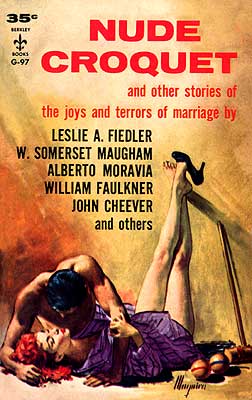
In 1886, Barton marries his first wife and becomes "chaplain at San Remo" for a brief time, not documented in the obituary above [but pictured at the very top of this post because I really like that poster]. Mills and his pregnant wife were likely driven from the Italian Riviera by a destructive 1887 earthquake, and he is immediately installed as vicar of Poughill.

Now, everything above is seemingly in strict chronological order. It mentions that after being ordained, Mills served the "curacies at Battersea, Broad Clyst, and St. George's Hanover-square."

Broad Clyst looks to be about 5 km from Exeter, where it appears Barton read his "sieges" paper during the winter of 1884-1885. Broad Clyst was also the home of Sir Thomas Dyke Acland, 10t bt., a man with whom Mills had spent a good portion of his childhood at Killerton [pictured, left, circa 1890] while his father, Arthur, was away, often traveling to the colonies in North America, India, and the South Seas. Sir Thomas himself had died in 1871, but there was still family at the estate.

Let's assume it was likely that Barton was in Broad Clyst for a least the winter of 1884-1885, where he would have used local resources, including the archives of the new Royal Albert Memorial Museum, to research his paper.

On 10 July 1886, Barton Marries Lady Catherine at—You may have guessed it! —St. George's Hanover Square.

Did Barton meet Lady Catherine while he was there, near Hanover Square? It's probably more likely you'd meet a girl from Buckinghamshire in London than in Exeter, don't you think? That would imply that he was at St. George's long enough to have pursued a courtship and married by July.

It would be interesting—at least for me—to know why Mills bounced around a bit in the mid 1880s. He had a rich and powerful father, rich and powerful relatives, and a university degree of some prominence. I mean, Oxford's a pretty good school, right?

However, it seems to take an Act of God—the Ligurian Earthquake of 1887—to get Barton a vicarage. However, I'm not well aware of what works may have been required of a young cleric in advance of becoming a vicar in the late 19th century.
On the other hand, Barton's life seems to have been one in which he never stayed put in a position for much longer than a decade, no matter what.

This propensity to move about professionally seems to have been passed along to his son, George Mills, at the time an undistinguished schoolmaster, referred to only in passing in the obituary above.

[Many thanks as always, Barry Mc, for all of your research! Also, you can get more on the life of the Rev. B. R. V. Mills here (Part 1), here (Part 2), and here (Part 3), and information on his memorial window in Bude here.]

Wednesday, April 21, 2010

Replies and Records Concerning the Revd Barton R. V. Mills


I just received a couple of e-mails I'd been awaiting, so here are some thoughts on the Revd Barton R. V. Mills, father of George Mills…

Revd Prof Peter Galloway, Chaplain of the Queen's Chapel of the Savoy, had recently suggested checking with the City of Westminster Archives regarding Rev. Mills and the possibility that he had not, indeed, ever been an assistant chaplain at the Savoy.

This is from Hilary Davies of those Westminster Archives:

Thank you for your e-mail of 5 April concerning the employment of Rev Barton RV Mills at the Savoy Chapel Royal, 1901-1908.
I checked the volumes for which you supplied the references (thank you), and found him preaching in the chapel regularly, though not frequently, from 1901 (Ash Wednesday & Good Friday) onwards. He is listed as celebrating Holy Communion on the 24th Sunday after Trinity and Christmas Day in 1907. He is clearly noted down as being an Assistant Chaplain.
I hope this is helpful to your research.


Yours sincerely
Hilary Davies (Ms)
Senior Archives & Local Studies Assistant

Good to know! Thank you, Hilary. But that left Revd Galloway—and me—with the problem of why a man who'd renounced the Anglican Church [according to the 1885 book, Converts to Rome, by W. Gordon Gorman] was preaching in the Chapel Royal. From Revd Galloway:

I am pleased you managed to discover a little more about Barton Mills, though the facts are certainly confusing. I think it highly unlikely that Mills would have been allowed to preach at the Chapel Royal, if his conversion had been known. My first instinct is to question the accuracy of Gorman's assertion that Mills was a convert to the Roman Catholic Church. My second instinct is that you try the records of the diocese of Truro - the diocese which covers Cornwall - held at the Cornwall County Records Office to see what papers they have regarding Mills. You can contact them at:

cro@cornwall.gov.uk

I hope this helps and I look forward to hearing more.


Having e-mailed them promptly, I very soon received this well-researched reply:

Thank you for your email.

I began by checking the entry relating to Barton Mills in the 1896 Crockford’s Clerical directory which we hold. This states that he was ordained deacon in 1882 and priest in 1883 in the diocese of Rochester. Therefore any records relating to his ordination would be held in Kent. He took his degrees at Christ Church College, Oxford who may hold records relating to this period of his life. This also says he was vicar of Poughill 1887-1889 and of Bude from 1891.

We hold registers of institutions and licences to benefices for the Truro diocese. These are indexed by the name of the parish. I have looked in the register covering his period at Poughill (D/R/275). I have found the entry for institution of Barton Mills to the vicarage of Poughill which was dated 9 May 1887. The institution of the next incumbent was dated 11 October 1889 and was due to the resignation of Barton Mills. Budehaven was a perpetual curacy so I looked in the register of licences to perpetual curacies (D/R/286). He was admitted to Budehaven 3 March 1891 and the next incumbent was admitted 7 June 1901.

I have also searched our parish collections for Poughill and Bude. We hold a register of services for Poughill 1887-1890 (P192/2/22) which I have looked at. This begins on 15 May 1887 when Barton Mills is the preacher. The last service he takes is 7 October 1888.

I hope this information is useful to you. If you have any further questions please do not hesitate to contact us.

Yours sincerely

Jennie Hancock
Archivist
Cornwall Record Office

Thanks, Jennie! This message presents us some interesting information. None of it, however, addresses a possible conversion to Roman Catholicism by B. R. V. Mills.

First, though, we now know the years in which Mills was ordained a deacon and a priest: 1882 and 1883. Even more interestingly, despite Mills being from a family that is heavy on its relationship with southern England, from Cornwall to Sussex, and London, he does this work in the Diocese of Rochester. That's a brand new pin on my big, figurative George Mills Map, and may mean something.

We also are able to work out the "turn around time" it takes from the time someone is named a vicar through to the time one actually takes the pulpit. Mills was named the vicar of Poughill the day after Ash Wednesday, 24 February 1887. His actual institution in the Diocesan records is 9 May, with his first sermon being delivered on 15 May—about seven weeks later. His first child would be born on 12 July 1887.

The last service he takes at Poughill is on 7 October 1888, just 17 months later. He is the vicar of record, however, until 1889. The new vicar is instituted at Poughill on 11 October 1889—just over a year after Mills delivers his last sermon from the pulpit at Poughill.

Let's say that over four weeks is fairly normal for a vicar's resignation to be accepted, a new vicar named, for him to be instituted in the records, and for the new incumbent to arrive with his belongings and cassock. That would still have left Sundays in Poughill, if I understand it all correctly, having been handled by the deacon for well over ten months during 1888-1889.

And we know that Lady Catherine Mills, Barton's wife and the mother of infant son Arthur, passed away on 25 September, just 16 days before the institution of the new vicar.

Would I be wrong in assuming that Lady Catherine likely suffered a protracted illness or recovery from an injury? Would I also be wrong in assuming that Mills must have been very much the worse for wear after a long year that must have ended in tragedy, fully knowing he would no longer be able to handle his duties in the small Poughill parish. In fact, is it likely that he already resigned and had a replacement on his way to Poughill by the time of his wife's actual demise?

We don't truly know exactly what kept Mills out of the pulpit for a full year, or what led to the death of Lady Catherine, but hopefully we'll hear soon about Mills and his affiliation with Roman Catholicism. I'm waiting to hear back from the Catholic Church in England and Wales.

Perhaps we'll know something soon!


Tuesday, April 13, 2010

The Life of B. R. V. Mills, Part 1


Details, details, details…

Sometimes one tiny item sets off a string of revelations. In doing a search on Sir George Dalhousie Ramsay, I stumbled on yet another detail that was quite interesting regarding Rev. Barton Reginald Vaughan Mills, father of George Mills. I thought about writing about it immediately, but took a quick look at what a long and winding road the path of the Rev. Barton's life had become, and I was shocked. Those details all begin to add up!

To put the life of George Mills into perspective, I think we first need to examine the foundation upon which George's life was constructed: We need to look at his family of origin, and especially—given the glaring lack of information about George's mother and sisters—at the life of George's father.

He's the man who truly sets the metaphorical stage for George's adult life. And Barton Mills' life is one that had indeed taken some unexpected twists and turns that I've put off writing about for too long. In fact, it's probably far too much for a single post here, so let's just get it started right now…

Barton R. V. Mills was born on 29 October 1857. His father, Arthur Mills of Bude Haven, Cornwall, was the new Tory M.P. from Taunton at the time. He was named after a member of the Acland family and relative of Barton's mother Lady Agnes Acland. He was also named in honour of Rev. Charles John Vaughan, apparently a friend of Arthur Mills and later the scandalous Head Master of Harrow School.

Barton attended Harrow School in 1870 and 1871, years after his namesake's departure. In 1873, his father became the M.P. from Exeter, but the Mills family was also maintaining a London residence at 34 Hyde Park Gardens, W., at the time as well as their home in Cornwall. Barton later attended Christ Church, Oxford, beginning in 1876.

In 1880, Barton earned a B.A. degree in History from Oxford, and receives his M.A in 1883. Arthur Mills had spent much of Barton's lifetime traveling the world and becoming an expert on colonial economies, and may have been en route from New Zealand when the advanced degree was conferred.

In 1884, we find "Rev. B. R. V. Mills," now a clergyman, sitting on the Battersea Committee as an active member, according to a 15 December report by The Council of the Society for Organising Charitable Relief and Repressing Mendicity. The committee, chaired by the Vicar of Battersea for relief of the poor, may be where Mills met his longtime friend, Rev. Watkin W. Williams, who also served as an active member.

In that same year, Barton Mills published a pamphlet entitled The Early Sieges of Exeter and their connexion with the General History of England that was based on a lecture he had given earlier. In 1895, the journal The Western Antiquary, concluded: "We must commend this paper as one of value and interest."

Even more interestingly in 1885, Barton R. V. Mills is surprisingly mentioned in the book, Converts to Rome: A list of about four thousand protestants who have recently become Roman Catholics by W. Gordon Gorman [W. Swan Sonnenschein: London, 1885]. The listing within a section headed "CHRIST CHURCH" reads: "B. R. V. Mills, son of Arthur C. Mills, M.P. for Exeter." No date is given for Barton's conversion, nor why Arthur had gained an unexpected middle initial.

Although Barton Mills had already become a clergyman by the year 1885, in this text he isn't titled as a 'Reverend,' or even a listed as a B.A.—at least not at that point in his conversion to Roman Catholicism. He is simply recorded among the recent converts from Christ Church.

As we know, according to Oxford University, Mills "matriculated from Christ Church on 13 October 1876, aged 18" and "the degree of BA was conferred in 1880 [by Oxford]." So, the conversion of Mills likely occurred while he was still a student at Christ Church, sometime between 1877 and 1879.

Now things started happening relatively quickly: In the Summer of 1886, Barton R. V. Mills married Lady Catherine Mary Valentia Hobart-Hampden at St. George, Hanover Square, London, on 10 July. She is granted the rank of an Earl's daughter at the wedding.

That same year, Barton and Lady Catherine left England and family behind as Mills became "Chaplain at San Remo" in 1886. Where, exactly, in San Remo he was appointed chaplain is still under investigation. There is as of yet no record found showing him to have been chaplain at either All Saints or St. John's Churches at that time. No real matter: He wouldn't be there very long.

On Ash Wednesday morning, 23 February 1886, with many churchgoers already attending services, a deadly 6.5-level earthquake devastated San Remo, Italy, as well as many nearby towns and villages. Lady Catherine Mills was probably just over 4 months pregnant with their first child and, unless the newlyweds were quickly parted, probably in San Remo at the time of that disaster.

The very next day, a Cornish newspaper announced: "Bude - The Living of Poughill - The Rev. Barton V. Mills, eldest son of Mr. Arthur Mills, Bude, has accepted the living of Poughill, near Bude. Poughill contains 1,700 acres, with a population of 399. Probable gross value of the living about £125 per annum. The Rev. T.S. Carnsew, who is promoted to the living of Constantine, near Falmouth, has been vicar of Poughill for 30 years."

Word travels quickly, apparently just as quickly as thirty-year vicars could when it was deemed necessary.

Just months later, Arthur Frederick Hobart Mills, the brother of George Mills, was born on 12 July 1887 in Cornwall. It's unknown at this point if Arthur was full term, or if Lady Catherine had suffered any injury in San Remo, any discomfort on her return from Italy, or any difficulties during the birth itself.

Sadly, Lady Catherine passed away just two years later, on 25 September 1889, the same year Barton Mills left the vicarage at Poughill. Did he leave because of her death? Was it sudden? Had he taken leave of his duties earlier to care for her? It's unclear if he left before or after that exact date, 25 September, and I am waiting for word from Poughill that may provide a clue.

It's now well into Autumn, 1889, in our story and winter's fast approaching. We've left the widowed vicar, Barton Reginald Vaughan Mills, and his young son, Arthur, in the care of 73-year-old Arthur Mills, Esq., M.P., in a house cared for by 10 servants at 128 Efford Down in Bude, Cornwall [left].

Barton will still be living there as a resident during the census in the Spring of 1891, along with young Arthur, then three years old. But Barton, 33 himself, in that document will state his occupation as that of being the new "Vicar Of Budehaven."

And that won't be the only change made as Barton returns to the Anglican Church and starts a new family—one that will include a young chap by the name of George Mills—as we'll see in Part 2!
[Read Part 2 or Part 3.]


Wednesday, April 7, 2010

A Glimpse into a 19th Century Acland Family Photo Album


On this warm and wonderful afternoon here in Florida, due to the modern miracle of the internet, we're about to travel back in time to "see" the world through the eyes of young George Mills, his half-brother Arthur Frederick Hobart, and his older sister, Agnes Edith.

Thanks to a portfolio donated to the University Of Canterbury [Te Whare Wānanga o Waitaha, in Maori] in Christchurch, New Zealand, by the Acland family [descendants of Sir Thomas Dyke Acland, 10th Baronet, of Killerton, Broadclyst, Devon, the maternal great-grandfather of George Mills] after they emigrated, we can see Cornwall, Devon, and much of southern England exactly as it looked to the very young Mills siblings, circa the late 1880s or the 1890s. [Click an image to see it full-sized.]


This amazingly unexpected photograph is labeled "Mills driving horses," so I suppose we're to assume that's George's grandfather, Arthur Mills, Esq., M.P., there at the reins. The passengers may be visitors to his home, but if so, would I be wrong in assuming he'd be sitting with his guests? My hunch is that he's taking out the family, but what do I know?

Would it also be wrong of me to assume that smartly dressed fellow in the carriage could be Revd Barton R. V. Mills, Vicar of either Poughill or Bude, and he could be sitting with his mother, Lady Agnes, and possibly his first wife, Lady Catherine [who passed away in 1889] or Elizabeth Edith Ramsay Mills, whom Barton married on 10 January 1894?
Lady Agnes died on 23 May 1895, so if that is both Elizabeth and Lady Agnes, that certainly narrows the list of possible dates on which this image could have been taken. Should it perhaps be Lady Catherine, this image would then be of an 1887 to 1889 vintage.

Barton's brother, Col. Dudley Acland Mills, was an officer in the Royal Engineers who is not found anywhere in either the 1891 or 1901 census. It seems unlikley that the he's the gentleman in the carriage. Barton, however, was listed in the 1891 census as living at 128 Efford Down, Cornwall, with his mother Agnes Lucy, father Arthur, and his son, young Arthur F. H. Mills, who was then 3 years old. Put this address, Efford Down Park, Bude, Cornwall EX23 8SE, UK, into Google Maps and see if you don't think this is the same place!


This is the lovely church at Poughill. Reverend Barton R. V. Mills was rector there from 1887, to 1889. Arthur Frederick was born in 1887, and Lady Catherine, young Arthur's mother, died in 1898. Is it likley this was taken during that time by the Aclands to show visitors the church where their grandson Barton was vicar?


This beautiful picture was taken on one of the Acland estates. Young George Mills was born in 1896, and his half-brother Arthur was 9 years older than George. Is it possible that this healthy looking lad could be young Arthur visiting Killerton?


This gorgeous image shows the Cornish coast that the Mills family must have known and loved so well. While I know that could be anyone who just happened to wander into the photograph, it still makes me wonder...


Why are this boy and, I suppose, his mother, so disinterested in someone taking outdoor photographs in Bude Haven in the 1890s? Could that have been such an everyday occurrence, compared to seeing a sailboat? It occurs to me they must have had the same interest as the photographer, having accompanied him to this spot: That wonderful vessel! Could that lad be young Arthur—or even George Mills himself? After all, how many tots in Bude would have likely been that disinterestedly close to a party of traveling, photographing, parasol-wielding Aclands?

If that is, George, date this image 1898 or 1899. And, if it's Arthur, make it 1891 or 1892. And perhaps it was different in the late 19th century, but I can't imagine why the Aclands would've taken the camera to Bude if not on an visit to see Arthur, Barton, and the children...

And in this photograph of the coast, we see a panorama of Bude Haven. It features the stately home of Arthur Mills, Esq., M.P. resting comfortably atop the hill.


Here's yet a closer shot of the Mills family's residence in Bude. Nice place, eh? I wonder what it costs to heat, though...


This image depicts Killerton in Devon. Barton and Dudley Mills were raised there as young boys until it was off to boarding school. The only residents of this manor listed in the 1861 census were Sir Thomas, himself, and "Barton Reginald Vaughan Mills (age 3) and Dudley Acland Mills (age 1) (Children of Arthur Mills, Esq., M.P.), + 18 servants." The boys' father would have been either in London, serving at the time as the Tory M.P. from Taunton, or may have been on one of his many excursions abroad. Mills had recently published his definitive book on the costs of the Sepoy Mutiny and the state of the colony, India in 1858.


This time, we've actually entered Killerton of the 1890s. The painting is entitled "Great Sir Thomas Dyke Acland, 10th Baronet," and was painted by William Owing. Sir Thomas had died in 1871, having been succeeded by Sir Thomas Dyke Acland, 11th Baronet, but obviously is still watching son-in-law Arthur Mills like a hawk.


Before returning to the 21st century, let's just take a look at a few images of the southern England of the late 18th century that the family of George Mills must have loved so dearly...