Here's another set of excerpts from The Times of London regarding the third trial pitting German governess Valerie Wiedemann versus Robert Horace Walpole, heir to the Earl of Orford, the latter being sued for breach of promise of marriage and libel. These images are from 16 June 1891 as the trial is nearing its end.
Sunday, September 26, 2010
The Third Trial: 16 June 1891
Here's another set of excerpts from The Times of London regarding the third trial pitting German governess Valerie Wiedemann versus Robert Horace Walpole, heir to the Earl of Orford, the latter being sued for breach of promise of marriage and libel. These images are from 16 June 1891 as the trial is nearing its end.
Saturday, September 25, 2010
Sunday, September 19, 2010
Notable Sussex Women

Let's take a break from the proceedings of the third trial pitting plaintiff Valerie Wiedemann against defendant Robert Horace Walpole and consider something else.
In her book, Notable Sussex Women, author Helena Wojtczak has written biographical sketches of 580 women of Sussex from Annie Abram to Nellie Sheail. As a tease, women within are also listed anonymously by accomplishment: "a woman with terrapins in her bra," "the wealthiest prostitute in London," and "Siamese twin entertainers," for example.
Included among these notable women is our Lady Dorothy Mills [née Walpole], daughter of Walpole and Louise Melissa Corbin. I'm uncertain how her accomplishments might have been described in the book's tease, however.
Is she "the white woman who led a protest march of 20,000 black Africans"? If she is, I'm unaware of that event, although Lady Dorothy certainly spent a great deal of time in Africa living among its native people.
Was she one of the "writers of books deemed 'obscene' and 'grossly immoral'"? I know that not every reader was in favor of her adventuring among the savages and even prompting marriage proposals from many.
With 580 biographical sketches in a 366 page volume, many of the sketches are bound to be exceptionally brief. There are 189 illustrations and 63 glossy photographs. Is there an image of Lady Dorothy Millls? And would it be an image of the young, globe-trotting Lady Dorothy, or of the aging Lady Dorothy who lived away from the public eye in Brighton from the publication of her last book 1931 until her death in 1959?
If you own the book or have borrowed it from a library and can summarize her biographical sketch, or if you own it and can e-mail me a scan of any information on Lady Dorothy Mills [pictured, right] it contains for the purposes of my research, I would be most grateful. Having already spent a couple of hundred of dollars on this strange quest of mine—most of it on shipping from the U.K., Australia, and New Zealand—I hesitate to tell my financial advisor [read: my wife, Janet] that I plan on spending well over £20 (with shipping) to catch a glimpse of a paragraph or two in a book that may or may not be of any use to me at all!
Please e-mail me at will19008 [at] yahoo.com if you can help, and thank you in advance for your consideration!
Saturday, September 18, 2010
Baron Pollock & Mr. Lockwood, Q.C.

I've discovered a couple of images of the principals in the trial. Here are Judge Charles Edward Baron Pollock [above, right], who presided over the third Wiedemann v. Walpole trial in 1891, and Frank Lockwood, Q.C. [below, left], who stood up on behalf of the defendant, Robert Horace Walpole. They certainly are a couple of severe looking fellows!
The Third Trial: 13 June 1891
We now come to the third day of the third trial pitting Valerie Wiedemann v. the Hon. Robert Horace Walpole. Walpole is at the time the father of a young daughter who will grow to marry Arthur Frederick Hobart Mills, half-brother of George Mills. This London Times article, from 13 June 1891, is shorter than most. It must have been an abbreviated day in the High Court.
Click to enlarge each segment in a new window.
Sunday, September 12, 2010
The Third Trial: 12 June 1891, Part 5
This concludes the lengthy second day of the third trial of Wiedemann v. Walpole. Tune in again next time for Day 3!
The Third Trial: 12 June 1891, Part 1
It's the second day of the third trial pitting Valerie Wiedemann v. the Hon. Robert Horace Walpole. Walpole is at the time the father of a young daughter who will grow to marry Arthur Frederick Hobart Mills, half-brother of George Mills. The London Times article of 12 June 1891 studied here is lengthy and will be revealed in a series of posts.
Click to enlarge each segment in a new window.
Monday, September 6, 2010
The "Who Is George Mills?" Mailbag: August 2010

Now that we've concluded the first day of the 3rd incarnation of Wiedemann v. Walpole, let's take a look at some comments that have accumulated on the website. They constitute a "mailbag" of sorts for this website. Let's take a peek at its contents....
● Here's a comment received on 24 August 2010 regarding what appears to have been a wedding gift to Robert Horace Walpole and his first wife, the parents of Lady Dorothy Mills:
Charles said...
Wow!
Have just been researching and old silver trinket box of mine. On the bottom it reads Tiffany, Paris. Around the sides there is worked floral decoration and on the top it reads Louise Melissa Corbin, Robert Horace Walpole Married May17th 1888.
What a surprise to come across your work!!
Charles, I'd certainly be interested in the history of your box, and most especially about Miss Corbin [pictured, above, right], about whom little is known. I do hope you'll share any research you discover!
● Here's an anonymous message from 26 August 2010 regarding a mistake I'd made in the early summer. In researching London phone directories of the 1920s through the 1940s, I'd assumed a "G. R. A. Mills" I'd been tracking was the George Ramsay Acland Mills [left] of our interest here. Not so:
Anonymous said...
George Robert Alexander Mills is part of a family tree I am researching - born 1903 in Brockley and dies in Canterbury in 1981. I stumbled across your research for the simple fact that your George Ramsay Acland Mills and Vera Louise Beauclerk also added some difficulty to my research! My George Mills was a stockbroker and married in 1927 in Lewisham. He lived at 51 Wickham Road, which had also been the family residence of his parents. I am afraid I cannot shed any light of the further addresses however, as I am unsure how long they continued to reside in the area.
● Finally, back on 10 August 2010, I received this comment regarding my search for a person who seemed to be named "Barbara Mills":
andrewbore said...
Hi there,
Henry Valentine Mills married Frances Georgiana Miller on Jan 27, 1917 in Radway. He was 35 and she was 22. They were married by licence. A Selina Mary Mills was one of the witnesses. I just happened to be indexing the marriage for Family Search Indexing and decided to do a search for the couple. Sorry I can't help more with Barbara Mills. Henry and Selina Mills were, indeed, relatives of George Mills. Barbara Mills, however, appears to have been created as a result of a transcription error made while Mrs. Barton Mills [mother of George] was ordering flowers [right] for the funeral of a relative, Maj. Reginald Ramsay Wingate, in 1938.
Thank you, Andrew, for the information, and for your interest! It certainly is greatly appreciated.
As always, if you have any information about George Mills or anyone in his family, I hope that you'll contact me via the e-mail address at the upper right of this page or via the option to leave a comment on any posting you see here.
Thanks in advance for your help!
The Third Trial: 11 June 1891, Part 3
Here is the third excerpt from the first day of the third and final trial in which Valerie Wiedemann, a governess from Germany, sued the Hon. Robert Horace Walpole for breach of promise of marriage and libel after they had an affair in the city called Constantinople.
In this final segment of the day's proceedings, court closes at 4 o'clock with the defense still laying out the details of the plaintiff's case.
The Third Trial: 11 June 1891, Part 2
Here is the second excerpt from the first day of the third trial in which Valerie Wiedemann sued the Hon. Robert Horace Walpole for breach of promise of marriage and libel. Walpole would become the father of Lady Dorothy Mills, the author and explorer who would marry Arthur F. H. Mills, brother of George Mills. It seems unlikley that these proceedings could not help but to have shaped the rearing of Lady Dorothy, and subsequently influenced Arthur's life, career, and subsequent divorce from her.
I apologize for the article sometimes being broken into segments that divide sentences.
Sunday, September 5, 2010
The Third Trial: 11 June 1891, Part 1
A real difficulty using the London Times for research is the capriciousness of its search engine. It seems to give one's desired result upon a whim. Regarding the third trial and final trial pitting Valerie Wiedemann v. the Hon. Robert Horace Walpole, not much surfaced, but I was able to work out the trial dates and search through the paper, page by page, until I had found and took a "screenshot" of all of the pieces of all of the article, which was quite an undertaking!
The real downside of this is that, when the search engine delivers results, it also provides the article sought in text format—something that was suddenly unavaliable to me. Now, even though that text can be largely drivel, it was still useful in that I could cut and paste it into a Word document and spend an hour or so correcting it.
[Here's an brief example of an available 'text' from the London Times: "tiree of wvhom were called. 'to the Bar-and three daughters. The eldlest son, Ir. Courtney Terrell,- was appo>inted-lust- November Chief Justice of the High Cotur t of Judicature at Patna." There would be some corrections to be made there!]
Anyway, that's the method I used in patching together the previous entries regarding Trails 1 & 2 that are found here. It was faster than transcribing them in their entirety myself: I type with only two fingers, and given the length of some of those article, I'd have been transcribing them all day.
Since I ferreted out the next series of articles myself, there wasn't even a poor-quality bit of text for me to cut, paste, and edit. I don't have the time or the energy right now to sit and peck out the stories regarding the third trial in their entirety. What I've done is cropped the screen shots of them down to size and I'll post them for you to peruse at your leisure.
Another issue with viewing the articles in this manner will probably be that they may appear to be of different sizes on the blog. If they do, simply click on the article and it should appear enlarged in a new window, of the same size, and will be much easier to read.
You'll find the first excerpt of the trial from the 11 June 1891 issue of The Times above left, and the second to the right. I'll try to post an excerpt each day until we reach its conclusion in the 18 June 1891 issue.
More soon…
Sunday, August 22, 2010
Back to School

My word! I blinked, and the summer was gone! It was a cocktail of house problems, health problems, a bit of travel, and trying to get some rest in advance of another grueling school year—I turned 52 on Wednesday, and I'm feeling every year of it!
While preparing to return to school, I went out to lunch with my grade level partners on Wednesday to a crowded little breakfast/lunch place called Scrambles here in Ocala [left]. The waitress, who was insanely scurrying around keeping track of orders and requests, serving food, filling water and drink glasses, and calculating the bills of fares for each table seemingly all at once, told us she'd used to be a teacher—but it was too stressful!
It's funny, children come into my class knowing less each year, I teach less to kids these days than ever, and with paperwork and requirements and new law after new law, I'm working much harder than ever to try to produce a single-digit score on a high-stakes achievement test that is alleged to sum up a child: Here in Florida, a 5 is a smart child, and a 1 is woeful.
There's a prescient episode of the classic sci-fi series, The Twilight Zone, which summarizes humans in exactly that way by their appearance [right]. This isn't too far off, only completely summarizing the learning of a child.Well, c'est la vie! I still have to break down some information about the last of the Walpole v. Wiedemann trials and tackle to later lives of George, Agnes, and Violet Mills as they lived out their Golden Years in Budleigh Salterton. I also received a copy of Stanley Elkins's book, George Mills, for my birthday from a dear friend [and former student!], and while only marginally related to our subject here as previously discussed, it still may make an interesting subject for a blog entry or two.
We're really coming to a close in our study of George Mills and family, unless more information comes to light. Without assistance from his taciturn closer relatives and several outside sources that have simply haven't responded to requests for information, there'll eventually be little left or nothing to examine or reflect upon.
Until then, however, I'll do my best to both prepare for my first lessons on Monday and gather more information to post on-line for you this week!
Monday, August 16, 2010
Wiedemann v. Walpole 2: The Aftermath

Last time we attended the final installment of the proceedings brought by Miss Valerie Wiedemann against the Hon. Robert Horace Walpole on the grounds of breach of promise and libel. The coverage was , however, entirely from the London Times.
For a slightly different perspective, let's once again pick up a paper from the southern hemisphere. Plucked from the wire service on 20 June 1890, New Zealand's Star offered a summary of the sensational case for readers down under. It offers up some interesting bits of information.
In it, their "London Correspondent" takes an obligatory swipe at W. T. Stead of the Pall Mall Gazette, an interesting act given how very loosely tied to the correct facts and details of the trial the actual Star article below is.
We do become privy to some interesting details here: Prior to the trial Wiedemann had dismissed her own solicitors, who had been unable to persuade her "to accept their brief." Walpole's child had been named "Minnie Valerie Margaretta," and that by the count here in the Star, the baby had been her third illegitimate child. It was alleged she had threatened Monsieur Logothetti with death for testifying against her. And when Walpole refused to give her more money than the £100, she pitched a public fit, threw herself on the floor, held onto his coat, and had to be shaken loose "with difficulty."
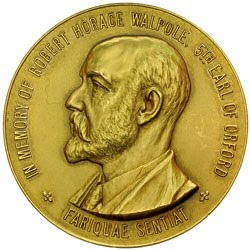
There are no images of a youthful Walpole available, certainly none depicting his the age of the trial. We do, however, have written descriptions. You may recall that the Melbourne Argus of 5 January 1889 had described Walpole as a "handsome young man, with the usual F.O. repose and insolence of manner." Here we find a differing [and less than flattering] glimpse of Walpole's appearance, this article describing him as "a thin-faced little man, with a bald head, large nose, slightly receding chin, and harassed expression."Most interestingly, the article below contains this bit of information from the trial: "Walpole, horrified, took [Wiedemann] to the Hotel Luxembourg, where they stayed for some days," after he had seduced and made love to her at the Hotel d'Angleterre. I wonder how many days they might have spent together, shacking-up in the second hotel where he had registered as "Mr. and Mrs. Boston," had he not been "horrified" by the entire ordeal.
Nonetheless, this is the story that went out across the wires after the conclusion of the trial, which had ended quickly in a 'hung jury.' One wonders how apoplectic Mr. Justice Mathews must have been to find out that four days spent on what had appeared to the learned judge to be a slam-dunk of a trial evaporated in a just a couple of hours when six jurymen for the plaintiff simply could not agree with six jury members who'd sided with the defendant.
The only thing we know for certain as a result of these proceedings is that—You guessed it!—we'll be having yet another trial: Wiedemann v. Walpole, Part 3.
And next time, it'll be for all of the proverbial marbles…
THE WIEDEMANN CASE.
Star , Putanga 6919, 31 Hōngongoi 1890, Page 2
-♦ The Plaintiff's Past. Startling Disclosures. The Berlin Baby. [From our London Correspondent.] London, June 20.
It will be remembered that, when the fair Valerie's outburst of temper brought the first trial of the Wiedemann-Walpole breach of promise case to an abrupt termination, the defendant declared that the unexpected stoppage was the greatest misfortune which could have befallen him. How true this was and how undeserved the obloquy which "that good man Stead" and other enthusiastic champions of the much-injured plaintiff heaped upon Mr Walpole we now know.
The second trial commenced on Saturday last, before Mr Justice Matthew (perhaps the most painstaking judge on the Bench) and a Special Jury. Miss Wiedemann, whose solicitors had proved unable to persuade counsel to accept their brief, conducted her own case. She spoke fast, and with such a strong accent, that it was often impossible to comprehend. Fortunately her story was familiar to most in Court. On Monday the Solicitor-General rose to cross-examine, and then (as anticipated) the proceedings grew distinctly lively. Miss Wiedemann's past according to Sir E. Clarke was not that of a simple nursery governess, but of a crafty adventuress with numerous amatory passages of a distinctly discreditable character. When Mr Walpole met her at the Constantinople Hotel his name appeared in the visitors' book as Lord Walpole, and, believing him to be a big fish, the lady tried her best to land him. She beguiled the young man into her room at night, and deliberately arranged matters so that her reputation should be publicly compromised. Next day she posed before him as a girl who had been seduced and ruined. Walpole, horrified, took her to the Hotel Luxembourg, where they stayed for some days, and where the fair Valerie's behaviour enlightened the man as to her real character, and convinced him that he, at any rate, had not robbed her of her virtue. He gave her £100 when he left, and considered that sum ample solatium for any harm he might have done her.
The Solicitor-General, enquiring into the fair plaintiff's past, asked her if she knew M. Victor de Crenville.
She said she had heard of Mons. Victor de Crenville, who was in the Austrian service, but she had not seen him in Constantinople. She did not go to his apartments in December, 1881. She did not know of another Valerie Weidemann [sic] in Constantinople. It was not true that Mons. de Crenville made complaint against her to the German Consul. Such a statement was an infamous scandal.
The Solicitor-General : Do not be too strong in your expressions.
The Plaintiff : It is infamous ; I will not allow it.
The Solicitor-General : You had previous acquaintance with. Mons. de Crenville, and said he was the father of your child.
The Plaintiff :
The Solicitor-General : I will give you the date when the child was born, and the name of the person who attended you on your confinement. Were you ever in your life in Cyprus ?
The plaintiff : No.
Sir E. Clarke here read a statement by M. Crenville, to the effect; that he had had passing relations with Valerie Wiedemann through the payments of money, and that she charged him with being the father of her second illegitimate child. He caused lots of money to be paid her through his Vienna advocate, but at the same time contested the- paternity. On the utterly false assertion that he bad promised to marry her, Valerie Wiedemann went to his parents and to the Consulate at Constantinople to extort fresh sacrifices of money from him, and then came to his rooms, and tried to strangle him, and threw a heavy teapot at him. The witness, with great indignation and violent gesticulation, declared that the whole thing was false unless the Valeric Wiedemann referred to was a person who had
Then Sir E. Clarke came to that part of the cross-examination at which the case broke off so abruptly before, the question of whether, before the end of 1881, the plaintiff had had a child. At first she again showed a disposition to refuse to answer, pleading that the question was offensive and insulting, but at length she denied the allegation. Sir E. Clarke gave her the alleged date, number, and name of the street in Berlin, and the name of the person who attended her, and the name which he alleged was given to the child, "Minnie Valerie Margaretta," but the plaintiff persisted in denying the allegation. Then the Solicitor-General handed up to her an official German certificate of birth chronicling the confinement of Valerie Wiedemann, but still the witness
Coming to another stage, Sir E.Clarke read the statement of M. Menosis, which • alleged that plaintiff called on M. Menosis and said she had not expected his father-in-law, M. Logothetti, the Constantinople hotel proprietor, to give evidence against 1 her, because M. Logothetti had always been "gallant et gentel" towards her. If she lost her case, she said, she would kill Logothetti, according to this state-ment by Menosis. Plaintiff denied this altogether, and said she only said she should proceed against Logothetti for his lies, and get him punished as he deserved. She was giving a piano lesson to one of her pupils when she saw Mr Walpole. He was inscribed in the visitors' book as Lord Walpole. He made love the first evening he saw her. She did not ask Mr Walpole to take her to England. He asked her to go, but she declined. There had been no arrangement that the defendant should come to her room on the night in question. She went to the opera with Mrs Manuso and her daughter that night. Mrs Manuso slept in the next room to hers. The defendant entered her bedroom about half an hour after she went into her room. She was undressed.
He told her his mother was at Cannes, at the Hotel Continental, and he gave her the money to pay her expenses there on the journey. She stayed at an hotel at Malta for two or three days. She also stopped two weeks in a convent at Borne before proceeding to Cannes. She went by the name at Cannes of Madame Valerie. She had never heard from Mr. Walpole since 1882.
The defendant, who is a thin-faced little man, with a bald head, large nose, slightly receding chin, and harassed expression, told the story of his fatal liaison with Miss Wiedemann. Never, he swore, from first to last, was marriage mentioned. He gave her £100 to go to Liverpool with. She was delighted with it, and said it was very kind,
How ridiculous," said the plaintiff, with a laugh. "It is a downright lie."
Sir E. Clarke here read a letter from the plaintiff to the defendant, in which she said their little boy would one day ask his birthright of his father, and that if he did not break his hateful silence he would make of her a modern Brunhilda or some outraged woman.
Then the plaintiff proceeded to cross-examine the defendant.
Did I tell you I was engaged to a German gentleman ?— She said she was engaged to the German officer who had brought her to Constantinople, and then she pretended to cry, and I did not ask her anything more.
Do you hope I can ever forgive the insult you have offered me by not answering my letters? Do you regret bringing these irreparable sufferings on me? Have you conspired with others against me — Logotnetti and the Manusos?" These were some of the questions which followed, but the two former were disallowed, and the defendant denied the last.
Have you anything to do with
In answer to a Juryman, the defendant said that on the night of Sept. 26 he received a note from the plaintiff from the Hotel Imperial at Constantinople. He went there, and saw her
She has cashed the £100 cheque, and told him she wanted some more money.
The plaintiff : " How shameful."
The defendant went on to say that the plaintiff behaved very violently, threw herself on the ground, took hold of his coat, and it was with difficulty he got rid of her.
The plaintiff said the statement was untrue. She was not at the hotel.
The Judge summed up dead in favour of the defendant, pointing out clearly enough that Miss Wiedemann's allegations regarding there having been either a forced seduction or breach of promise were absolutely without corroboration. On the other hand, a number of different people told quaint stories of the lady's past, and her own family appeared to have held themselves conspicuously aloof from her.
The Jury were expected to agree forthwith, but, to the surprise of all concerned, were locked up for several hours without deciding on a verdict, and had then to be discharged. Strange to say, too, six were for the plaintiff and six for the defendant.
Saturday, August 14, 2010
Wiedemann v. Walpole, The Second Trial, Part 4

I found this, the fourth and last installment of the second trial pitting Miss Valerie Wiedemann against the Hon. Robert Horace Walpole, by far the most surprising—looking at it from the vantage point of the United States in 2010.
Justice may, indeed, be blind, but Justice Mathews certainly was not. After the counsel for the defence, Sir Edward George Clarke, made his closing remarks for the defence in a succinct and gentlemanly way [presumably to avoid seeming like an angry legalistic mercenary of a paternalistic society coming down hard on poor, wronged Valerie], Mr. Justice Mathews—whose duty here would seemingly to have been merely to explain the points of law involved—broke out a metaphorical sledgehammer and pounded his personal suppositions, feelings, and prejudices home into the jury.
Behavior like that today would have been the most shocking aspect of a trial of that nature. Perhaps the lawyers might have indulged, but I feel certain that judges now would have to keep at least some sort of veneer of impartiality in place during proceedings such as these.
Using words like "incredible," "inveigled," "concocted," and "persecuted," contrasting Miss Wiedemann with a "modest woman," pointing out her alleged divergence from the norms of "human nature," and asserting that the gentleman providing critical evidence on behalf of the plaintiff, Uriah Cook, was "untrustworthy" and a "perjured villain," Mathews hammered his opinions home. He even took a verbal swipe at the editor of the Pall Mall Gazette, W. J. Stead, and all of the readers of that paper.Mathews even took issue with "the way in which she denied" an allegation by the defence, directed the expectations of the jury, saying "One would have expected," in regard to Wiedemann's actions, and even pointed out the telling fact that, given a note for £100, that check had been very suspiciously "cashed at once" by the unemployed Wiedemann.
When the speed at which a person cashes a cheque is open to criticism and supposedly a point of law, it isn't surprising then that Mathews also offers a critique that would have made the defendant's case far more air-tight: "It would have been better for the defendant to have left Darlington alone." Apparently Walpole's 'unnatural' inclinations, especially in that case, were simply a matter of stupidity, while Wiedemann's had been malicious. Mathews's opinion of the intellect of the jury must have been quite low, and he seemed to determined to frame these proceedings for them in such a way that the plaintiff 'couldn't get away with it.'
But here I am, spoiling it all for you. Read it for yourself. I don't mean to be making a case for or against either Wiedemann or Walpole, both of whom seem to have been involved in a dirty little affair that mushroomed out of control and had gone poorly in the long run for them both. What shocks me about this 'shocking' case, however, is actually the leading summary by Justice Mathews.
Oh—and I actually haven't spoiled the real surprise ending!
Read for yourself the surprising events of 19 June 1890, as recorded in the London Times:
(Before MR. JUSTICE MATHEWS and a Special Jury.)
WIEDEMANN v. WALPOLE. The trial of this action, which was brought to recover damages for breach of promise of marriage and libel, was resumed and concluded to-day. At the close of the proceedings yesterday the Solicitor-General had concluded his address to the jury on behalf of the defendant. The plaintiff then addressed the jury. The question of corroboration was a legal question with which she could not deal. If defendant thought her bad or wicked, why did be wish her to go to England with him? The people at the hotel could have found out everything if they had liked. When one looked at so many people who spoke well of her, it was impossible that she could have lived the life they said she did. The Count had not been called as a witness against her, although the defendant had plenty of means and could easily have called him. Her family had suffered very much by the conduct of the defendant. The defendant had not answered the Ietters of herself or her relations, who were in good positions. It had been said she delayed the trial. She did not delay the trial; she pressed the trial on. The letters she wrote showed she did not intend to extort money, but to claim the right of legal wife. In all her letters she wrote saying she had a right to be his wife, and the defendant never wrote and contradicted it. In the first trial she said her child was alive. She then thoroughly believed that it was alive. Her parents refused to correspond with her till she became the legal wife of the defendant. She had not corresponded with them since 1883. As to the petition of Count Cieuneville, it was a libel upon her. When she wrote to the Consulate they would not allow her to look at it. The defendant's evidence was altogether inconsistent. He said that when he gave her the cheque for £100 she was delighted, and almost in the same breath he said she told him she would make his life a burden to him. As to the ring, if she had stolen the ring, as suggested, the defendant could have properly claimed it, but he had never once written to her to claim it. He had asked Darlington to try to get it from her. The plaintiff then gave a full description of her movements from 1878 to 1882.MR. JUSTICE MATHEWS summed up. He must say he thought the jury had heard the plaintiff's case with exemplary patience. He had had to interrupt her, not against her interest, but because if she had referred to documents not entirely evidence, a new trial could have been obtained, and the time of this trial would have been thrown away. He did not think that the jury, when they heard all, would have very much difficulty in dealing with the case. The action was for breach of promise of marriage, under which promise the plaintiff alleged she was seduced and became the mother of a child, of which the defendant was the father, and that then she was cast off. She told the story so simply that it was difficult to believe that it was not true. She represented herself as a modest woman. She was a talented and graceful woman. She said she was the victim of the violence of in Englishman; that, following it up, he induced her to live with him for three days. That was the story told by plaintiff, and that story she repeated to-day. The defendant asked them to take a very different view. He said it was a strange story, and there was not a scrap of evidence to support the promise of marriage. He said she was a woman who could not give a satisfactory account of herself. She was 32 at the time of the alleged seduction and defendant was 26. The Solicitor-General said the plaintiff inveigled the defendant in the first instance, and got a large sum of money out of him, and then persecuted him, his mother, and innocent wife. The Solicitor-General said they ought not to act on the statement of plaintiff or defendant without some corroboration; that in dealing with a woman like the plaintiff they should act with care and vigilance. Before he spoke of the facts, he must tell them about the law. A few years ago it was enacted that the plaintiff could give evidence in support of her action of breach of promise of marriage. Before, it was thought that it was unwise to depend on the evidence of the plaintiff. In 1870 it was thought the law might be relaxed, and it was thought that the plaintiff might be examined, only on condition that her evidence was corroborated in some material matter. The plaintiff's evidence would have to be discarded unless there was other evidence in support of plaintiff's statement. In this case all hung on one single thread. The plaintiff could not be heard, and plaintiff could not get a verdict unless they believed Cook. The plaintiff's advisers told her the difficulty of her position. She might have written letters, but the law imposed on no man the obligation of replying to them. The whole thing, therefore, turned on the evidence of Cook. Cook's recollection was precisely in point. If the evidence had been made for the occasion, it could not have been more exactly what was wanted. Cook said before he entered into a contract he had doubts as to the defendant's position with regard to the plaintiff. Cook said the defendant said to him, "I am not her husband, but I may have promised to marry her when I seduced her." The Solicitor-General asked them not to act on that evidence. Who was Cook? A retired policeman. Cook was compelled to admit he had to retire from the force for giving untrustworthy evidence. He had since been an inquiry agent. He made a claim on defendant which defendant refused to pay. The defendant had to pay money into Court which Cook took. Then this confidential agent handed the defendant's letters over to the plaintiff. The Solicitor-General said they helped the defendant as it showed the defendant, when he wrote them, told the same story then as he did now. It was clear that Cook, if not a liar, was a traitor. There was one point more against him. The plaintiff told the
m that Cook was a perjured villain: that he tried to take the ring by violence, and inflicted injuries on her. He denied that. If the statement by Cook was not true, there should be a verdict for the defendant. The Solicitor-General said the plaintiff's statement should not be accepted. Some of the plaintiff's statements as to her antecedents were tolerably clear. In 1869 she was 18. She had been educated as a governess, and earned her living as such during the early part of her career. In 1878 she said she came to England. The plaintiff gave the name of Pastor Wagner [pictured, right]. There was nothing that appeared in the case discreditable to him. He had taken up her case. He probably heard the story she told them now, without her then being under cross-examination. He saw her in 1883, and wrote to defendant, repeating statements made to him, and asked defendant to come to her assistance. He added she was starving. The plaintiff repudiated that indignantly. When the pastor wrote that letter, had he heard about the trip to Rome, and that she had stayed at a convent, and then went to Constantinople, where she did not know the names of the superiors? The pastor was not called. He wondered whether he knew all about that. The jury should bear in mind that no one who had spoken about the case knew so much about it as the jury, whether it was the editor of the Pall Mall Gazette or other editors who had been writing about it. After 1878 certain obscurity descended on the proceedings of the plaintiff. His Lordship then referred to the persons mentioned by the plaintiff. It was a singular thing that no single relative had been examined on her behalf. It appeared she had an uncle, an aunt, and two cousins at Innsbruck. A commission was sent out, and their evidence could be taken. Why was she left without the aid of a single relative? The plaintiff's answer was that they did not want their names mentioned in the case. If her relatives believed her story it was inconsistent with human nature that no relative should come forward to assist her. According to plaintiff's statement she went to her relatives. From 1880-1881 she went to other relatives in Pomerania. There was no explanation how a lady so accomplished as the plaintiff was should remain all that time doing nothing. Was the explanation that she was travelling with the young man she said she was engaged to? She then said she went to Rome with a countess. There were so many countesses mentioned he could not say which one it was, but he thought her name was Winsky. That lady was going to found a convent, and thought the plaintiff just the person to become a novice, forgetting her engagement to the young man. She said she was at the convent of Sacré Cœur from February to March. There was one person above all others in the convent, and that was the lady superior. The plaintiff could not tell the jury her name. She said she went back to Innsbruck, and then went to Vienna. And in February, 1882, the said the countess advised her to go to Constaninople. That was the account of those years which the plaintiff gave them. The Solicitor-General thought it a curious story that she should select, of all places in the world, Galata, to wait till the convent was ready for her reception in Rome. Did they think she was sent by Countess Winsky to wait at the convent at Galata till the countess's convent was ready? He must now turn to another part of the case. It appeared from a certificate that in 1880 there was another Valery Wiedemann in Berlin. The statements in that certificate were not evidence against the plaintiff. Their attention must be confined to the way the plaintiff answered the suggestion that she was the person mentioned in that certificate. She denied absolutely the suggestion that she was the mother of the child whose birth was recorded in that certificate. The Solicitor-General called their attention to the way in which she denied it. It appeared at one time as if she were going to admit it, but ultimately she denied it. There was another Valery Wiedemann, whose history was brought home nearer to the plaintiff than the first. It appeared that in December, 1881, there was a report of a complaint by Count
Cieuneville that a woman, Valery Wiedemann, charged him with the paternity of her child, and also used threats towards him and that ultimately he had to call in the assistance of the consular office for protection. Oddly enough that woman's name was Valery Wiedemann. The plaintiff's account of that was that a person had picked up her passport and made use of the name. It appeared from the document that the Valery Wiedemann who was the subject of the proceedings had an introduction to the nuns at Galata [pictured, left]. So much for that part of the case. He would now go to the main incident. The plaintiff swore positively that she was not in difficulties as indicted by the statement in the document and that all the statements were trumped up, and that defendant, who was the evil genius in this case, had got these documents, which were concocted as to her journey to Constantinople. On the first trial she said nothing about her becoming a Catholic, and going to a convent. She then said she went on the invitation of German families. There was apparently no truth in that statement, as in this trial she told another story. Which of these stories was true? He need not go through the different weeks in September which ended in the plaintiff's employment by Logothetti. As to the evidence of Logothetti and Monoussos, he thought their evidence ought to be laid aside. It was clear that when the plaintiff was in the hotel, after the employment of the children was over, she had no means. One would have expected she would have gone back to her convent, but she remained in the hotel. The plaintiff was very likely to attract the defendant. The defendant said that he asked leave to go to her bedroom, was allowed, and remained there some time; that in the morning an occurrence took place, and the hotel proprietor sent her away; that the plaintiff told him what had happened, and that she wanted to go to Liverpool, and he sent her the money. That she left and stayed with him at the Luxembourg, and that no promise of marriage took place. Was his story likely or not? Now contrast it with the plaintiff's story. She said he kissed her and was repulsed, and was told of the young man in Germany; that she had been at the opera with the daughter of the house, that she retired to
Why did she not bring her action at once? In 1888 the defendant became engaged to another lady, and this action was brought. They had to see what sort of a woman they were dealing with. What possible reason could there be for insulting that innocent lady? The Judge here handed to the jury the picture [left] of Miss Corbett [sic] written, over by the plaintiff. His Lordship next read one of the postcards written by the plaintiff to Mrs. Walpole, and continued, —The plaintiff walked about outside defendant's house. What greater persecution could there be than that? As to damages, they must deal with that. There was a charge of libel in the letters to Darlington. The jury had heard the letters read. If defendant wrote them in the honest belief that they were true, then plaintiff could not recover damages for that. The question for them was, did the jury believe there was a promise given by the defendant to plaintiff. If they did, then give her a verdict by all means.The jury retired to consider their verdict at the adjournment for luncheon at 1 40. At 3 30 the jury sent word into Court that they could not agree upon a verdict.
The jury were sent for. The learned JUDGE, to the jury. —Have You discussed the case thoroughly, and is there no chance of an agreement ?
The Foreman. —No, my Lord.
The learned JUDGE. —It is so very important that you should come to an agreement. Is there no chance of your agreeing?
The Foreman. —The jury are so equally divided that there is no chance of their agreeing.
The jury were consequently discharged without giving a verdict. The plaintiff again conducted her own case. The Solicitor-General and Mr. William Graham were for the defendant.
Friday, August 13, 2010
Wiedemann v. Walpole, The Second Trial, Part 3

Welcome to Day 3 of the proceedings in which Valerie [Valery] Wiedemann sued the Hon. Robert Horace Walpole, heir to the Earl of Orford. In yesterday's lengthy segment of the trial we finished with the cross examination of the plaintiff under the watcdhful eye of judge, Mr. Justice Mathews [pictured, right]. In well over a year since the completion of the first trial [which ended in a mistrial], Walpole had told anyone who would listen that he was sorry he didn't get to testify and finish off the case once and for all.
On this day, the 18th of June, something Sir Edward George Clarke, the Solicitor General and defence counsel for the future Earl [pictured below, left], would get what was his own wish as well: Walpole finally would take the stand. With Valerie Wiedemann handling her own case in the courtroom, it must have been strange seeing the plaintiff questioning the defendant, face to face, and speaking to each other for the first time since 1882..
Let's get a seat before the proceedings begin at 10:30 am, and experience the exchanges viâ the 18 June 1890 edition of the London Times:
(Before MR. JUSTICE MATHEWS and a Special Jury.)
WIEDEMANN v. WALPOLE. The trial of this action, which was brought to recover damages for breach of promise of marriage and libel, was resumed to-day. At the adjournment of the Court yesterday the cross-examination of the plaintiff had concluded.
The SOLICITOR-GENERAL (to the Judge)—Your Lordship has two pieces of paper with the names of Oxford Professors. (The papers were then handed to the Solicitor-General, and read as follows: —The name is Mr. Harmann. To the plaintiff—Do you say he was an Oxford Professor in 1879? Answer. —Yes. And Professor Bue? Answer. —Yes.The plaintiff then concluded her evidence. My father died in 1868. She passed her examination for governess when she was 18. From 1869 to 1874 she was in the employment of Baroness ——— (The witness here read a testimonial from Baroness L——— when she left her service.) In 1874 she went to Berlin to the Royal School of Music, where she studied two years. She went to Russia till 1878. Then she came to England. She stayed a year in England in the service of Mrs. Lloyd. In 1879 she was in a school at Notting-hill. She then went to Oxford. In November she went to Innsbruck to relatives. She stayed at Innsbruck till March. She then went to Oderburg to her sister. She stayed there till October 1880. Both her brother-in-law and his sister were dead. They had six children, who were brought up by a brother, who is a physician at Charlottenburg. She had another brother in Berlin. She then went to her relations in Pomerania. In the beginning of 1881 she went to Rome with Countess Winsky. She stayed from February till September at Rome at the convent of the Sacré Cœur. She then went to Innsbruck again, and stayed some weeks. She was invited to stay in Vienna with a lady, and stayed there till February, 1882. The lady recommended her to a convent near Constantinople, and she was to stay there till the Countess founded her convent and then she was to go back to Rome. [The JUDGE (to plaintiff). —Is there anything else you wish to add? Answer. —No. The JUDGE. —Are there any other witnesses you wish to call? Answer. —No. The JUDGE. —Are there any depositions you wish to put in ? Answer. —Yes.]
Depositions which had been taken since the last trial in November, 1888, were here read: —
The plaintiff here interposed, and said she never asked Dr. Wagner to ask for a sum of money, but only to ask the defendant to fulfil his promise.
The deposition of Julia Assmann read: —The plaintiff asked her to attend her in her confinement, in May, 1883. The child was dead. There was no one to assist her at the confinement. The child was an eight months' child.
Carl Huhndorf's deposition read: —He was registrar of births and deaths. Assmanm appeared before him, and reported the birth of a child on May 31, 1883. A woman calling herself Marie Valery Walpole was the mother.
Deposition of Dr. Theodor Römpler read: —He was hospital proprietor of Görbersdorf. Asked to attend a lady in her confinement. He visited a lady calling herself Mrs. Captain Walpole. The child was dead. It was an eight months' child.
Depositions of the witnesses examined at Constantinople on behalf of the plaintiff were then read.
The deposition of Hermann Muhlich read: —The plaintiff came to him and said she wished to enter the employment of Marco Pasha. He made a declaration to Marco Pasha that the contents of her certificates were favourable. She was in his service for two months. She was of irreproachable morality, and he never heard anything prejudicial to her character.
Colonel Altar Bey's deposition read: —He knew the plaintiff at Marco Pasha's. He expressed great satisfaction at her conduct. All he knew of the plaintiff was from Marco Pasha.
Omer Bey's deposition read: —He knew the plaintiff. He could not say under what circumstances the plaintiff came to Constantinople. Augustine Kroeker's deposition read: —She was a widow. The plaintiff taught her daughter. She gave plaintiff a certificate that plaintiff was in her house in April or May, 1882. Thought one of the sisters introduced plaintiff to her.Osman Pasha's [left] deposition read: —The plaintiff came to him from Marco Pasha's. He tried to find her a place. While she stayed in his house he was satisfied with her conduct. He gave her a certification of good conduct.
This closed the plaintiff's case.
The SOLICITOR-GENERAL submitted that there was no corroboration of the promise.
The JUDGE. —I take note of the point to be discussed hereafter.
The SOLICITOR-GENERAL said he did not intend to make two speeches. He would put whatever evidence he had before the jury, and then address them. The deposition of John George Monoussa was then read by the SOLICITOR-GENERAL, to the effect that plaintiff had too much liberty with his father-in-law, M. Logothetti.
The deposition of Spiro Bahoumis read: —He was waiter at Logothetti's Hotel. Plaintiff was there at the same time as defendant. He saw plaintiff and defendant together on the terrace. There was a scandal, and M. Logothetti refused to allow her to dine at the table d'hôte.
The deposition of Urban Flament read: —He kept the Hôtel Luxembourg. The plaintiff and defendant remained there on September 24 and 25, 1882. Three whole days they occupied one room. (The book containing the entry was here produced.)
Theodore Leuser's deposition and the petition of Cieuneville to the Consulate-General were then read.
The JUDGE here interposed, and said the petition itself was not evidence against the plaintiff, but if it was read in her presence, her conduct with regard to it must be taken into consideration.
The deposition of M. Logothetti was then read: —Plaintiff asked for a situation as governess. She accepted employment to teach his illegitimate children. He had been on intimate terms with plaintiff.
At the close of the reading of the depositions,
The SOLICITOR-GENERAL called the defendant, who said his name was Robert Horace Walpole. He was 35 years of age, 36 next month. In 1882 he was at Constantinople. He had been in ill-health and was travelling. He arrived there the second week in September, and went to Logothetti's Hotel. He was in no employment. His income was then an allowance of £300 a year. He saw the plaintiff at the hotel. He had not seen her before. She spoke to him and asked him if be felt better. He answered her, and the conversation went on. It was not true that he went into a room where she was giving a music lesson and asked to stay there. It was four days before she left the hotel. During the four days he talked to her from time to time. They were talking on the terrace together outside the dining room after dinner. They spoke for about two hours. He asked permission to go to her room, and she gave it him. She told him her room was next to his. He said he would wait downstairs till she went to her door and then he would know her room. She went to her room. He went to his room and undressed. He put a dressing-gown on. He went to her room. She was standing at the door, which was ajar. She asked if Logothetti was about, as he had suspicions. He went into her room. There was no resistance or struggling on her part. It was not true that be put his hand over her mouth. He never promised to marry her. He was there about an hour and a half. She said good night and he returned to his room. He saw a man in the passage. There had been a conversation as to her passage to England. The first conversation they had, she asked when he was going. She said she had never been in England and would like to go. The next time they were together she asked him to pay for her passage. He did not agree at the time. The next morning a note was put under his bedroom door saying that Logothetti knew that he had been in her room and would not permit her to stay, and it asked him to take her away with him. He then sent back the note with the money. The money was in gold. It was £15, the price of the ticket. [The plan of the hotel was here handed in showing the position of the plaintiff's and defendant's rooms.] He could see into her window from his room. He told plaintiff he would take rooms at another hotel until the steamer left. He took rooms at the
Hôtel Luxembourg in the name of Mr. and Mrs. Boston. He met plaintiff in the garden that afternoon. It was not true that he went to the ticket office with her. She stayed with him at that hotel from the 23d to 26th. He never promised her marriage at that hotel. On one occasion she asked witness to let her see his rings. One fell on the floor; the plaintiff took it up and put it on her finger. She refused to give it up. There was no truth in the statement that he gave her the ring as a pledge of his promise to marry. He found the steamer did not sail for a fortnight. He could not wait, and returned viâ Varna [pictured, right]. He got the money back for his ticket. He understood plaintiff was going to Liverpool. He gave her £100 by cheque. She was delighted, and said how good it was. It was not true that he suggested she should go to Cannes. He told her that his family were there. It was not true that he suggested that she should go to meet his mother. He said his family went to Cannes every year. The next thing he heard was by letter asking for money. He had not got the letters; he tore them up. He received a letter from Italy. He destroyed them at the time. He then heard of her being at Cannes. In consequence of what he heard he employed Cook (the detective). He was employed in getting plaintiff away from Cannes. It was not true that he ever said to Cook that he might have promised Miss Weidemann [sic] marriage when he seduced her. He had never seen plaint until the day he left Constantinople and the last trial before Mr. Baron Huddleston. He had received letters from her. [The letter of November 30, 1884, then read to witness.] He used to get letters from plaintiff by fits and starts till 1888. When his engagement was announced to Miss Corbett [sic], he received the letter on Foreign Office paper. The likeness of that lady, written over by the plaintiff, was left at his mother's house.
Cross-examined by the plaintiff. —He did not answer any of the letters because she said the last time he saw her she would follow him all her life unless he gave her thousands of pounds. She never told him she was engaged to a gentleman in Germany. She told him she had come to Constantinople [left] with a German officer who had promised to marry her. He had nothing to do with anonymous letters written to persons by whom she was engaged. It was not true that he suggested that she should go to Rome and wait for him. [The plaintiff here read from a long document which she held in her hand.]A juryman. —Does this advance the case any further?
The JUDGE, to plaintiff. —I agree you are quite at liberty to go on, but you hear what the juryman says. You had better see some professional man during the adjournment.
The Court at this stage adjourned for luncheon.
After the adjournment the defendant continued his evidence. He gave no directions to the detective to get the ring by force or tear up the letters. [Letters written by the defendant to Cook were here handed in and read.] In answer to a juryman. —On the evening of the 26th, after he had given her a cheque for £100, she wrote to him to go and see her at a smaller hotel. She was sitting with some German officers who were drinking beer. She said that she had cashed the cheque and said she wanted more money. She said she heard he was very rich. He said he was not rich; that he had given her all he could afford. She said she would make his life a burden to him; go to his wife and tell her. She said that he had told her he was married. He never said he was married. She made such a noise a crowd collected, and he went back to his hotel. He paid the bill, and plaintiff said to him that if she had to stay till the steamer went she would have to go to a cheaper hotel.
The plaintiff here interposed. —"It is utterly untrue."
In answer to the JUDGE, the plaintiff said she passed the night of the 26th at the Hôtel Luxembourg. The defendant left her on the afternoon of the 26th.
Mrs. Walpole, examined by the SOLICITOR-GENERAL, said, —She was the mother of the defendant. In the autumn of 1882 she was at the Hotel Continental, Cannes. She had been there a short time before she saw the plaintiff. The plaintiff was passing as Mme. Valery, a Russian widow. She saw plaintiff at meals, and joined in general conversation. Plaintiff said to witness it was about witness's son she had come to Cannes. The plaintiff told witness that her son had seduced her by violence, and that if he had not been so strong it would not have happened. Neither the word marriage nor engagement was spoken by the plaintiff or witness on any occasion. It was not true that witness said plaintiff could not marry her son, as he was going to marry a rich woman. She communicated with her son, and afterwards with the manager of the hotel. After that the manager of the hotel removed the plaintiff to a part of the table away from witness. After that the plaintiff left the hotel. She next saw plaintiff in July, 1887. Plaintiff came to her house. She did not recognize plaintiff's name of Wiedemann. When she saw who plaintiff was she would not have anything to do with her. There was no truth in the suggestion that the witness laughed at plaintiff.
Cross-examined. —She never asked for the ring back. She had no communication with the police at Cannes. When the plaintiff walked up and down in front of her house in Park-lane [Park-lane pictured, right, ca. 1864] she asked her son to speak to the police, as the plaintiff caused annoyance.James Black, examined, said he was butler in the employment of Mrs. Walpole. About three years ago his attention was called to plaintiff walking up and down before Mrs. Walpole's house. The plaintiff kicked the door and spat on the doorstep. He spoke to the policeman on duty. The policeman spoke to her in his presence.
That closed the evidence for the defence.
The SOLICITOR-GENERAL then addressed the jury. There were two matters which must have occurred to them as difficulties with which the defendant had to contend. One was the difficulty of conducting a case against a plaintiff in person who was a young and attractive woman. There was also the difficulty of cross-examining a witness like the plaintiff, who could make statements appealing to the jury. He hoped that they had got to the evidence of fact, and that there was no doubt but that the plaintiff had had the most absolute freedom and licence in the manner in which she had conducted her case. He had endeavoured in this trial that the plaintiff should be treated with absolute fairness. The postponement of the case for years by the plaintiff imposed a great burden on the defendant. When the child was born in 1883 the plaintiff brought an action against the defendant. Her mother was joined as co-plaintiff. That action was allowed to lapse, and the writ in this action was delivered nearly six years after the incidents at Constantinople, out of which the claim arose. In November, 1888, the defendant, for the first time, had the opportunity of testing the statements the plaintiff made. In the first instance he wished to call the attention of the jury to the difficulty that the defendant was in by reason of the lapse of time. There was a direct conflict of evidence, and the jury must decide between the plaintiff's and Cook's statement as against the defendant's, supported as it was by the evidence of the letters which the plaintiff herself had written, which were inconsistent with the idea that she was an innocent and injured person. As to the evidence of Cook, the law required in cases of breach of promise of marriage that there should be some corroboration of the plaintiff's evidence; otherwise men would be at the mercy of an adventuress. The corroboration in this case was of a curious kind. The letters to Cook showed the attitude the defendant took. In the letters there was no reference to a promise of marriage. His letters had reference to the plaintiff as a woman who was trying to get money from him. Cook when he was called on the former occasion forgot the words that he said defendant uttered about the promise of marriage which he now spoke of. The defendant absolutely denied that he made such a statement to Cook. Cook, who had been a confidential agent of the defendant, passed the papers that he had received as such agent into the hands of the plaintiff's solicitor, and therefore was a person whose testimony must be carefully examined. There was one remarkable fact about Cook's evidence. The plaintiff's evidence was in conflict with it, because she wrote that Cook had offered her violence. Cook denied that, so that the witness who corroborated her statement as to the promise contradicted her evidence in other respects. How had the plaintiff verified the story of her life since 1878? They had no evidence of the plaintiff's private means. She represented herself as a governess. Was it not curious that from 1878 to 1883 the plaintiff had not been able to specify the name of a place where she had earned her livelihood for the space of three months together, although the plaintiff had mentioned names? On the point of tracing her life for five years the plaintiff entirely failed. In November 1888, the plaintiff swore the child she had in 1883 was living. In this trial she had to call witnesses from Germany, and their statement showed that the child was dead, and their evidence showed that the plaintiff showed the dead child to the midwife. The letter of November 30, 1884, was material to consider whether she was trying
to extort money from the defendant. In that letter she wrote "For the sake of our little boy, who will ask his birthright of you." She then knew the child was dead. The plaintiff on a former occasion said she travelled with Countess Winsky to Constantinople [left]. On this occasion she said she travelled the last day alone. On the former occasion she wrote on a piece of paper that it was the family of Omer Bey who had invited her to Constantinople. Omer Bey's deposition stated he did not know the time or circumstances under which the plaintiff came to Constantinople. The plaintiff now said that it ought to have been Osman Bey, but that would not help her, as his deposition showed he did not know the circumstances under which she went to Constantinople. The story now set up was that, having become a Roman Catholic, she entertained the idea of becoming a nun, which was curious for a person who said she was engaged to be married. With regard to Constantinople and what took place at the hotel, M. Logothetti had given evidence, which plaintiff contradicted. The plaintiff was driven to say that there was the most unaccountable conspiracy between Logothetti and the defendant. The evidence showed that Logothetti made improper proposals to her, which she accepted. On the last occasion the account she gave of what took place in the bed-room was different from the account she gave now. The evidence of Logothetti was that the door was bolted when he went to it at 7 o'clock in the morning. How did it become known that defendant had been to her room? When the defendant was leaving the room some one saw him. The letter of November 27, 1882, written from Cannes, was very important. If there had been a promise, the first thing would have been an appeal to the defendant's mother to intercede with her son on plaintiff's behalf. The language of the letter was not such as would come from a person such as the plaintiff represented herself to be. Was not the language of the letter in character with the history of a person such as he suggested the plaintiff was? The plaintiff admitted that she knew Victor Cieuneville, and he made a complaint against a person calling herself Valery Wiedemann. He asked the jury to consider the letters plaintiff had written; the way she had behaved; the time that had elapsed; and the changes made, and to come to the conclusion that the plaintiff was the adventuress who was trying to play off on Victor Cieuneville the trick she was now trying to play off on the defendant.At 5 o'clock the Solicitor-General concluded his address, and the Court adjourned till to-morrow.
The plaintiff again conducted her own case; the Solicitor-General and Mr. William Graham were for the defendant.